My intention is that this sanctuary for all the Gods reproduce the similarity of the terrestrial globe and the spheres of the planets. The dome must reveal the sky through a large opening in the center, alternatively showing light and shadow
Hadrian
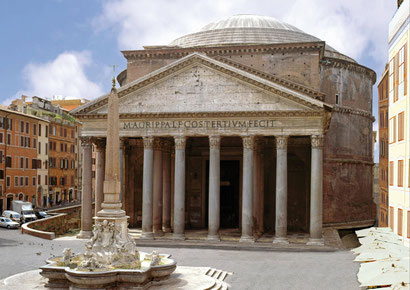
The first structure was built between 27 and 25 BC by Marco Vipsanio Agrippa who was the general of the roman navy, the son in law of Emperor Augustus and a fine engineer. Some consider it as the calidarium of its public thermal baths but it is not certain. Due to fires, it was rebuilt by tbe Emperors Domitian and later by Hadrian as we see it today between 118-125 AD, reusing the inscription dedicated to M. Agrippa but apparently reversing the entrance to North to let the sun in from South. The Temple, dedicated to all gods (from the greek pan theion literally ‘all the divine’), had the statues of the seven planetary divinities: Diana for the moon, Mars, Mercury, Jupiter, Venus, Saturn, Apollo for the sun in the seven niches inside and was a solar watch to calculate the equinozes.
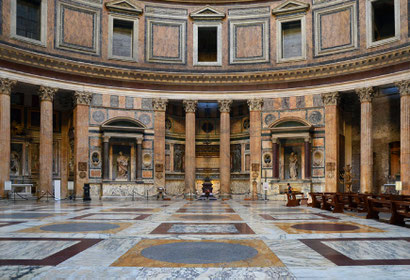
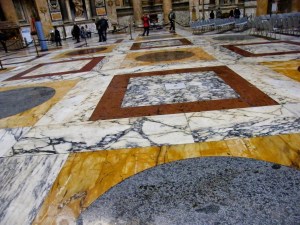
Surprisingly, it still has the original 15-meter-high columns of granite shipped from Egypt and its seven-meter high bronze door. The original geometrical floor made by imperial red porphiry and grey granite from Egypt, yellow giallo antico from Tunisia , pavonazzetto from Turkey was restored in 1872.
Its dome in concrete, the largest unreinforced in the world, is a blend of roman cement, broken bricks and pomice stone wisely combined in different proportions from the wider base to the thinner top where a centered 9-meter-wide big opening (oculus) lets the sunlight in. The rain goes efficiently into the sewer system by the 22 drainage holes on the floor and the building never gets flooded.

Close to cult in 399, it was donated by the bizantine Emperor Phocas to Pope Bonifacius IV in the year 608 AD and turned into the church of St. Mary of the martyrs in 609 AD. It now hosts the statues of the Holy Family and masses are celebrated on Saturday at 5 pm and on Sunday at 10 am. Its almost non-stopping use preserved the structure and many internal decorations even if outside it was deprived of the gilded bronze dome cover, bronze capitals, colossal statues of Augustus and Agrippa, marble decorations over the walls. It is the tomb of Raphael (its desire in his will was to be buried in Pantheon where the sun sets down), Annibale Carracci, Baldassarre Peruzzi, King Victor Emanuel II, King Umberto, Queen Margherita, Baldassarre Peruzzi, Perin del Vaga, Taddeo Zuccari, Giovanni da Udine, Vignola (without plate being lost), Flaminio Vacca and the musician Corelli.
Until the 1800s the building was still attributed to Agrippa but in 1892 the archeologist Beltrami found the structural bricks dating to Hadrian and its perspective totally changed.
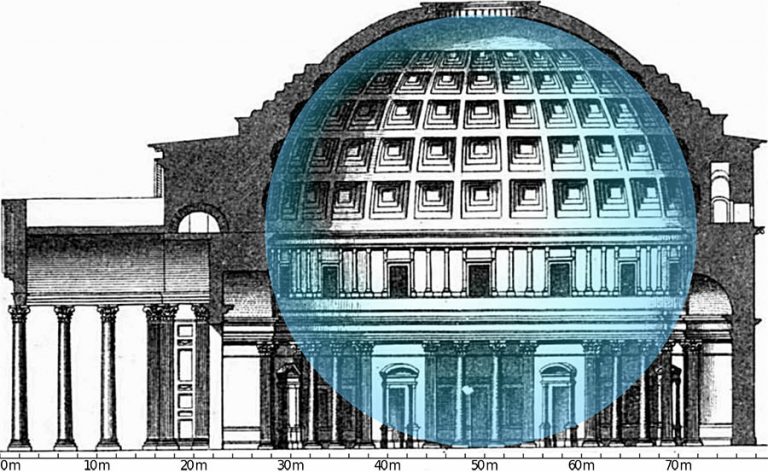

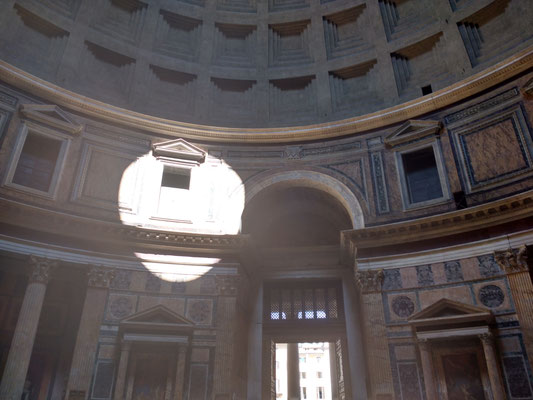
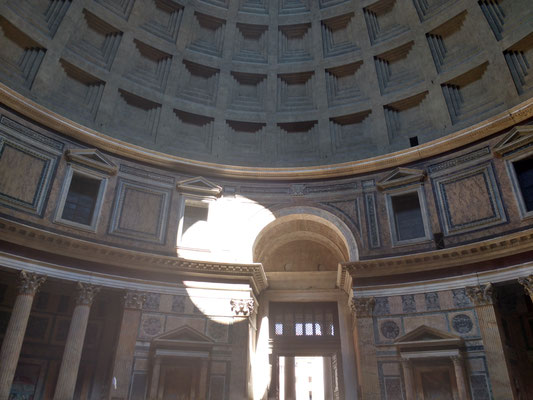
The most spectacular temple left from ancient Rome shows us after two thousand years its astronomical calculations, still surrounded by mystery. The sunlight, entering and projecting over the North side, used to show the dates of solstices and equinoxes. On early April and September, the Pantheon gives us an amazing show: at 1 pm (noon in ancient Rome due to solar time change) the sun enters from the oculus shining over the entrance arch with such a perfection that amazes every spectator inside.
In Ancient Rome, festivities dedicated to Cybele the Mother-Earth were held between April 4th and 10th (Ludi Megalenses) whereas to Jupiter between September 5th 19th (Ludi Romani) and these light shows were connected to those religious festivals when stadiums, theathers and circuses were full of entertainment and competitions to honor the Gods.
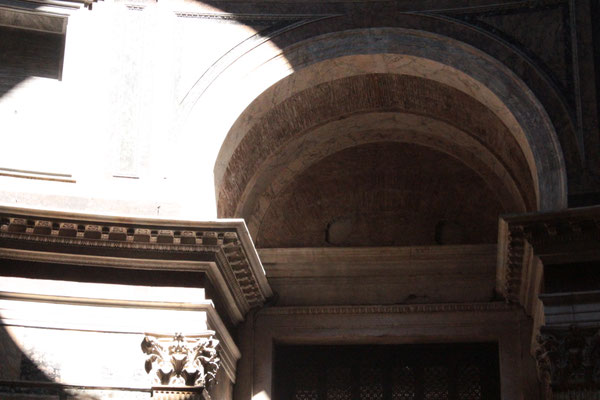
The light of the sun within the days slowly moves down towards the gate and on April 21st, the legendary foundation date of Rome, it shines with its solar circle exactly over the entrance for the Emperor, the Pontif Maximus (the highest priest), who entered as a ‘bridge-maker between the human and divine’.
These light shows were not uncommon in the ancient times and sites such as Abu Simbel, Stonehenge and Chichen Itzà confirm the importance given to the Sun by ancient populations.
The Emperor Hadrian in particolar was a keen traveller and was probably inspired by the Egyptian culture, its god-sun Amon-Ra and their obelisks that were considered petrified rays of light and used as sundials.
Below is the solar effect between 12.30 and 1 pm, registered on April 8th 2017.
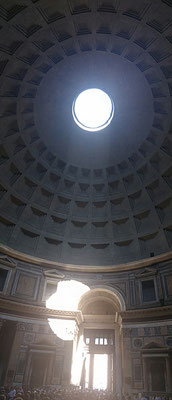
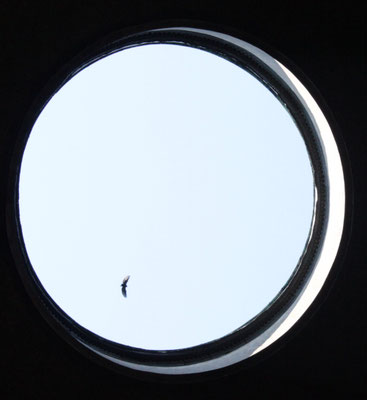


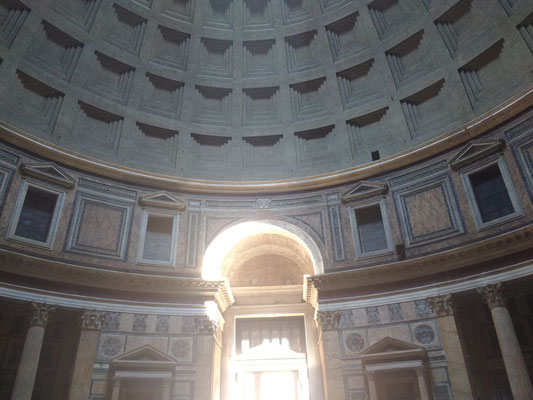
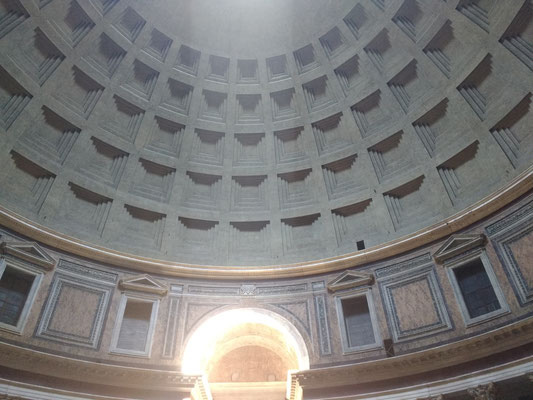
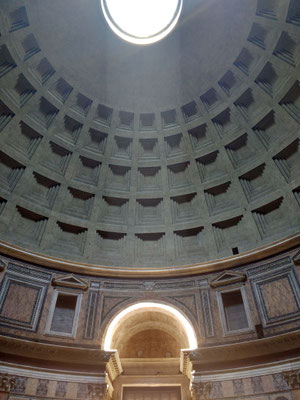
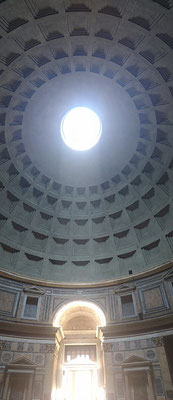
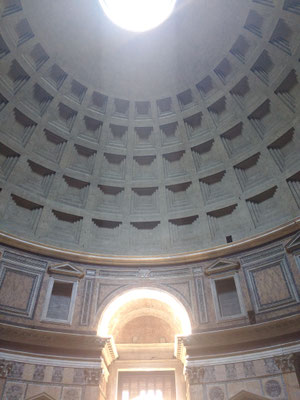
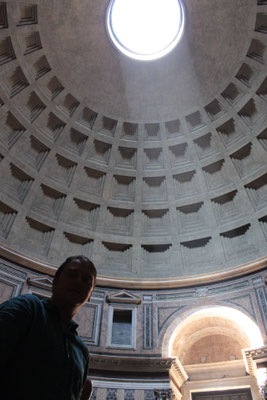
The intrados of the dome of the Pantheon has 28 caissons and this number is obtained by adding the first 7 numbers (1 + 2 + 3 + 4 + 5 + 6 + 7) as well as being a multiple of 7. The number 7 in fact had a magical-symbolic value in antiquity and not by chance we find it in the 7 wonders of the world, in the 7 kings and in the 7 hills of Rome, in the 7 visible planets associated with the 7 divinities from which the 7 days of the week nowdays derive. The choice of this number associated with the dome or the celestial vault therefore evokes the concept of perfection associated with the divine entity.

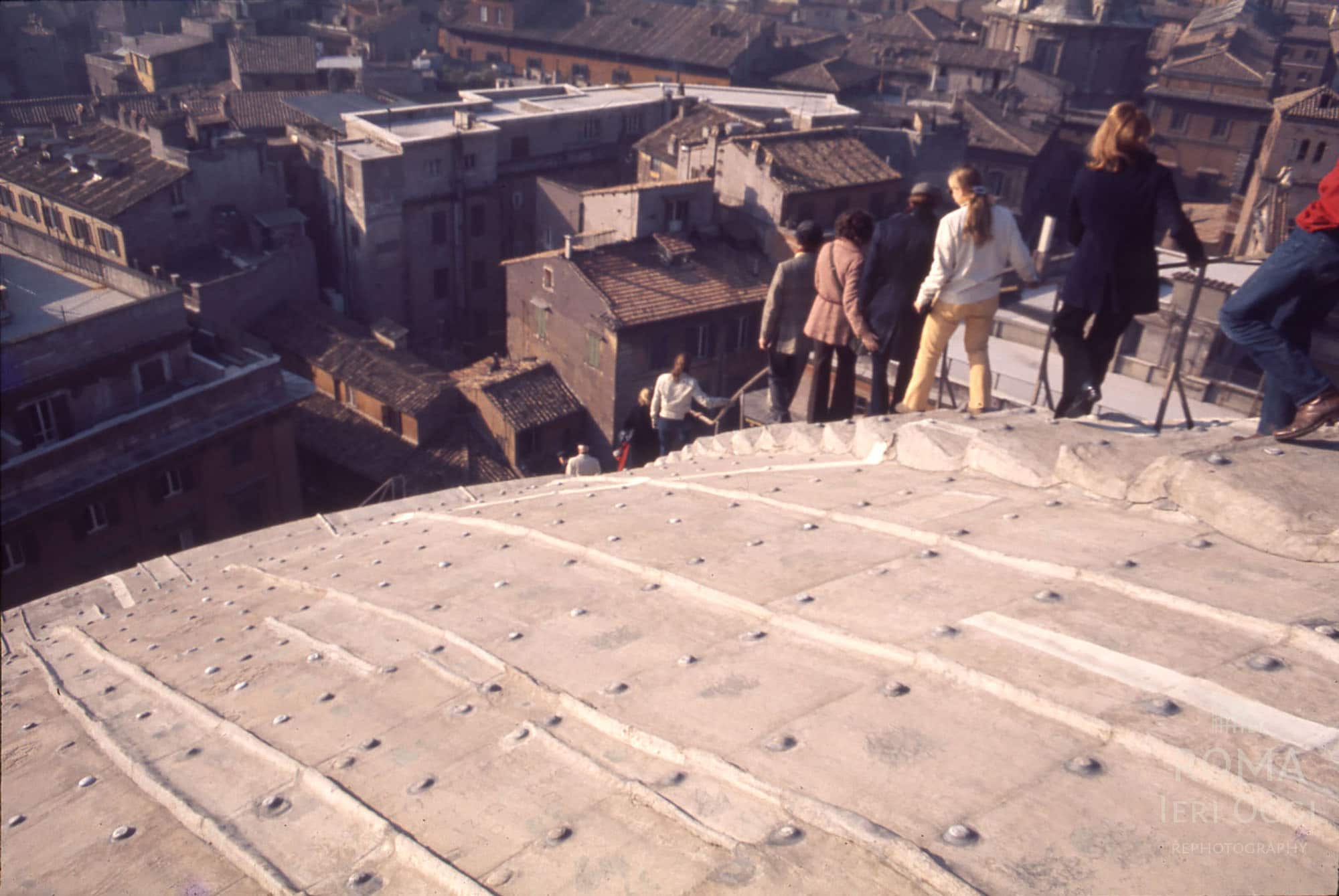
In 1975 some students of the American Center for Classical Studies in Rome were allowed to climb to the top to enjoy the view



 Maurizio Rome Guide