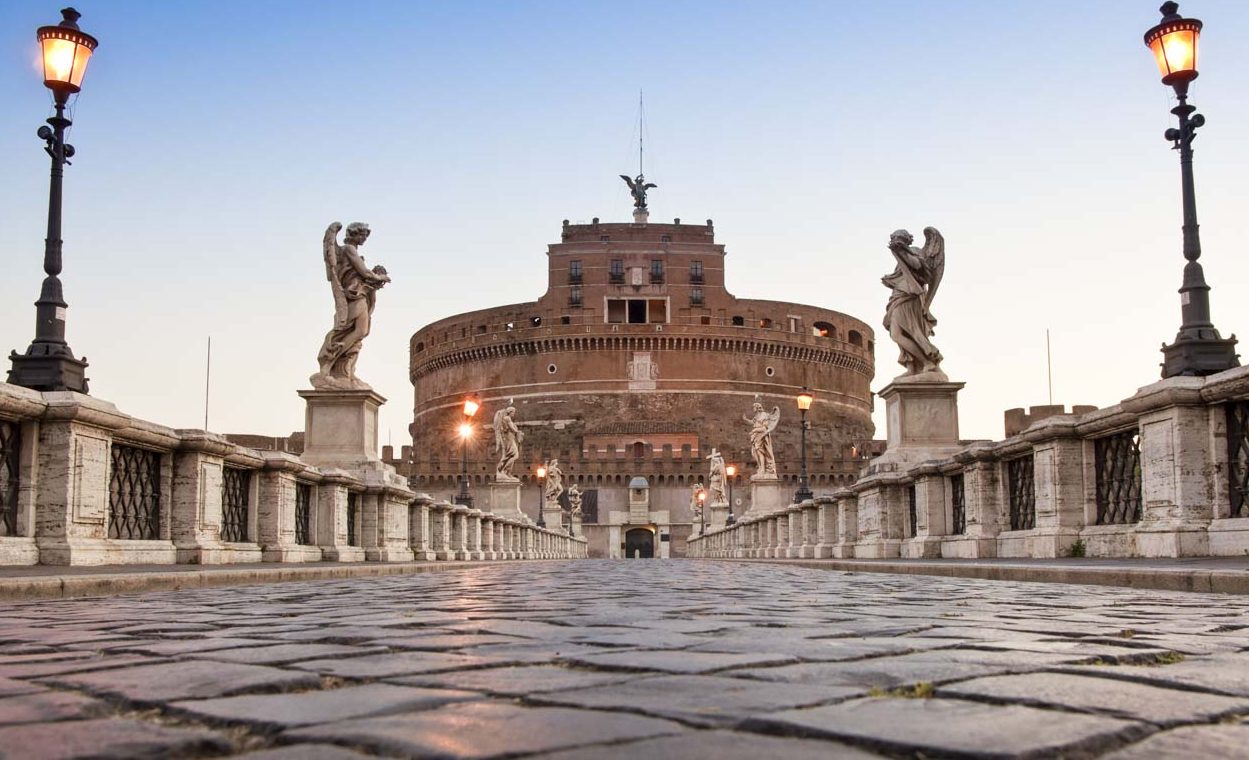
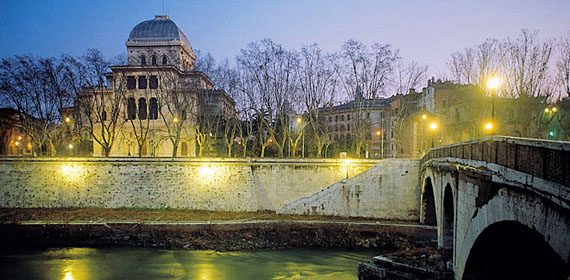
The Jews of Rome are the oldest Jewish community in the Western World that was able to survive the Pagan Time, the Middle Age, the Papacy, the Inquisition and the nazi persecution. It is a living community, the oldest of Rome, even older than the cristian one considering that their presence in the Eternal City is recorded since the 2nd century B.C.
The word ghetto probably comes from the Venetian word geto (to be read with strong german pronunciation) which refers to the old foundry in the area of Cannaregio where the Ashkenazi (central european) Jews established since the 1300s and where they lived until World War II. Another interpretation connects the word to the Hebrew get which means divorce. At their peak, about 5.000 Jews lived in Venice.
The first Jews arrived to Rome during the 2nd century BC for commercial purposes and established mostly over the Tiber (Trastevere), an area for merchants and foreigners. When Pompey conquered Giudea in 63 BC and when Titus destroyed the Temple of Jerusalem in 70 AD some more were brought to Rome as slaves: the treasure of the Temple finaced the building of the Colosseum and many Jews were forced to work on its building. Even an ancient marble plate, on display today inside the Colosseum, recalls their contribution in the construction. The treasure taken by the roman soldiers included the golden seven-arm candlestick named Menorah that recalls the seven days of Creation and weighted about70 kgs. It was kept for two centuries in the Temple to Peace, the Forum built by the Flavian dynasty, and then sacked or melted down; the Jewish community still hopes to find it again..
This event represents the beginning of the Diaspora, an ancient greek word which means ‘to scatter around’ and their wandering around the world.
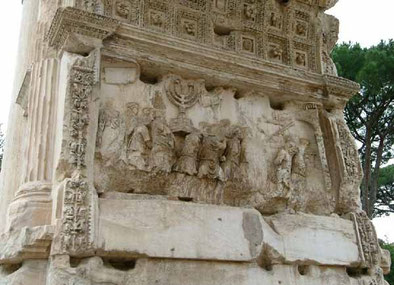
The arch built for the ‘divine’ Emperor Titus by his brother Domitian in the Roman Forum shows the military parade after the destruction of the Temple: the Romans took treasures including the famous Menorah and the Trumpets of the Tribe of Levi.
At least 40.000 Jews lived in Rome in the 1st century AD, even though numbers were probably much higher. Although many of them were not registered in the official records, there are places where we can trace back their lives: their tombs.
There were six jewish cemeteries, decorated with their symbols (Menorah, Palm tree, ritual horn, cedar leave) with inscriptions mostly in greek and latin which shows that ancient Hebrew was not commonly used in the community. The most interesting and famous jewish catacomb is Villa Randanini, that shows well-preserved fresco decorations, located along the Appian Way.
Pagan Romans considered Cristians as a sect of Judaism and made little difference between the two communities but the Jews suffered less persecutions because they made no proselytism and considerably contributed to commerce thanks to their connections through the Mediterranean.
With the Edict of Thessalonika in 380 AD, Nicene Cristianity became the state religion of the Roman Empire and as a consequence both Pagans and Jews were persecuted, loosing the freedom they had before. Some cristians at that point became more cruel than their previous persecutors.
The Jewish community in Rome began to get smaller and would have never reached the same number peaks.
In the Middle Age the Jews lived mainly in the rioni (districts) of Trastevere and S.Angelo managing their commercial business and living with Cristians, facing highs and lows.
In 1492 all Jews were expelled from Spain and the Borbonic State in Southern Italy and some arrived to the Eternal City. These are the so-called Sephardic (Spanish) and the sinagogues they founded in Rome, with differences in rituals, were called Schola Catalana, Castillana and Siciliana.
On 9 September 1553 (1st day of Rosh Ha Shanà), at the behest of Julius III, the Talmud (rabbi commentaries of the Torah) was publicly set on fire in Piazza Campo dè Fiori in Rome. The Talmud today in Rome is read, studied and examined because it contains chronologically ancient teachings and principles which never cease to surprise for their modernity. The Talmud, after the destruction of the Temple, accompanied the Jews in the Diaspora, keeping the oral tradition alive and today; it involves not only the Jewish sphere but also the whole world of Italian culture.

Things were about to dramatically change when the cardinal Pietro Carafa was elected as Pope Paul IV in 1555. After a few weeks from his election, He issued the famous bull ‘Cum Nimis Absurdum‘ that takes its name from its first words: “Since it is absurd and utterly inconvenient that the Jews, who through their own fault were condemned by God to eternal slavery…” and officially began their modern discrimination.
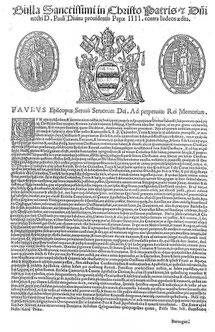
The bull Cum nimis absurdum was issued on July 14th 1555 with its 14 restrictions to Jews including the institution of the ghetto in the most unhealthy area of Rome, rione Sant’Angelo, often flooded by the Tiber.
In the Middle Age the Jews were skilled in plenty of craft activities but when Pope Paul IV Carafa instituted the Jewish Ghetto, he obliged them (about 3,000 out of 100.000 inhabitans) to move into a restricted area of 3 hectars (7,5 acres) with one entrance and one exit (later they became 5 and 8) opened in the morning and closed in the evening. Jews were not allowed to delay their curfew hours and the gates were efficiently checked.
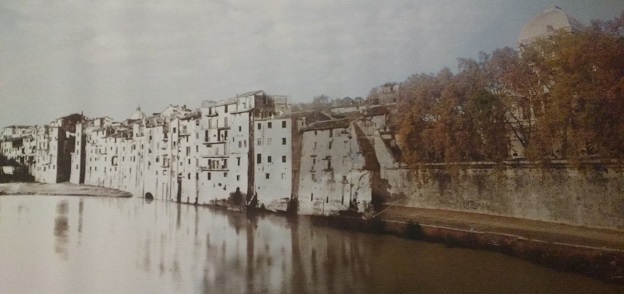
Due to its size restrictions, buildings developed in height forming the first mini skyscrapers in the city.
This location was particularly unhealthy since it was quite low compared to the level of the Tiber and flooded more than once a year. Dirt, humidity, lack of air were the inevitable features of these places where the hygienic conditions were poor and where life was ardurous. Nevertheless, due to their ritual ablutions, the Jews could avoid many diseases that spread out in the rest of the city.
All the members of this community were forced to sell their properties to cristians and were obliged to wear an identifying mark, a yellow hat for men and usually a yellow headscarf for women (yellow in the middle age was connected to falsity and is the colour normally associated to Judas in paintings). Their activities were strongly controlled and they were only allowed to work as second-hand clothes and antiques dealers, pawnbrokers and later fishmongers. The only university faculty they could study was medicine but they could only cure members of their community. They basically could have no more relationships with cristians and were not allowed to work on Sundays and cristian holidays. Their five sinagogues (three sephardic Schola Catalana, Castillana, Siciliana plus the two roman Schola Nova e Schola Tempio) had to strecth into the same building since no more than one sinagogue was allowed anymore. All this represented a big change in their life but the history of the community shows their strength and faith in the worst situations.
Their conditions slightly improved and got worse continuously, according to the change of the Popes, but gave no stability to establish good commerical activities. Many of them left, crossed the papal border and settled down in Tuscany where the Medici guaranteed more freedoms.
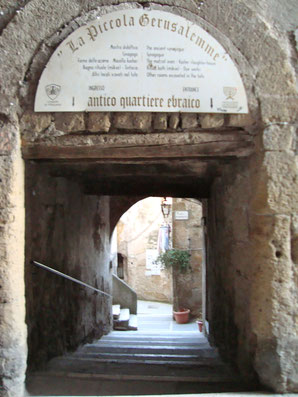
Pitigliano, in Southern Tuscany, was the first city outside the Pontifical State where the Jews could take shelter and were given the possibility to continue their commercial activities and keep their freedoms.
Another brutal aspect of the time was the discrimination that Jews had to face during the Roman Carnival when they were forced to run a race along Via del Corso (receiving insults from anybody) and parade to the Capitol Hill bringing tributes to the Senator which financed most of the celebrations. All this went on through the Middle Age up to the 1800s until Pope Pious IX Mastai Ferretti stopped this insane tradition against the Jews.
On their holy Sabbath (Saturdays) a number of Jews were obliged to listen to cristian sermons aimed to convert them inside the Church of S.Angelo in Pescheria (a monumental roman portico converted into an 8th century church), in front of the Chapel of Carmel and by the Church of S. Gregory. Often Jews held wax in their ears to avoid listening but when the pope’s guards found that out they began to check them.
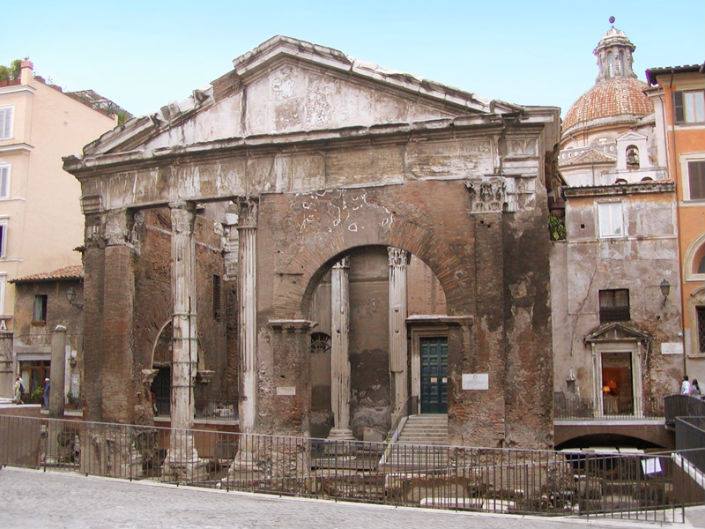

Pope Paul V Borghese built the famous Aqueduct Aqua Paola, restoring the ancient Aqua Traiana, to bring fresh water to Trastevere and had it enlarged to supply also the jewish ghetto in Piazza delle Tre Cannelle; before their only water came from the Tiber.
In 1650, some 4120 people lived here and their cemetery was by Porta Portese. In 1775 it was moved to the Aventine hill which in the 1920s was turned into the Rose Garden, still bearing the Menorah in its path architecture.

On April 17th 1848, the evening before Easter, finally the wall and the eight gates of the ghetto were torn down, without any advertisement, by order of Pope Pious IX Mastai Ferretti, the last Pope-King of Rome, who showed to be more liberal towards the Jews’ civil and human rights. However, some Jews decided to leave the city, also supported by the Rothschild family and reach the United States of America. The Rothschild is a german-jewish family who in the 1800s was accounted to have the largest private patrimony in the world and were able to finance the first kindergarten institution in Rome’s ghetto since the 1860s.
Young Jews joined Garibaldi‘s national troops to unify Italy and obtain civil rights. In 1870, 5000 Jews lived in Rome and after the fall of the Pontifical State they became italian citizens and participated to the city cultural events.
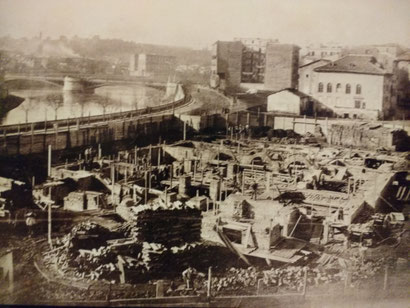
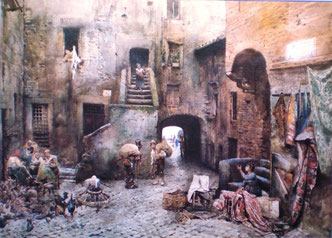
In 1884 large works started around the Tiber and lots of buildings were torn down changing for ever the look of the district. Most of those people were hosted in Trastevere, across the river, in the same district that 330 years before some of them had to leave. During the first years their rent was paid off by the state. However, the most picturesque part of the ghetto has disappeared, replaced by new modern buildings. Thanks to the roman painter Roesler Franz we can still visualize some of its streets, alleys and colors.

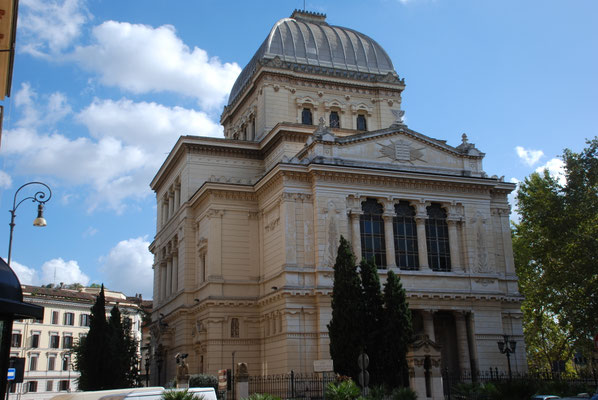
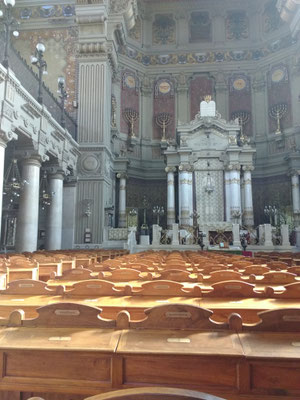
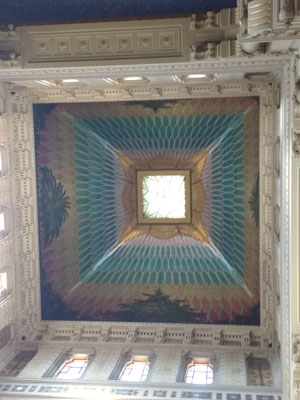
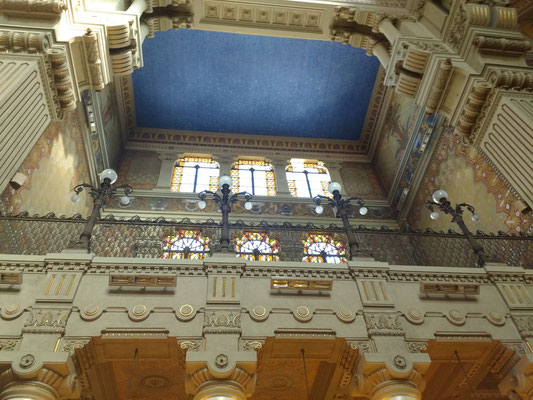
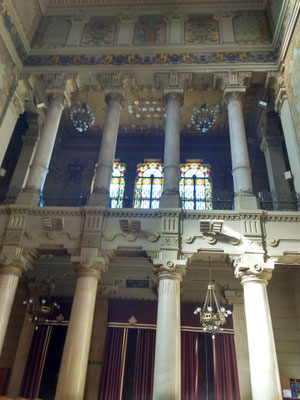
The building of the new Sinagogue, designed by the italian Costa and Armanni, started in 1901 and was completed in 1904; it has a 46-meter high square dome, the only in Rome, and is catalogud as an assirian-babylonian style. Some of the marbles inside come from the old scholae and the external architecture is liberty, with colourful windows, typical of the time. Still today, it is the largest in Europe and on of the most beautiful.
These were the years of the emancipation of the Jews to whom no carreer or occupation was denied. In 1907, one of the first city mayor was a Jew, Ernesto Nathan, who will prove to be one of the best. The King of Italy Victor Emanuel III came to see the sinagogue but He will be the same man to sign that absurd document which are the Racial Laws.
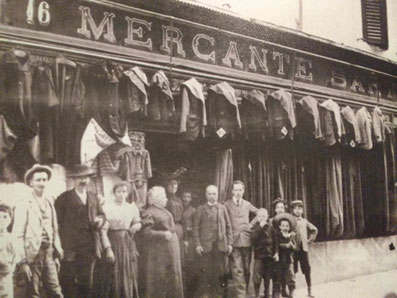

In 1938 the Jews become second class citizens again and are discriminated as it was in the middle age. They are drawn with bestial features and described as hopeless money dealers. Doctors cannot work, journalists cannot pubblish, teachers cannot teach, writers cannot write, students cannot attend public schools. In addiction, they had to wear again a mark of their identity: the star of David.
After the armistice of September 8th 1943, Italy joins the allies and Rome is taken by the Nazis on the 10th after winning the local resistance at St. Paul’s Gate. The Jews’ situation gets drammatically worse.
The Germans entered the ghetto and asked for 50 kgs of gold to guarantee their safety but, after having given the amount which even exceeded the requested (also non-jews came to donate), the agreement was not respected.
On October 16th 1943 (the Black Saturday) 1023 Jews are taken from their houses in the ghetto (including 200 kids), brought to Palazzo Salviati and on the 18th sent to concetration camps leaving by train from Tiburtina Station. Including the other districs of Rome, totally 2091 Roman Jews were deported, to be added to other 6000 italian Jews.
Many were hidden inside private houses, convents and hospitals and some Romans proved to be extremely brave hosting them secretly. In the close-by hospital on the Tiber Island, doctor Borromeo was able to hospitalize some of them stating that they had the K disease (with K standing for Kappler and Kesserling, nazi chief lieutenants).
Rome was liberated by the allies on June 4th 1944 but only 15 men and 1 woman (Settimia Spizzichino) have come back. No kid has come back home.
In 1939, in Italy were 42.500 Jews and 5.969 were the victims of the Shoah.
The total jewish victims of the Shoah were 6 millions.
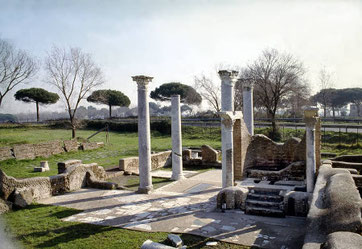
In 1961, during the works for the building a local road in Ostia, an extremely important site was found: the ancient sinagogue of the jewish community that lived here. It is the oldest ever found in Western Europe, built in 161 BC, and the only one not oriented towards the Temple of Jerusalem which proves it was built before its destruction.
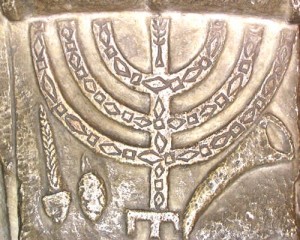
Its decorations shows us how the Menorah looked at the eyes of people who were able to see it before being taken by the Romans. An important detail since it stands on a tripod which is missing from the carving on the arch of Titus.
It was a Saturday, a feast day. On 9 October 1982, after the blessing of the children, at 11.55 the Jews who came out of the Synagogue of Rome were overwhelmed by a group of Palestinian terrorists with grenades and machine gun shots: the attack hit the Jewish heart of Rome, a child died of two years, Stefano Gaj Tachè, and forty people were injured.
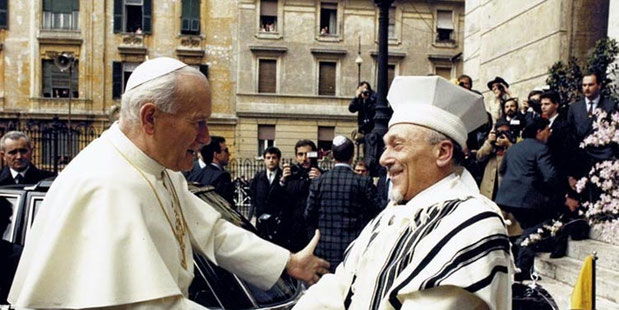
On April the 13th 1986, Pope John Paul II was the first Pope to visit a Sinagogue: a short distance but a long time to make it. In that occasion He called the Jews elder brothers. Later, also Pope Benedictus XVI and Pope Frances paid a visit to the Rabbi Elio Toaff and the community.
On October 9th 1992 there was another black day for the community and the whole city: a terrorist attack took place on the main entrance of the Sinagogue causing forty wounded and a 2-year-old kid to lose his young life. His name was Stefano Gaj Tachè and a square close by is dedicated to him.
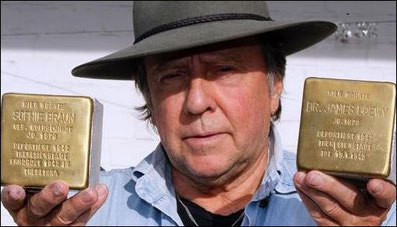
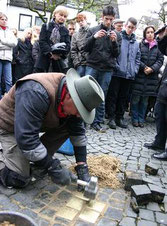
The German artist Gunter Demnig in 1992 started the project of setting about 50.000 cobble stones with a brass plate (stolperstein or stumbling Stone in english) with the name of the victims of the nazi persecution over 18 european countries (207 are in Rome since 2010) and making it the world’s largest decentrilized memorial.
Currently there are 18 sinagogues and 13,000 Jews distributed mainly in the upper-class districts of Esquilino, Monteverde and Marconi with 250 families still living in the old jewish ghetto. A large libyan group of refugees has arrived in 1967, following brutal discriminations in their country, which has enlarged the number and variety of the roman jewish community.
Some 30,000 Jews live in Italy today, mainly in Rome, Milan, Florence, Livorno, Ancona, Ferrara, Genoa.
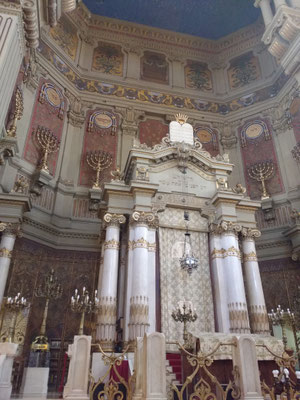
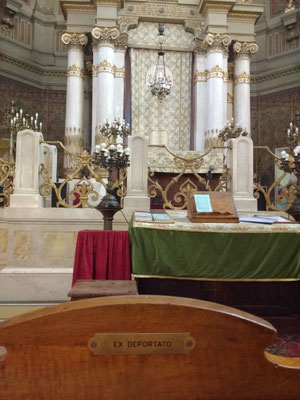
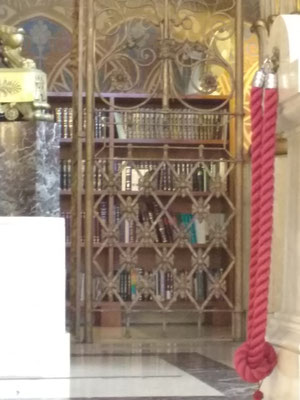
Below are some pictures I took inside the modern sinagogue, symbol of the life and variety of this community who has accompanied the history of Rome as nobody else, adapting to the many changes and restarting with renovated energy due to its solid faith and culture.

Gastronomy
The jewish gastronomy of the roman community has always been cosmopolitan and multicultural. Generally speaking, the Jews follow the kasherut wich is the list of regulations to prepare and obtain appropriate (kosher) food.
It is forbidden to cook or eat meat and dairy together in the same meal and is is compulsory to use different utensils for their preparation. The Torah forbides to cook ‘the little goat in his mother’s milk’.
All meat has to be slaughtered according to a precise ritual (shechitah) by a competent and recognized butcher and restaurants need to show their license (teudà).
Fish is allowed only with squales and fins; no crustaceans, mollusks, cuttlefish, eels, snails.
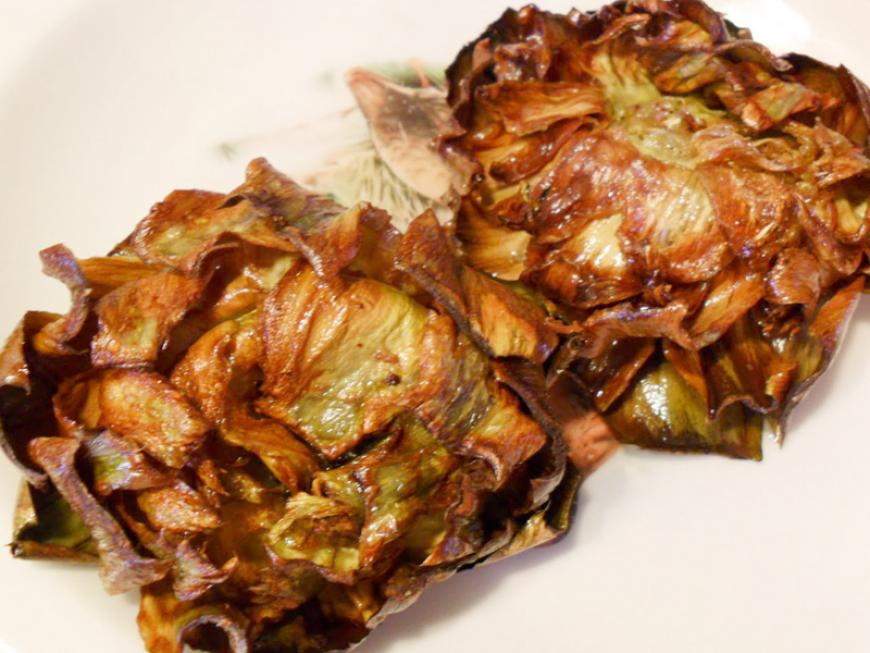
Typical dishes of the roman-jewish tradition are the overcook beef (stracotto di manzo), anchovies and endive (aliciotti e indivia), marinated zucchini (concia di zucchine), jewish-style artichoke (carciofo alla giudìa), cod fillet (filetto di baccalà), fried zucchini flower with anchovies (fiore di zucca fritto), cakes with ricotta and cinnamon (cassola) and biscuits with raisins (pizza di beridde).


Jewish Calendar and Festivities
The Hebrew Calendar, which derives from the babylonian, is called lunisolar because it is based on the cycle of the sun and the moon. The year does not always have the same duration but is made up of 12 or 13 months (the month of Adar is doubled) and the dating begins with the presumed creation of the world which took place 3760 years before the birth of Christ.
The Jewish day begins in the evening, at sunset or at the exit of the first stars: for example, Sunday, the first day of the Jewish week, begins at sunset on Saturday.
Months, which do not correspond to those of the gregorian calendar, are:
Tishri o Tishrei, Heshvan o Cheshvan, Kislev, Tevet, Shevat, Adar, Nisan, Iyar o Iyyar, Sivan, Tammuz, Av, Elul.
Shabbat
Weekly day of absolute rest in memory of the seventh day of creation. It is the most important holiday in the Calendar so observing the Shabbat (from the Hebrew ‘to stop’) is one of the main duties of every observant Jew. It starts on Friday evening at sunset and ends at sunset on Saturday. According to the precepts of Jewish law (halakhah), it is forbidden to work and engage in many normal daily activities during these twenty-four hours. Among the prohibitions (rabbinic legislation indicates thirty-nine): cooking, doing manual work, travelling, driving a car, making money transactions, carrying objects, turning on the light and the TV. It is allowed to visit friends and relatives, attend synagogue services, read, study and discuss the Torah. Part of the celebration is the recitation of Kiddush, the blessing prayer of the special braided bread (challah) and wine, at the beginning of the meals.
Rosh haShanah
It falls in the month of Tishrì (usually between September and October) and corresponds to our civil New Year. It is a solemn occasion in which the creation of the world is celebrated but also a moment of reflection and spiritual renewal. It is celebrated with ritual dinners (Sèder di Rosh Hashanah) bringing firstfruits to the table by reciting prayers and greeting formulas.
It is traditional to exchange wishes “Shana tova u’metukah” (may the year be good and sweet). On the morning of the second day it is a precept to go and listen to the sound of the shofar in the synagogue, the ram’s horn tradition that recalls the animal sacrificed in place of Isaac that exalts Abraham’s faith
Yom Kippur (day of atonement)
It falls on the 10th of the month of Tishri (between September and October). It is the most important day in the jewish calendar to be spent, without doing any activity, between fasting (25 hours without eating or drinking), penance and prayer, reflecting on one’s actions and sins. It is the last of the ten days of repentance that began with Rosh HaShanah
Sukkot
Autumn harvest festival that commemorates the forty years spent in the desert after the Exodus from Egypt which involved, in ancient times, a pilgrimage to the Temple of Jerusalem. It falls on the 15th of Tishrì (between September and October) and lasts 7 days. The ritual involves having at least one meal in a characteristic hut (sukkà) with a roof made of plant material (branches, leaves) so as not to block the view of the sky. Another feature of the festival is to bring a bunch of palm branches (lulav), willow (aravah), myrtle (hadas) and cedar (etrog) to the synagogue for prayers. The general sense of living a few days in a hut, for observant Jews, is to try to give up their comforts and certainties by relying on divine security.
Chanukkà
Festival of lights. It falls on the 25th of the month of Kislev (between December and January) and lasts eight days like Pèsach. It recalls the victory of the Maccabees for the reconquest of the Temple of Jerusalem, desecrated by the Greeks (165 BC) and the miracle of the oil used to rededicate the Temple. According to a midrash (story), a small ampoule found in the sacred building, normally enough to shed light one day, lasted eight days, the time necessary to procure another. In memory of that event, in Jewish houses (near doors and windows so that they are visible from the outside) special nine-branched candelabra (eight spouts plus one – the shammash – used for lighting) are put into operation, called channukkià ( not to be confused with the menorah which has seven) by turning on a light every evening for eight days. The anniversary is also celebrated in many public places in Rome (in front of the Tempio Maggiore and in Piazza Barberini for the Jewish community and in Piazza Bologna for the Chabad-Lubavich group) with an event open to all, citizens and tourists, in which also the Municipality of Rome participates.
Purim
Celebration in memory of the escaped danger of the Jewish people who risked being exterminated by King Ahasuerus at the time of ancient Persia in the fifth century before the Common Era. Also known as the Jewish Carnival, it is a cheerful and joyful occasion in which for adults and children it is customary to dress up or in any case use different clothes from other days. The meaning lies in the very name of the feast of Purim (fate) since the bad luck of the Jews was changed into good luck. It falls on the 14th of the month of Adar (between February and March), the celebrations begin the day before with a fast (known as Esther’s fast) and continue the same day with a banquet, exchange of gifts, reading of sacred texts.
Pèsach
Passover (one of the three great joyful recurrences of the Jewish tradition) remembers and commemorates the escape of the Jews from Egypt and the end of slavery. It is one of the most celebrated in the Jewish world and also known by non-Jews. It falls on the 15th of the month of Nissàn (between March and April) and lasts for eight days, the first and last two being a solemn feast in which it is forbidden to do any work (except cooking) and eat leavened foods (chametz), both starchy and beer. In their place, matzà, unsalted unleavened bread, is brought to the table, and maror, a variety of sweet and bitter vegetables, is eaten to underline the contrast between the hardness of slavery in comparison with the sweetness of freedom. During Pèsach it is also traditional to participate in the suggestive ritual dinners (Sèder) which are consumed by reading the ancient text of the Haggadà and eating special foods, according to a very specific order.
Shavuot
Feast of the gift of the law or the harvest. It is one of the three pilgrimage festivals (such as Sukkot and Pèsach) during which one had to go to the sanctuary of Jerusalem and bring an offering. It falls between May and June, seven weeks after Pèsach, and commemorates the delivery of the Tablets of Laws (Ten Commandments) to Moses on Mount Sinai. It is customary to bring first-fruits to the table, decorate houses and synagogues with flowers and floral-patterned fabrics and after dinner on the eve to read and study the Torah. In Rome and in other Italian Jewish communities, in Shavuot many girls also celebrate their bat mitzwah, a ceremony through which they become adults and ready to enter adult religious life
Tishà Be-Av
It is a day of mourning and fasting that commemorates the destruction of the first and second Temple in Jerusalem by the Babylonians (586 BC) and Romans (70 AD) and the beginning of the diaspora. This date, considered a symbol of disgrace for the jewish people, also marks other tragic moments: precisely on the ninth of Av the Jews were expelled from Spain in 1492. In the synagogues, mourning parades, often seated on the ground and by candlelight, prayers are recited and elegies
Ages of life
Jews are born or made. In the first case, on the basis of materlinear descent, therefore the indispensable requirement is to be children of a Jewish mother. In the second case, becoming Jewish, the matter is more complex and the choice of conversion (which also includes absolute religious observance and respect for the 613 Mitzvot or precepts) involves a long and demanding course of study and deepening, under the supervision of the Rabbinic Court.
Jewish life is marked and sacralized by a succession of rites linked to the fundamental stages of each person’s existence. Here are the main and best known.
Milah
Ritual circumcision of male babies that is practiced on the eighth day after birth and has the meaning of renewing the covenant between God and the people of Israel since the time of Abraham. It is one of the fundamental precepts of the Jewish religion and includes a special ceremony with which the new born is welcomed into the community.
Bar Mitzwah
It represents the entrance into adulthood for males (at the age of 13), the moment in which religious responsibility begins and the obligation to respect the mitzvot. It is celebrated with a special ceremony in the synagogue, after having taken an exam in the presence of the Chief Rabbi.
Bat Mitzvah
It is the moment of entry into adulthood for females (at the age of 12). It involves the same duties as for the males.
Wedding
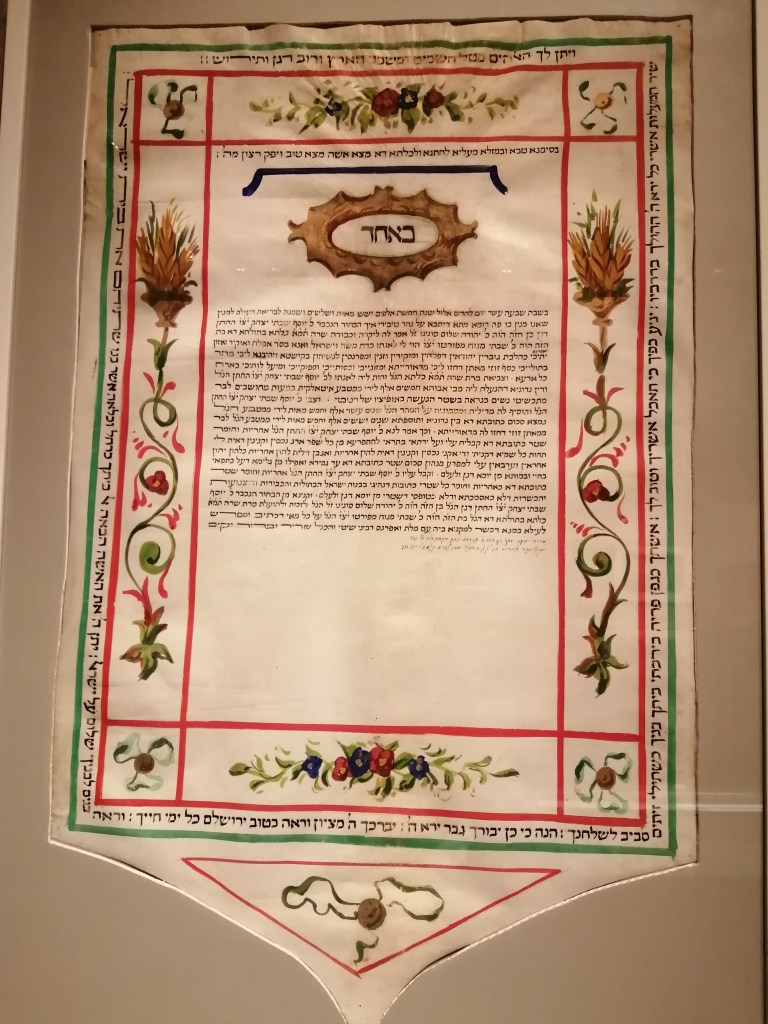
It is one of the most important duties for observant Jews. It is a specific contract (ketubbà) written on sheep parchment and signed by two witnesses during the wedding ceremony, which is then kept by the bride’s mother. Not surprisingly, because it is the document that in practice guarantees the woman a series of rights and protection even in the event of divorce. In the days of the ghetto of Rome, people used to marry at home while today they go to the Tempio Maggiore where the bride and groom are blessed by the Rabbi under the wedding canopy (khuppà). The most ancient Ketubbot, in addition to their great historical value, are considered real pieces of art for the rich decorations that characterize them: many are preserved in the Archives of the Roman Jewish Community (ASCER) and in the Jewish Museum of Rome.
Avelut
Even the end of Jewish life includes various and complex ritual procedures often with the assistance of a Rabbi, ranging from death to burial on earth in the Jewish wards of the cemeteries of Rome. They also concern the close relatives (avelim) of the deceased, for whom the ‘short’ mourning period (in which working and cooking is also forbidden) lasts 7 days after the funeral while the ‘extended’ one lasts a year. It is forbidden to put photos, sculptures and other images on the gravestones even if in some Roman-Jewish cemeteries this rule is not respected.
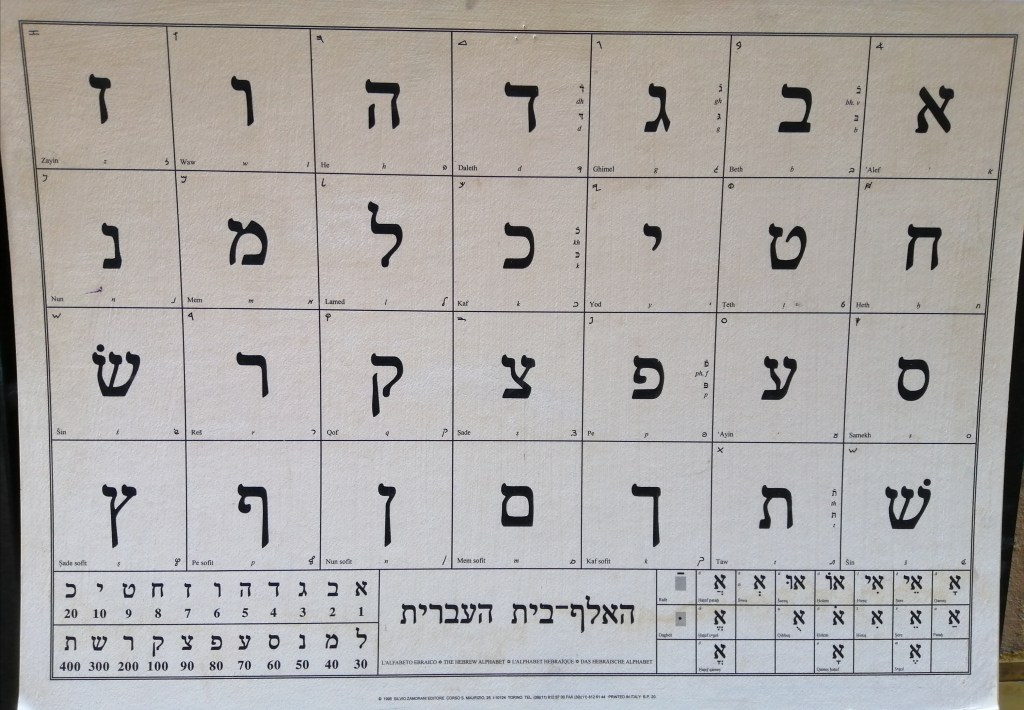
Jewish Terminology
Aliyà – Climb. The return of Jews in diaspora to Israel
Aròn Ha Kodesh – Holy Ark”. It is a cabinet-like piece of furniture, usually richly decorated, which contains the scrolls of the Pentateuch (five books of the Torah) and in all synagogues it is positioned in the direction of Jerusalem. It is so called by analogy with the Holy Ark, which contained, among other things, the Tables of the Law
Special prayer for the sanctification of wine which is recited on the occasion of Shabbat and other religious holidays
Beteavon – Good Appetite
Bet ha knesset – Meeting house. Term of Greek origin used as a synonym for synagogue
Berakah/berakot (pl.) – blessing
Bimà – Pulpit
Cabbalà – Transmission of a teaching (Tradition) from the masters of one generation to another
Chanukkià – Nine-branched candelabra that is lit during the eight days of the Chanukkà festival
Etrog – cedar fruit
Halakhà – The complex of rules of the Torah based on the interpretation of the masters of Judaism. It is a complete guide to all aspects (practical and spiritual) of life that an observant Jew must abide by
Kippah/Kippot (pl.) – Headgear always used by male observant Jews and obligatorily in places of worship
Ketubbah/Ketubbot (pl.) – Jewish wedding contract. Made with a personalized text and enriched with different types of decorations, including precious ones, over time it has become a real object of art, often exhibited in museums and exhibitions
Kiddush – Special prayer for the sanctification of wine which is recited on the occasion of Shabbat and other religious holidays
Kaddish – The oldest prayer for the sanctification of the name of God. In order to be recited, it requires the minimum presence of ten Jewish men or boys over the age of thirteen (minian) used in funeral rites.
Kasher (or kosher) – (literally “suitable”) is used to define foods and drinks that comply with Jewish dietary rules
Kasherut – Set of Jewish food rules
Kippah – The traditional head cover that is worn by male Jews, particularly during prayers, study and when entering the Synagogue. According to the Talmud, it is a sign of “Fear of Heaven”, a way of continually reminding ourselves that above us there is a G-d who watches and protects us
Le-chayyim (more commonly le-chaim) – “to life!”. It is the toast that is pronounced while raising the glass before drinking wine or alcohol, the equivalent of “cheers!”
Lulàv – Plant composition formed by three branches of myrtle, two of willow, palm and cedar
Marrano – (in Spanish “pig”) is the derogatory term with which the Spanish Catholics of the sixteenth century designated Jews forcibly converted under the Inquisition and forced to baptism but who continued to practice their Judaism in secret
Menorah/Menorot (pl.) – Seven-branched candelabra (it can also be five or nine), treasure of the ancient Temple of Jerusalem, forged in gold. It was stolen by the Romans at the time of the Judean wars and brought to the capital as booty by the emperor Titus. Probably destroyed or stolen in later times, traces of it have been lost from the 5th century onwards. It is one of the oldest and most well-known symbols of Judaism (together with the lulàv, palm branch, the etrog, the cedar and the shofar, the ritual horn), which over time has also become an important figure in Christian iconography.
Minhag – Rite, a complex of ritual uses
Mikvè/Mikveot (pl.) – Tub containing spring or rain water, built according to certain standards, essential for the Jewish ritual bath
Mishnà – First collection of rabbinic teachings representing Jewish law handed down orally. It includes the discussions of the oldest masters (up to the second century AD) and together with the second part, called Ghemarà, which collects the discussions that developed between the third and fifth centuries, it forms the Talmud.
Mitzvà/Mitzvot (pl.) – Rule, precept. The Torah, the sacred book of Judaism, includes 613 (obligations to do and prohibitions). All must be respected by the Jews
Moadim – Solemn religious appointments
Pogròm – “destruction”. Anti-Semitic popular uprising but also more generally a bloody persecution of a minority. Term of Russian derivation that indicates the popular uprisings with massacres and looting carried out between 1881 and 1921 in Tsarist Russia against the Jews
Rabbi or Rav – master
Séfer – Book. Scroll of parchment wrapped around two wooden supports, on which the text of the Pentateuch (five books of the Torah) is handwritten. It is used for public reading of the sacred text
Sèder – Order. It is the sequence of the different moments of the ritual of some celebrations and festivals of the Jewish culture. It takes place during solemn dinners in Pèsach (Easter) and Rosh haShanah (New Year)
Shechitah – Slaughter of animals allowed, according to the law (kasherut), which can only be performed by a special expert butcher (the schochet) authorized by the rabbinic authorities
Shabbàt – Saturday, seventh and last day of the Jewish week, dedicated to family, prayer and rest
Sofer – Scribe and copyist of sacred texts. He is the expert who, based on the millennial practice of Hebrew writing, can transcribe, according to precise rules and rituals, the scrolls of the Torah and other religious scriptures including ketub (marriage contracts) and gittin (divorce documents). His role in the communities is very important and he is considered a real artist
Shofàr – Ram’s horn played in synagogues during special celebrations (Rosh haShanah and Yom Kippur)
Talmud – Study, education. It is the sacred text that includes the whole of the interpretations and practical applications of the Torah by the rabbis, collected in the first centuries of the Common Era. It is composed of two parts, Mishnà and Ghemarà, and there are two editions: one is broader and more authoritative, Babylonian (which collects not only legal and normative material but also legends, lives of masters, prayers, sayings, midrash, etc.); and a shorter one, Palestinian or Jerusalem
Tallìt or tallèd (for Roman Jews) – ritual shawl worn by men for prayer and on solemn occasions. Square or rectangular, in silk or wool, ends with special fringes on the sides (tzitziot)
Tefillàh/tefillot (pl.) – prayer
Tevilah – Ritual practice of ablution
Teudà – Certificate certifying compliance with Jewish food standards issued by the rabbinic authority
Torah – Lit., “teaching, law”. It is the central reference of the Jewish religious tradition. It includes the set of teachings and precepts recognized by the Jews as revealed by God through Moses. The written Torah consists of the first five books of the Bible (called Pentateuch): Genesis, Exodus, Leviticus, Numbers, Deuteronomy
Yom – Day. Many Jewish celebrations and holidays are indicated with this term
Want a guided tour of the Jewish Ghetto in Rome?
 Maurizio Rome Guide