The city of Alba Fucens was founded by the Romans in 303 BC along the Via Tiburtina Valeria, in a strategic place placed at the confluence of important roads from which it was possible to easily control the surrounding area, previously inhabited by the people of the Equi. Today it is in Abruzzo, one of the wildest central italian regions
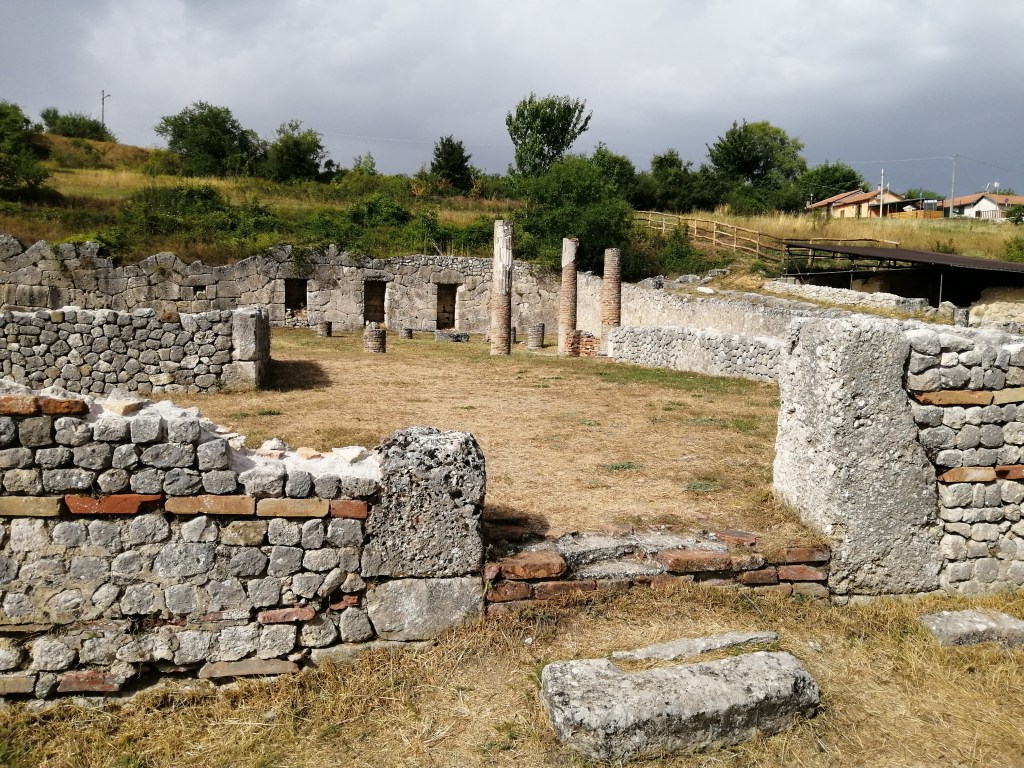
The city extends over a plateau surrounded by three hills; parallel and perpendicular streets divide the space into regular blocks, in which the most important public buildings are located. A mighty city wall, almost three kilometers long and equipped with four gates, surrounds the city protecting it from external attacks.

In the 1st century BC, following the social war fought by the Italic peoples to obtain the Roman citizenship, Alba Fucens became a municipality and its inhabitants Roman Citizens in all respects. In the following centuries the city, enlarged and embellished, enjoyed a period of great prosperity, as shown by many of its buildings; after a period of decline, in the 5th-6th century AD, the city was definitively abandoned.

The sector of the city that can be visited today was brought to light by Belgian archaeologists who conducted the research for thirty years, from 1949 to 1979. The excavations of the Superintendence for Archaeological Heritage of Abruzzo and some Italian universities have been resumed for some years. and foreign
BUILDINGS AND ROADS
The Elephant Street (Via dell'Elefante):
It is the street that, together with Via del Miliario, gave rise to the organization of the city in regular blocks. It was named by archaeologists after the discovery of some reliefs depicting elephants. On the right the Basilica faces it, on the left the portico of the Forum
Basilica:
Building where justice was administered and business dealt. The administrative and political activities of the city took place in the Forum, located to the left of Via dell'Elefante and currently not open to visitors
Street of the Pillars (Via dei Pilastri):
It takes its name from the tall pillars that line the street on the left side. They supported the portico on which the tabernae opened
Tabernae:
Shops intended for the sale of various products. We recognize the thermopolium, a place similar to an inn where it was possible to consume food and drinks
Crosswalk:
Along Via dei Pilastri there are three stone blocks that were used for the crossing of pedestrians

Macellum:
Market where they bought groceries. It has the shape of a circular square around which the shops are arranged; originally it had a square shape
Thermal Baths:
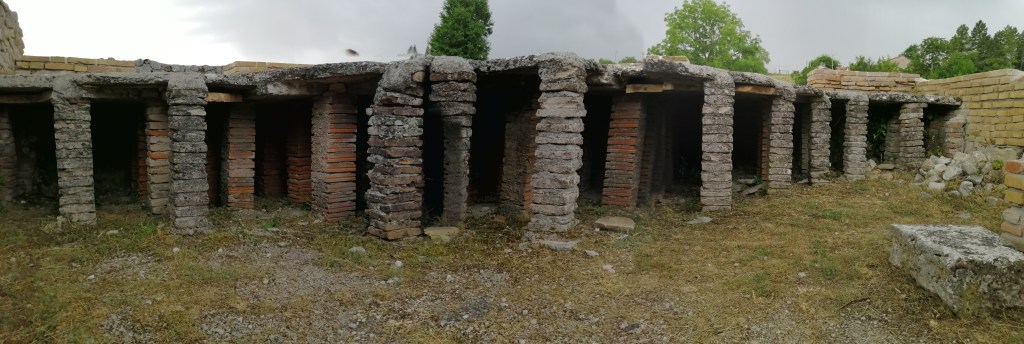
Public place where people dedicated themselves to body care with baths, gymnastics and beauty treatments. The brick columns that supported the floor are still visible, allowing the circulation of hot air (used to heat the room above) and the tub used as a swimming pool. In the baths there were also public latrines, recognizable by the marble seats with a central hole that served as a toilet
Theater:
Place for performances built by exploiting the slope of the hill. Today only a few remains are visible
Sanctuary of Hercules:
Place of worship of one of the most beloved gods in the ancient world, protector of flocks, trade and commerce. It is composed of the chapel, a small room for worship in which a statue of Hercules seated at a banquet almost three meters high was placed and a large rectangular porticoed square
Amphitheater:
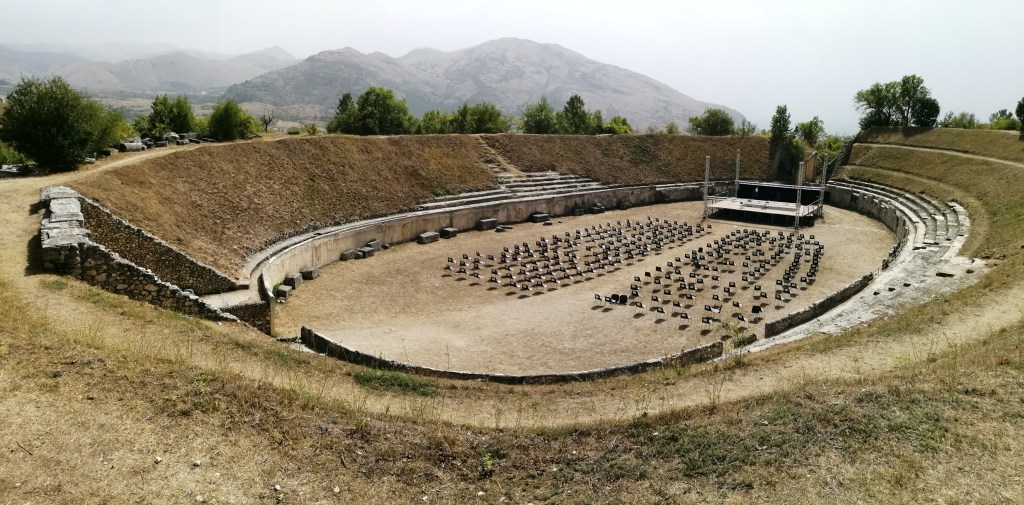
It rises not far from the central area of the city, at the foot of the Colle di San Pietro. It is a large building for gladiator games and animal shows. It was built by Quinto Nevio Sutorio Macrone, an important figure from Alba Fucens, with the money from his will. It could hold up to a thousand spectators
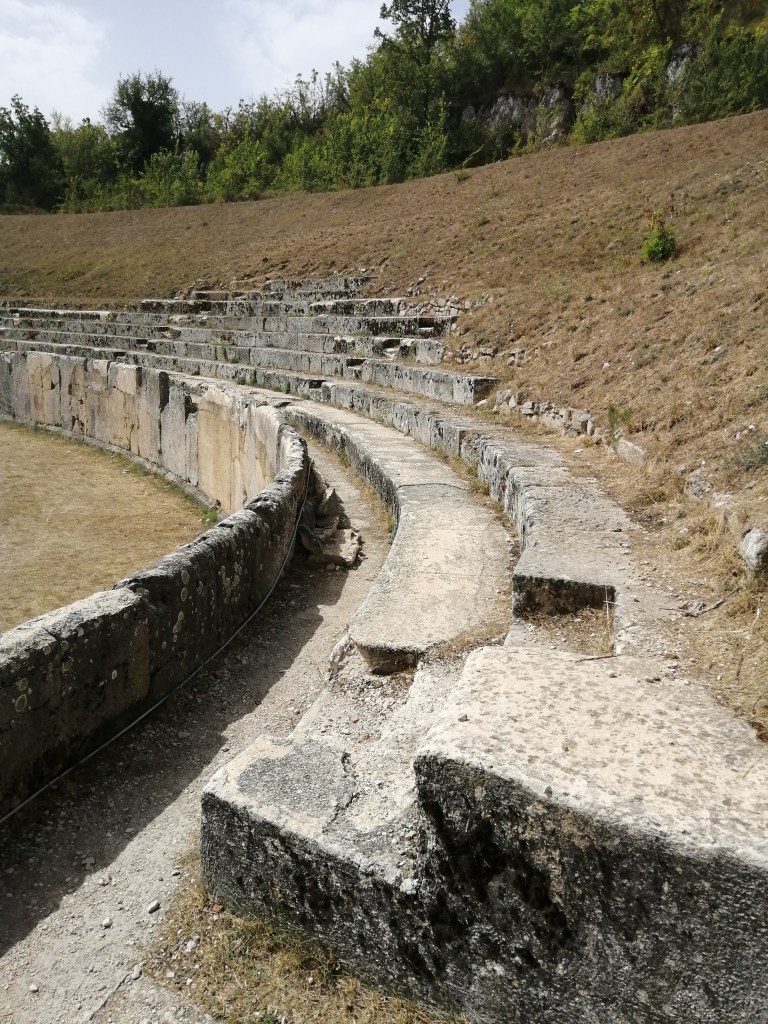
Domus:
Large house consisting of the atrium (in which the remains of the impluvium, the rainwater collection tank, are visible) and a large porticoed garden (peristyle) around which there are various rooms with mosaic floors and decorated walls from frescoes. The building was perhaps also used for public functions
Via del Miliario:
It is the street parallel to Via dei Pilastri. It takes its name from the stone Miliary that was found there. Along the road there are various tabernae
Miliary:
It is a column on which is indicated the distance of Alba Fucens from Rome (68 Roman miles, corresponding to about 100 km)

 Maurizio Rome Guide