The excavation began in 1859 on Giuseppe Randanini’s agricultural property between the 2nd and 3rd mile of the Appian Way, after obtaining the permission from the competent authorities. The commissioner of antiquities P.E.Visconti wrote: “I saw there some sepulchres of people of humble rank. These things were discovered in making uprooted to plant vines”. In 1896 the Randanini family sold the property which, after a series of passages, came to the Marquis Alberto del Gallo of Roccagiovine, whose descendants are the current owners. The archaeological section of Rome has protected it since the 1980s and carried out a restoration campaign between 2001 and 2002, evaluating the state of conservation as satisfactory.
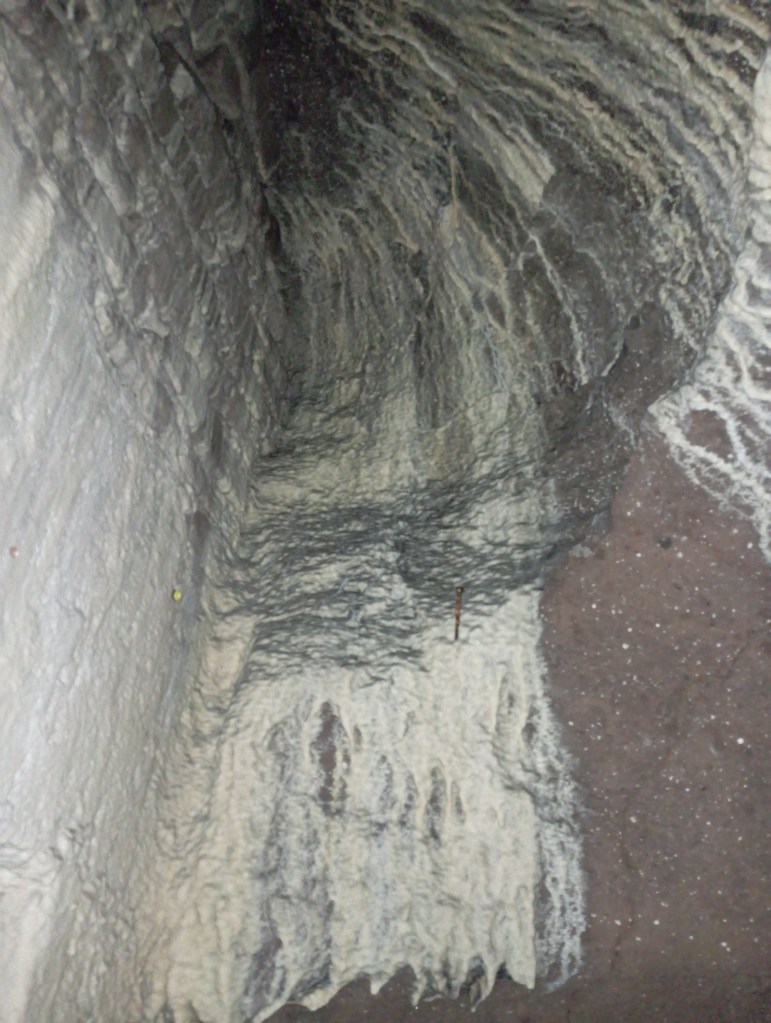
The last updated plan was made in 2009. We are nearby of the Christian catacombs of S.Callixtus, S.Pretestatus and S.Sebastian where the name ‘catacombs’ originated referring to the latin word ‘ad catacumbas‘ meaning by the cavity or by the valley, an important volcanic quarry created by the last eruption of the Alban Hills about 20,000 years ago which will be used to build the Appian Way in 312 BC. The name catacomb will be adopted by the other underground cemeteries and it was not exclusive to Christians.

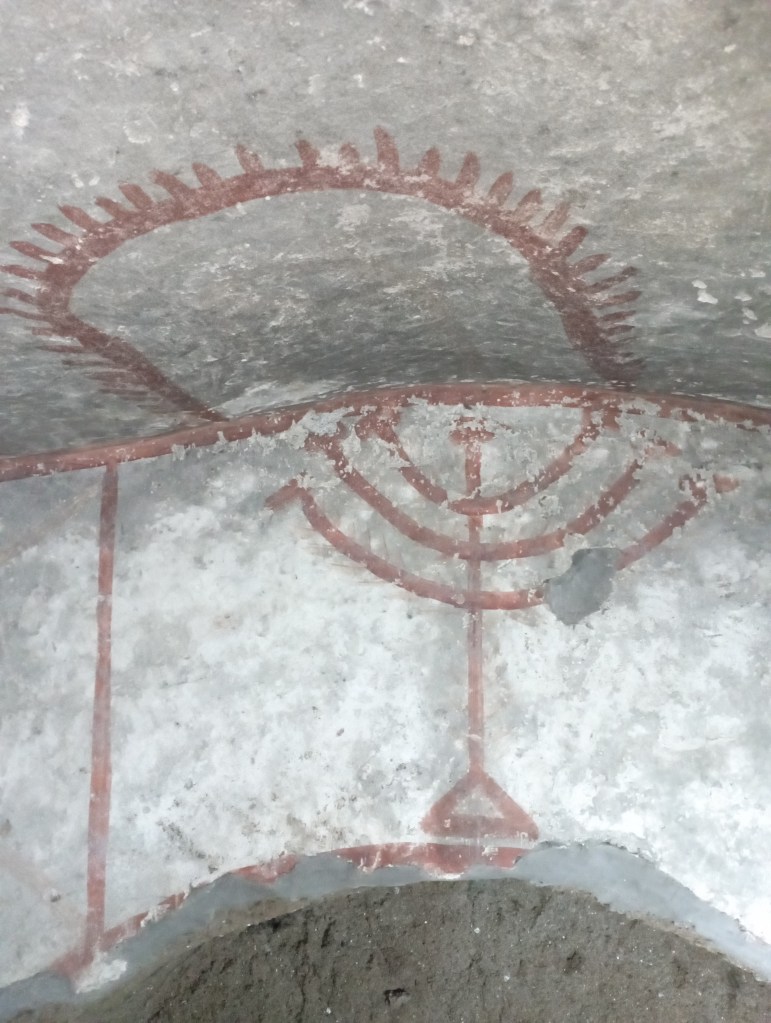
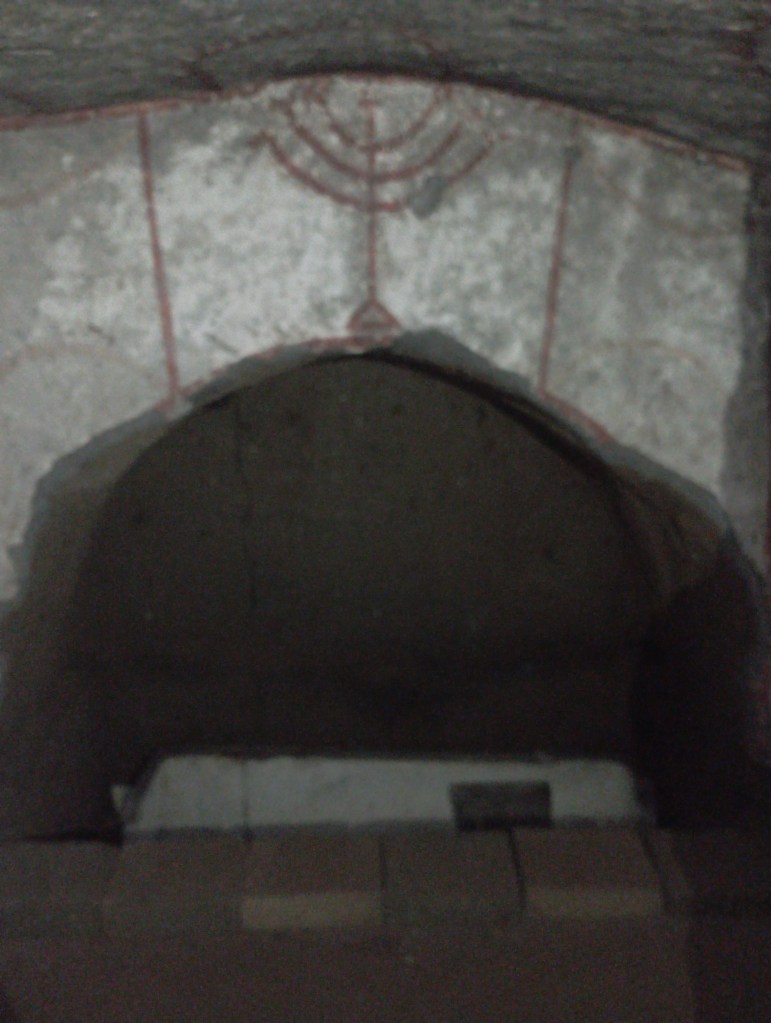
Just a few weeks after the beginning of the excavation in 1859, the first cubicle (in latin cubiculum) depicting the Menorah, the seven-arm candlestick symbol of Judaism, was found. The Jewish characterization of this funerary context was absolutely surprising even if the desecration in a later period is evident. Until that moment, only the catacomb discovered by Carlo Bosio in 1602 along the Via Portuense in the Monteverde area was known. Subsequently also those along Via Labicana and under Villa Torlonia were also discovered but only the latter is still preserved since the others collapsed.

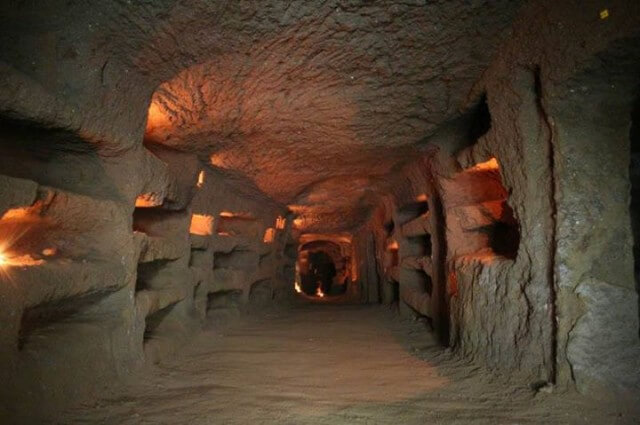
The Vigna Randanini catacomb covers an area of approximately 18,000 m2. The tunnels develop on two levels: the lower one dug into the tufa stone includes zones A, B, C while the upper one dug into the pozzolan includes zones D, E, F. The tunnels wind for a length of about 700 meters of which 400 currently visitable and are about 10 meters deep. The sepulchral area that can be visited today was developed between the 2nd and 4th centuries AD without following a homogeneous plan but merging originally separate and autonomous sections with independent entrances, perhaps also connected to different funeral groups (collegia). After the 2nd century, inumation replaced cremation causing an increasing request of larger spaces to contain the bodies which led to the necessity of digging under the former cemeteries. According to the Roman law, the owner of the property only owned the land underneath and this means that catacombs are not all connected one another. Probably the owner of these catacombs, like those of the whole surrounding area, was the wealthy Roman matron Domitilla

Area B was commissioned by Pagans and probably shortly after area C, while the Palm Cubicle dates back to the 4th century. The construction of underground connecting galleries should have begun in the second half of the 3rd century and the funerary purpose perhaps ended in the 5th century when it was ‘visited’ for grave robbing or destructive purposes.
The current access is from Via Appia Pignatelli but originally there were several. There are two open bell-shaped skylights to facilitate the extraction of material and to provide light and air.


The burial types are:
-the niches, wall tombs dug into the tufa parallel to the gallery closed by brick walls or marble slabs, plastered and decorated or marked with the name of the deceased and religious symbols;
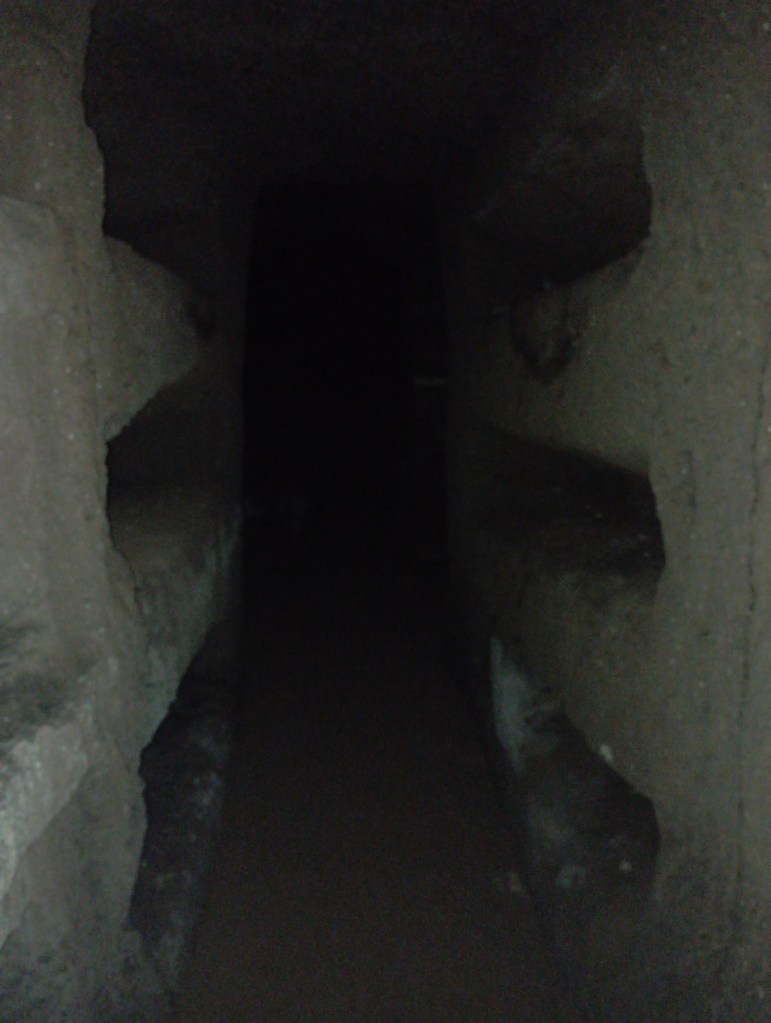
-the kokhim, wall tombs dug into the tuff perpendicularly to the direction of the gallery which could house more than one deposition and closed by slabs with symbolic decorations. These were typical of eastern provinces and are not very common in Rome;


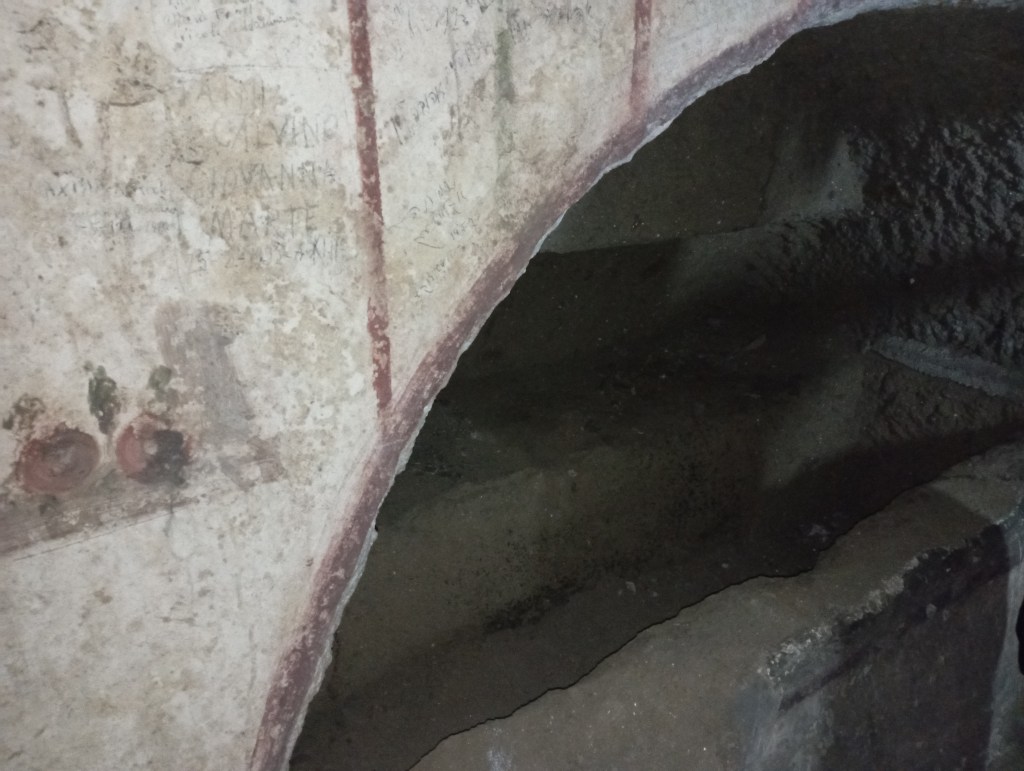
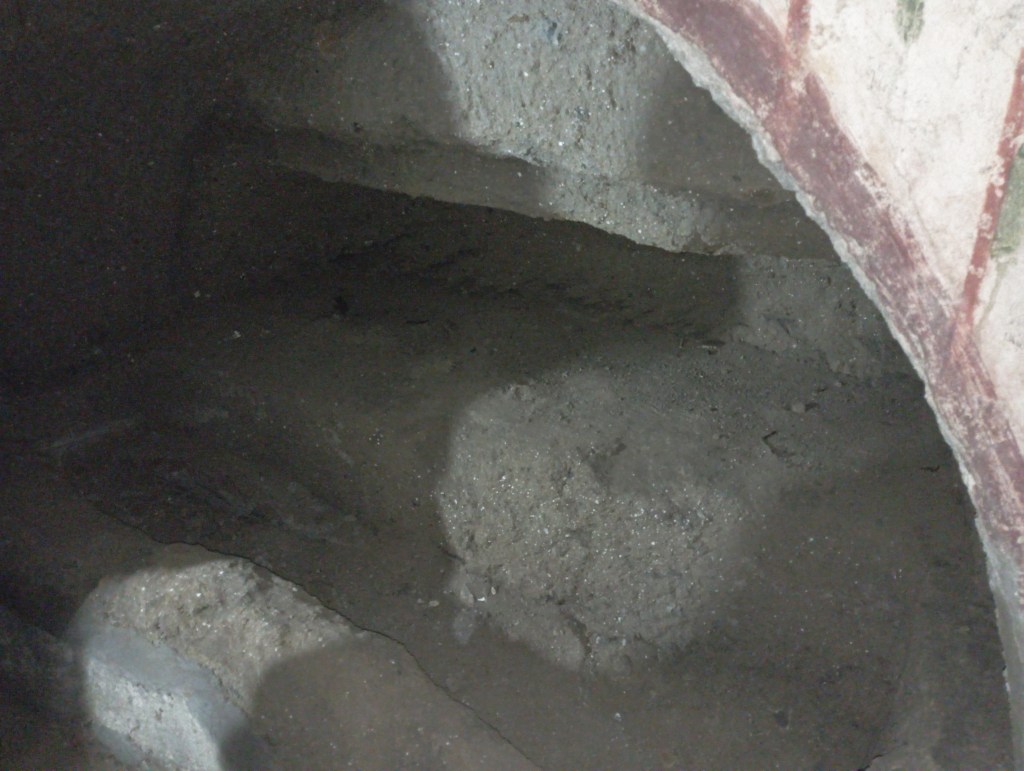
-the arcosolia, arch-shaped wall tombs dug into the tufa or (as in the case of the external environment M) built in masonry consisting of an arched niche closed by decorated clay or marble slabs, sealed with lime;
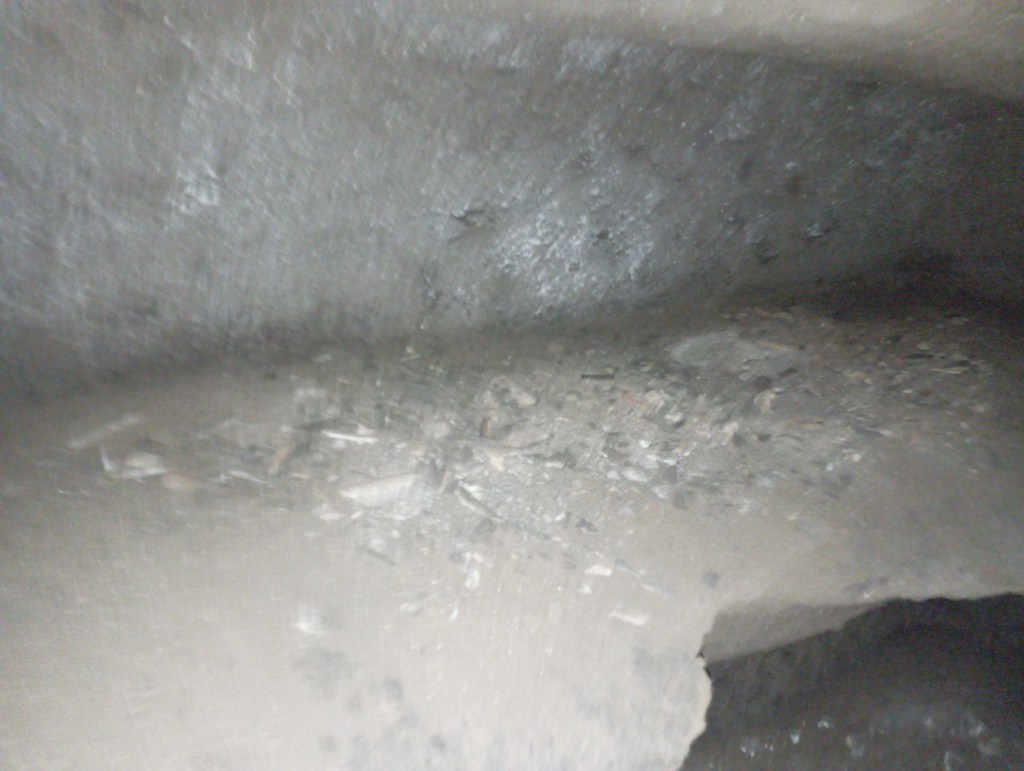
-the pit tombs, dug into the floor of the gallery, devoid of decoration and covered with cement conglomerate, currently in the section not open to visitors.
Despite of the diversity of sepulchral solutions we can imagine that the funerary ritual was common and overall very simple; as the Law prescribed, immediately after death the deceased was stripped and covered with a sheet; around the body, continuously watched over, lights were lit; after the ritual washing (rechitzàh) and the funeral oration the burial took place, possibly in contact with the earth. All of these rites had to be performed in the shortest possible time, preferably on the same day of death, before nightfall.
REGIONS IN DETAIL:
The A entrance hall probably represented a hall reserved for liturgical functions linked to the prescriptions of the Mishnah (Book of ‘repetition’).
Region A is characterized by the presence of niches in the upper part of the walls and kokhim in the lower part, at a higher level than the floor.


Region B probably did not belong to the Jewish catacomb initially but was perhaps incorporated in a later period or perhaps simply during the excavation. In fact it is located on a different floor level and contains the Pegasus Cubicle or a figurative decoration chronologically preceded and iconographically very atypical with respect to the usual themes of Jewish cemeteries. It also contains a monumental kokh framed and divided diagonally in two.

It seems that region C was still visible in the 1930s but is now completely inaccessible, while region D has a network of galleries orthogonal to a main corridor, connected to each other by an intermediate arm. The height of the vaults (1.8 MT) is less than the average of 2 meters. Here we find the Palm Cubicle whose rich decoration dating from the end of the 3rd century and the beginning of the next was damaged to make room for new burials which attest to its use at least throughout the 4th century. At the crossroads between the D7 and D5 galleries we find the sarcophagus of Eudoxios.
In region E we find two large galleries with a skylight at the junction point.
Region F has a long corridor with six cubicles which house an average of twelve niches. The Menorah Cubicle is the only one that fully preserves the original decoration; it had niches on the side walls and a large niche tomb on the back where a marble sarcophagus was discovered. On both walls of the gallery niches are regularly arranged, some of which partially retain their original closure. Noteworthy is the cubiculum 9 whose door is monumentalized with travertine molded jambs and architrave. The interior was intensively used for burials: pit tombs opened on the floor, niches on the walls, a large arcosolium on the back.
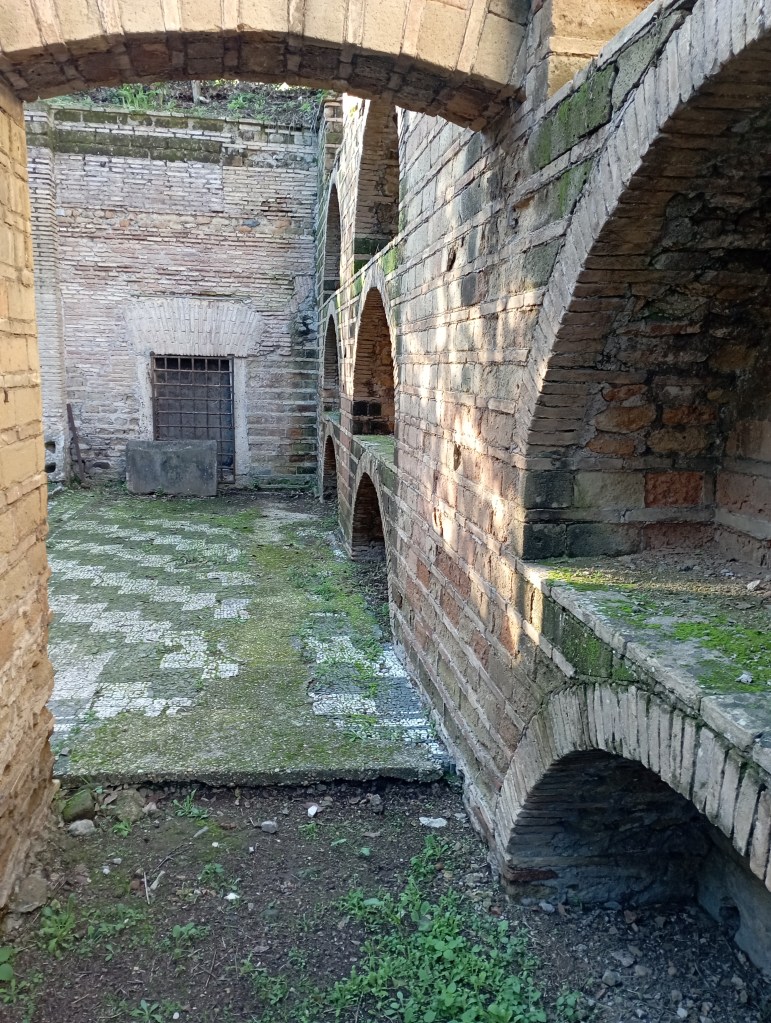
Rooms G and H act as a connection between the cemetery galleries and the external environment M. They were plastered white, traces of which are mainly preserved on the barrel vaults, and here we find a brick well used for purification rites of the deceased, fed by a duct coming from room M. The entrance steps are modern while the ancient passage has been walled up.
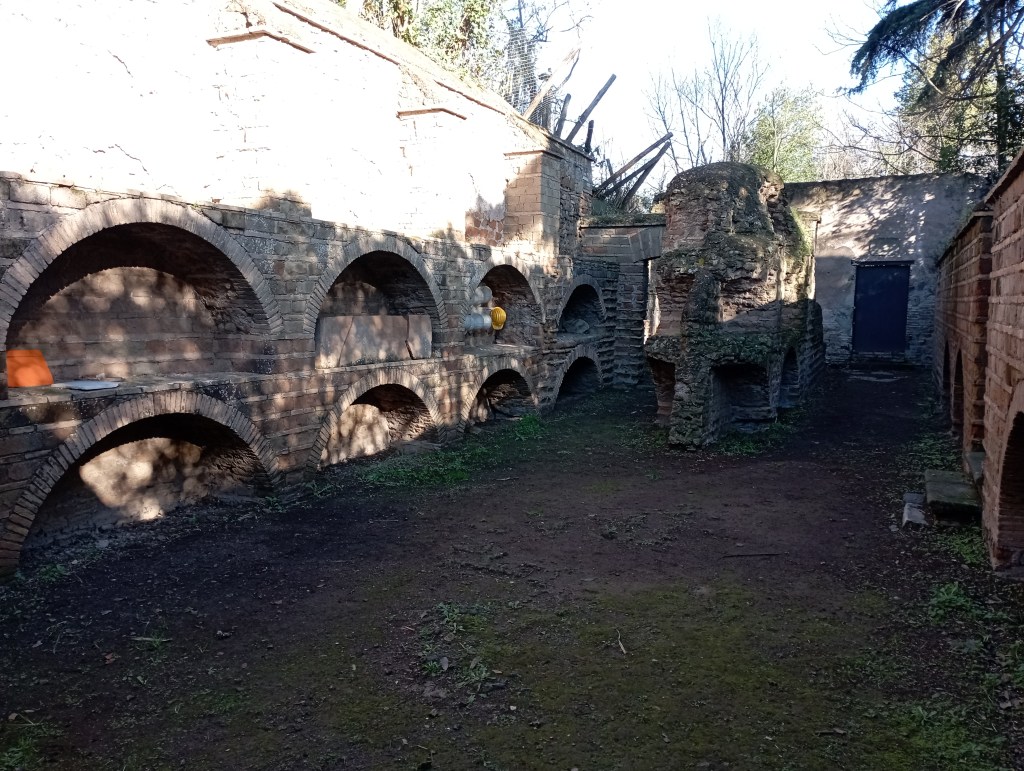
The external environment M must originally have been divided into four communicating and vaulted environments. M3 and M4 were divided by a spine containing arcosolia. There are numerous mosaic floor decorations here, some of which are rather rough and can therefore be dated to the 3rd century. It is hypothesized that this environment could initially have been a monumental fountain (nymphaeum) converted into a sepulchral environment only later.
FURTHER INFORMATION
According to Roman law, the tombs had to be located outside the sacred area (pomerium) of the city and inside private properties.
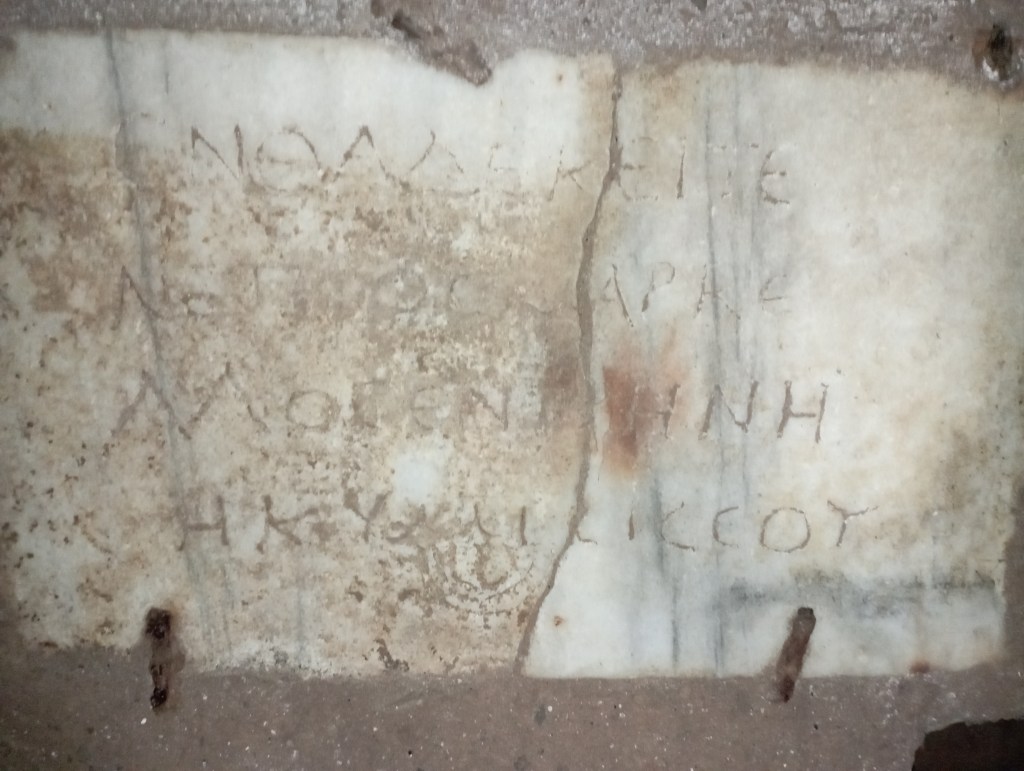
Most of the inscriptions are in Greek, the most widespread language in the eastern part of the empire, just as St. Peter’s tombstone found under the Vatican Basilica.
The Jewish community lived mainly in Trastevere, near the river port, had prosperous commercial activities across the Mediterranean Sea and was well integrated in the Roman society. Julius Cesar had established that Judaism was a licit religion and the Jews had several synagogues.
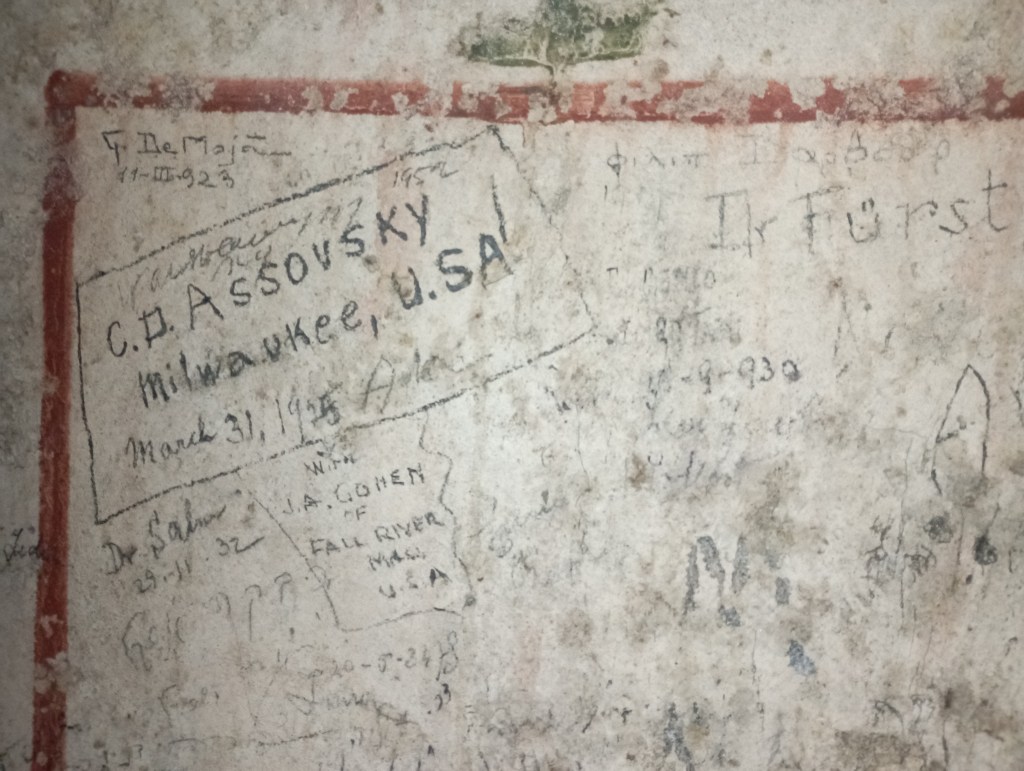
The Vigna Randanini catacombs were visited several times after the discovery and were also used as a refuge during WWII, proved by the several graffiti left.
The kozim served to contain the body for a year until complete putrefaction following which only the bones were placed in the ossuary since it was believed that the flesh weighed down the soul.
The most common Jewish symbols on tombstones are:
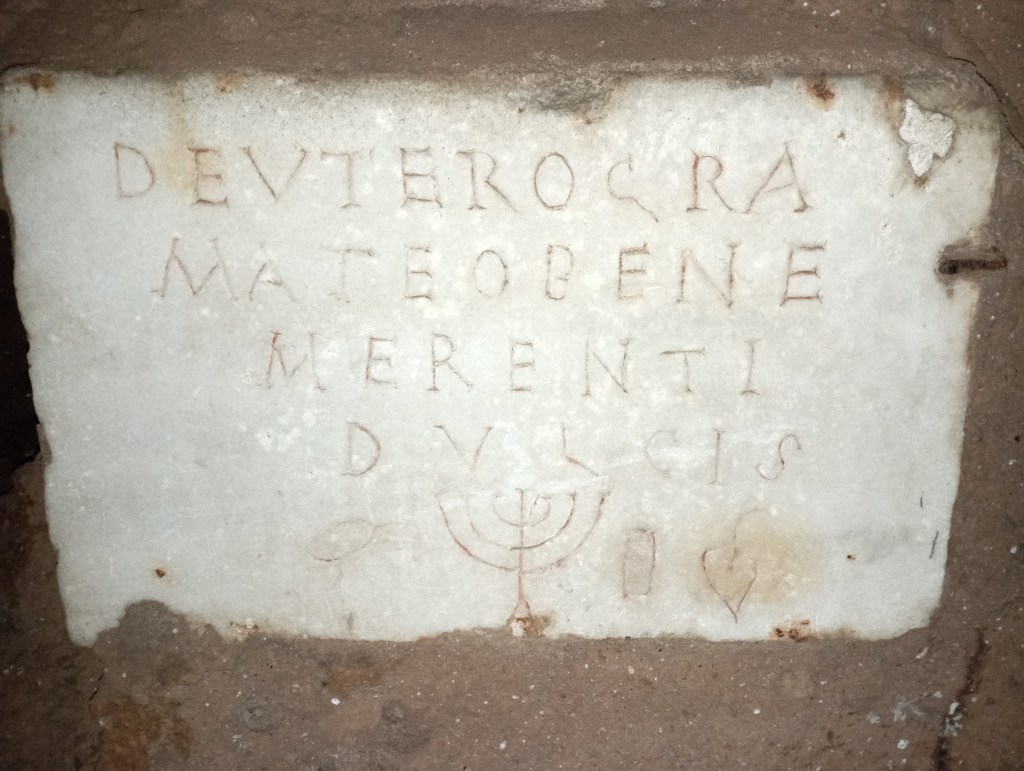
-the Menorah, the seven-branched candelabrum (sometimes equipped with oil lamps, a drainer and a vase for oil);
-the Aròn Ha-kodesh, the cabinet containing the sacred texts or the five scrolls of the Sefer Torah (the Pentateuch);
-the ethrog, the cedar symbol of durability frequently combined with the lulàv, the palm branch symbol of justice (which in the Christian world will become a symbol of martyrdom);
-the shofar, the ram’s horn;
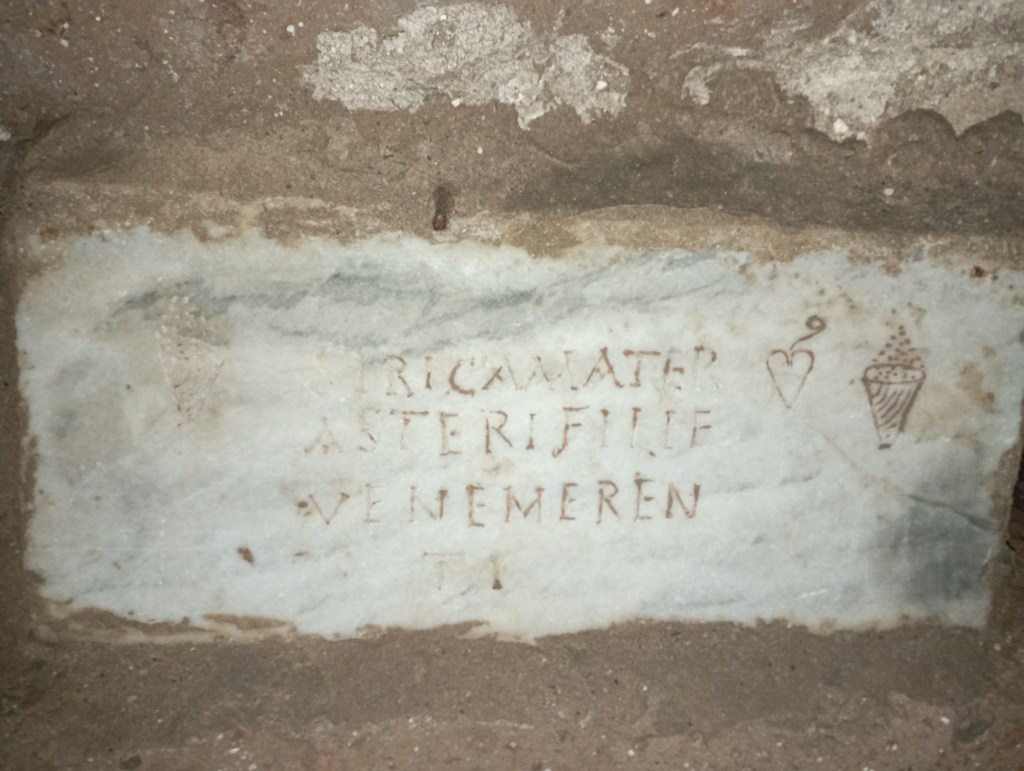
-the ivy (as in marble slab below).
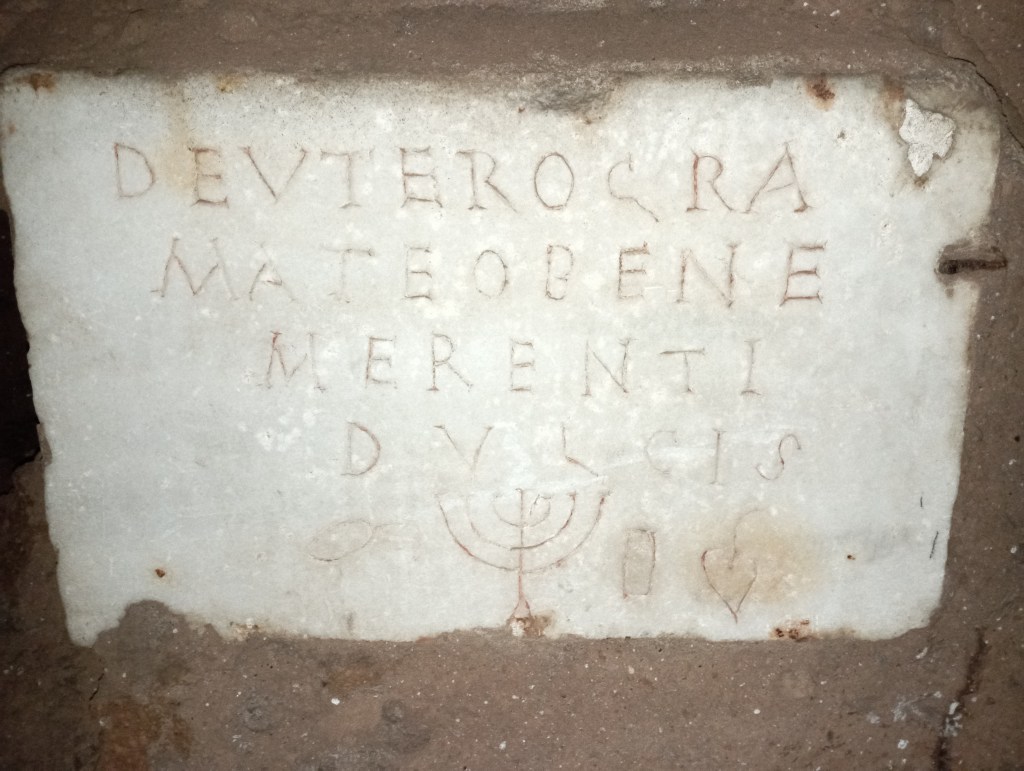
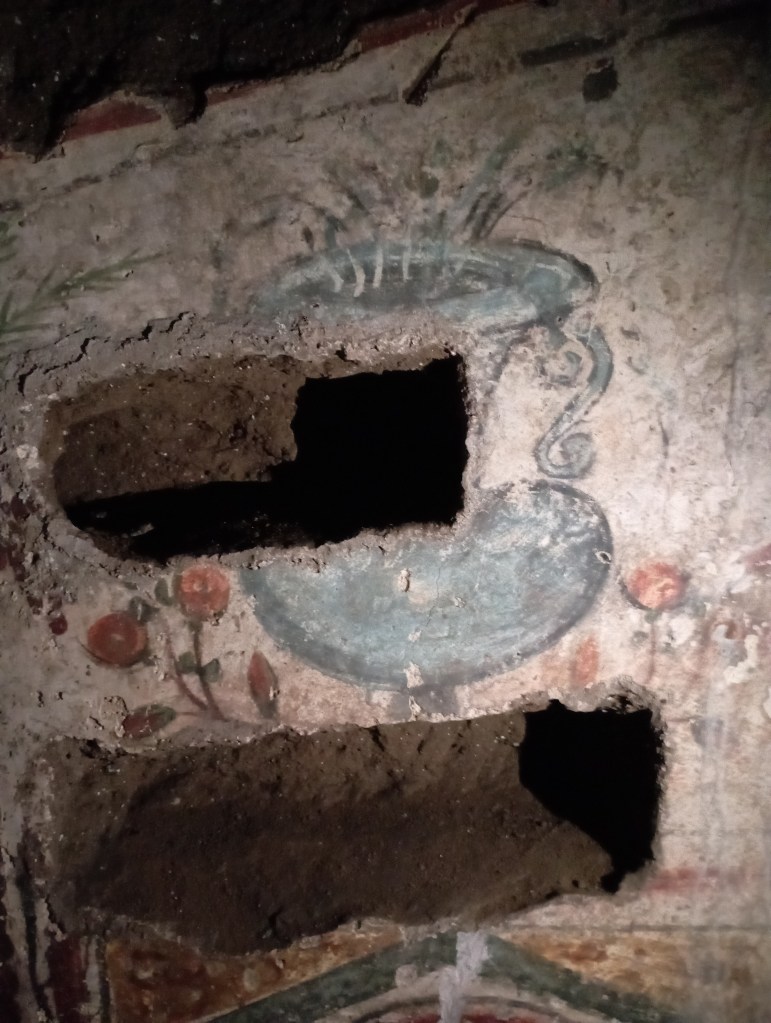
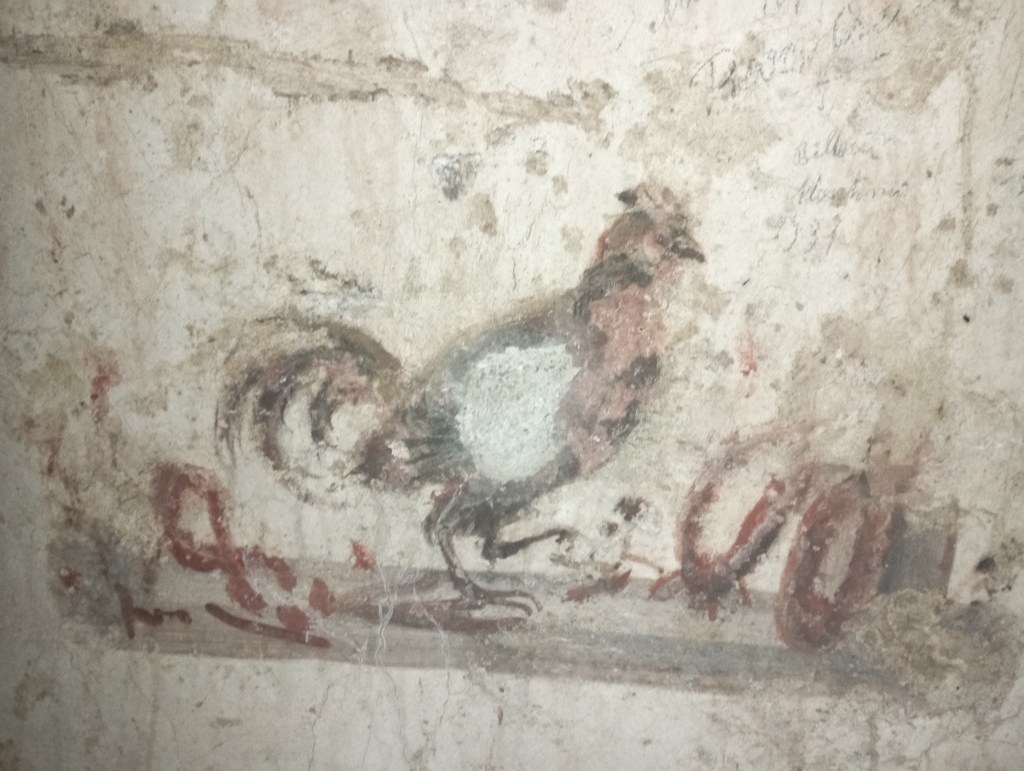
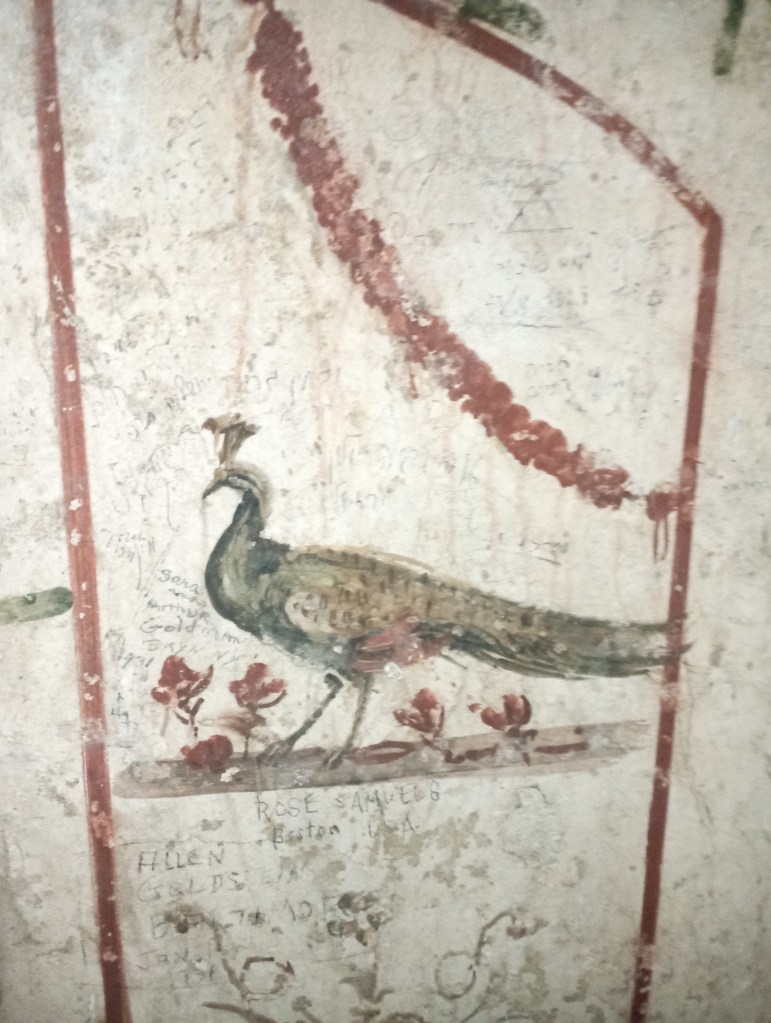
The pomegranate is a symbol of life, the peacock of eternity, the jug with water is a symbol of life, the date palm a symbol of Judea and the diaspora.
In the Menorah Cubicle we see an arcosolium tomb containing the sarcophagus of the owner of the room with a Menorah above it and other lateral ones (probably from the same family) including some children near the access door. Above are geometric decorations in red with others in yellow that have almost completely disappeared. In the side spandrels we find ethrogi (cedar symbol of durability).
In the Palm Cubicle are four date palms (Judea and diaspora) on all four sides and a Menorah. Subsequent to the decorations, when it was still in activity, massive interventions were carried out to obtain new funerary spaces both on the vault which was broken down and on the entrance wall for children’s depositions. This damaged the paintings. Also present here is a vase (kantharos) with water, a symbol of purification before the ceremonial.
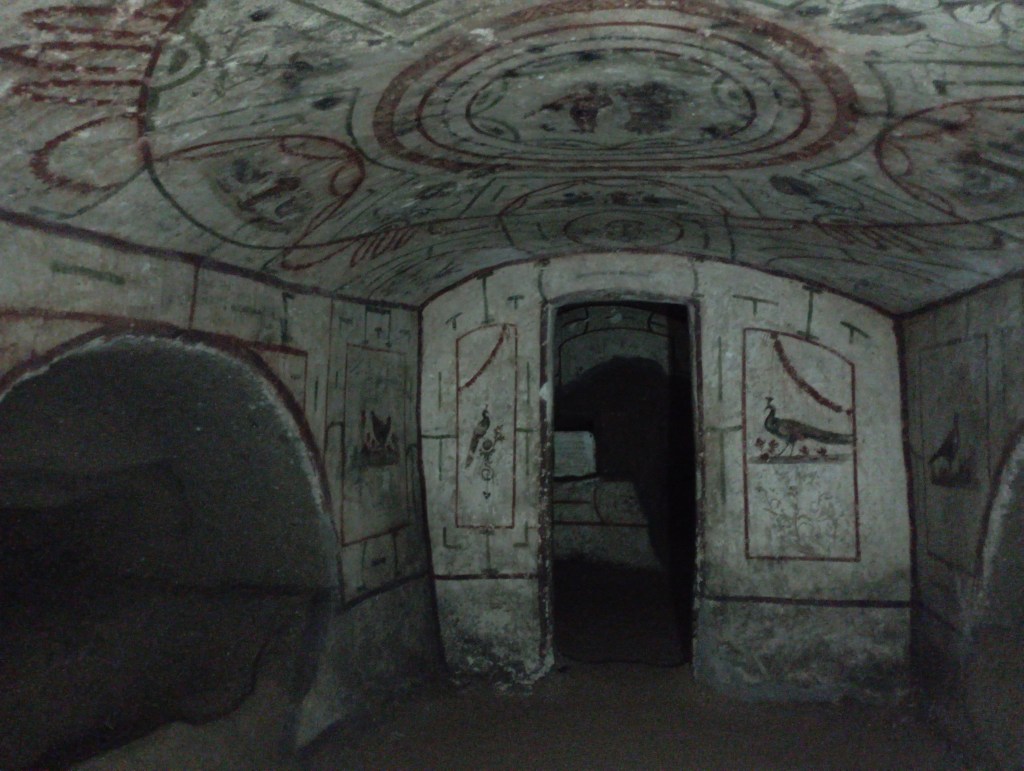
In the Pegasus Cubicle, probably of pagan origin, we find winged horses that carried the deceased to the underworld. Its decoration interpreted as pagan contrasts with the presence of oriental kochim so that some scholars hypothesized its Jewish origin. There is the presence of graffiti left by visitors and refugees during the Second World War. (Symbology: see notes 31,32,33 p. 57-58.)
Central clypeus at the top depicting winged Nike with palm branch, tunic and woman veil (pallium) offering a laurel wreath to a heroically-naked young man holding quiver and flowering branch. There is another depiction of a Fortune allegory, a woman holding a horn of plenty (cornucopia) and offering libation from ceremonial bowl patera.
At the four corners, the genes of the seasons representing the passage of time.

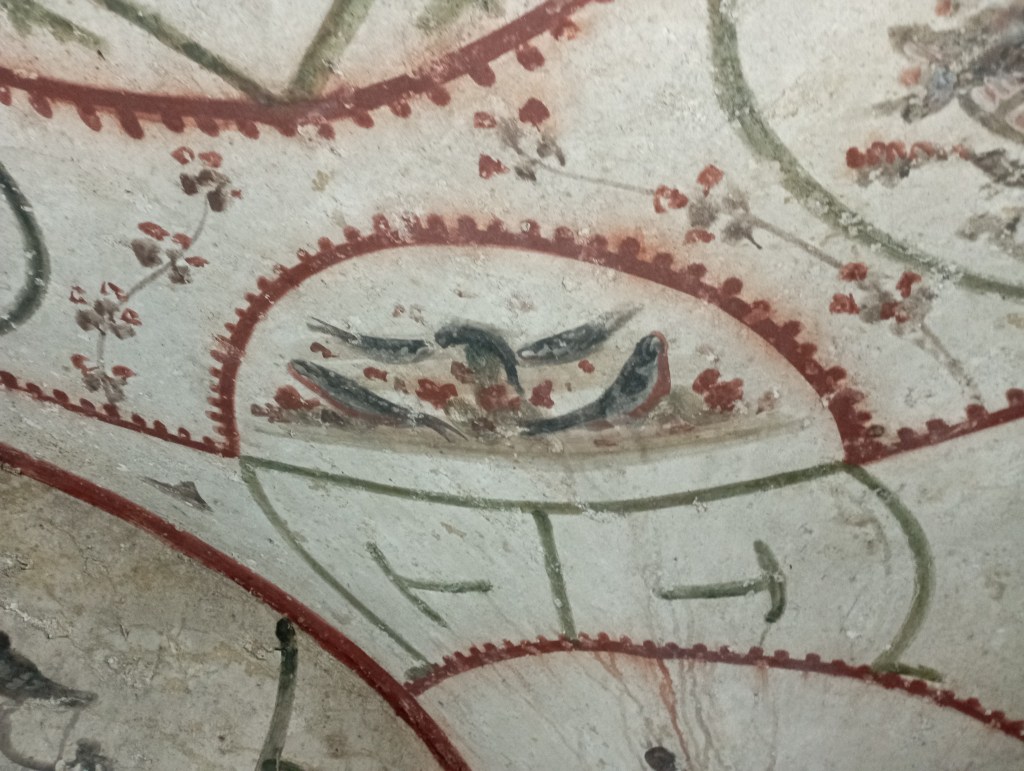

In the Tomb of the little girl who died at the age of four we find:
Ark of the covenant, lulav, spinning top (symbol of childish play) or oil container, ethrog and an erroneous inscription (bixit instead of vixit)
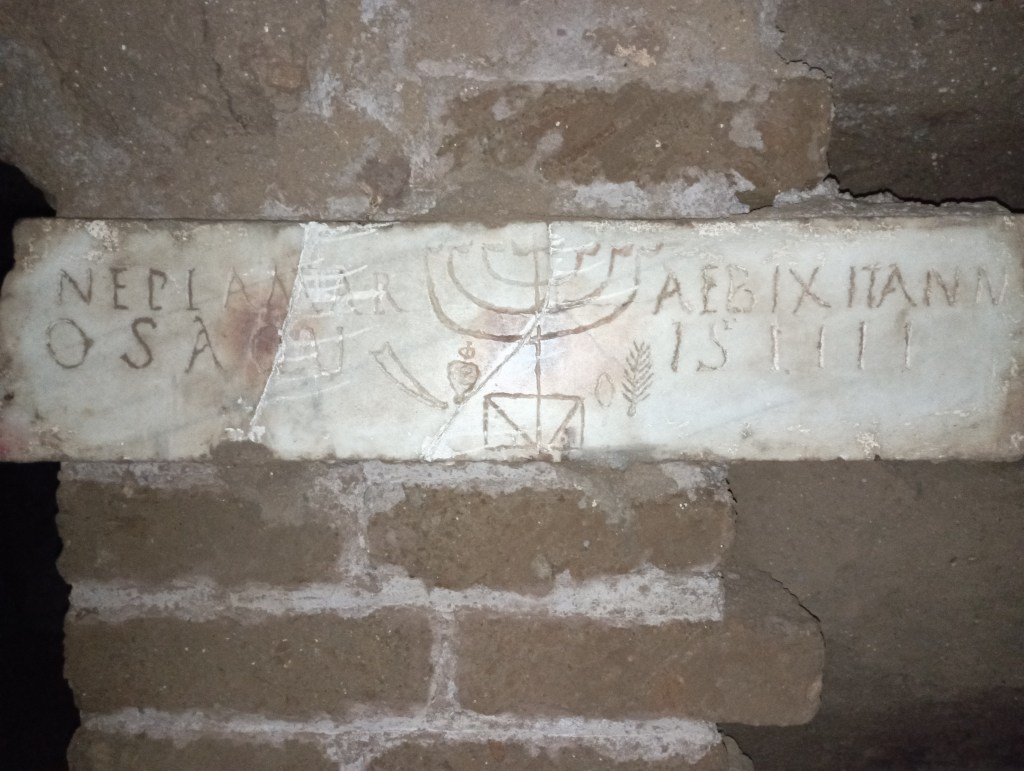
The Tomb of Petronius Grammateus (secretary, clerk)who lived twenty-four years was dedicated by his father Onoratus Grammateus and his mother Petronia.
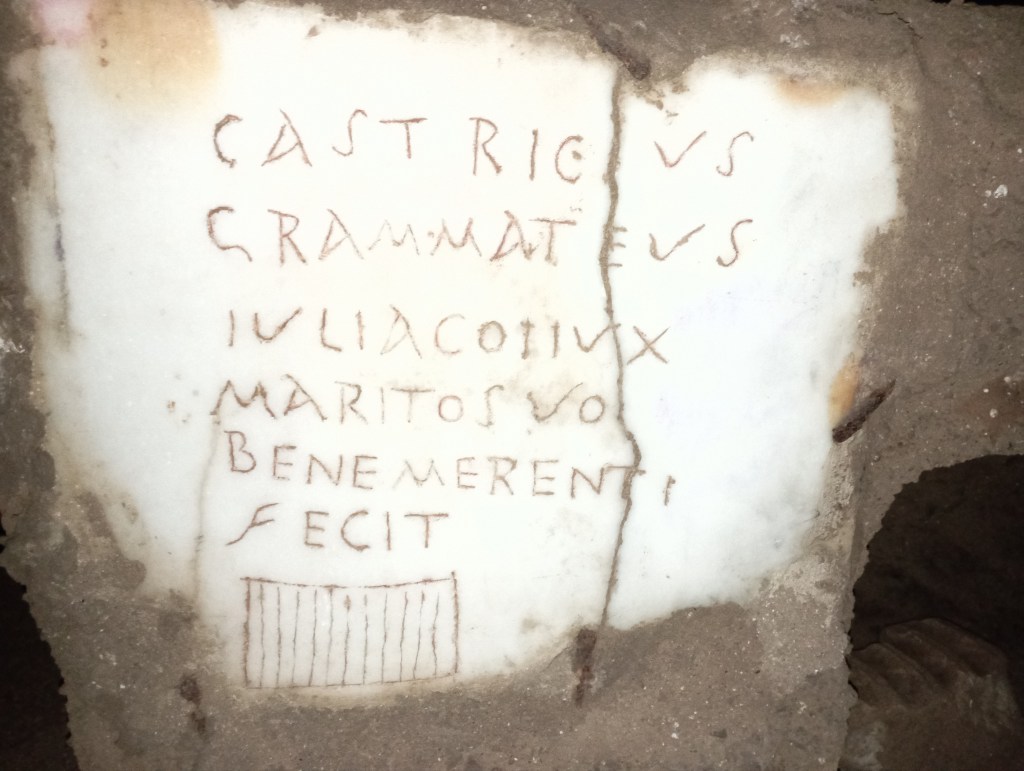
The Tomb of Castricus Grammateus (secretary, clerk) was dedicated by his wife Julia to her beloved husband including the symbol of the Torah





CONTACT ME FOR A PRIVATE TOUR OF THE JEWISH CATACOMBS AND THE ANCIENT APPIAN WAY
 | Maurizio Benvenuti Official Rome Tour Guide  +39 3275495465 +39 3275495465 www.maurizioromeguide.com ✉️ maurizio.benvenuti@hotmail.com Rome, Italy |
 Maurizio Rome Guide