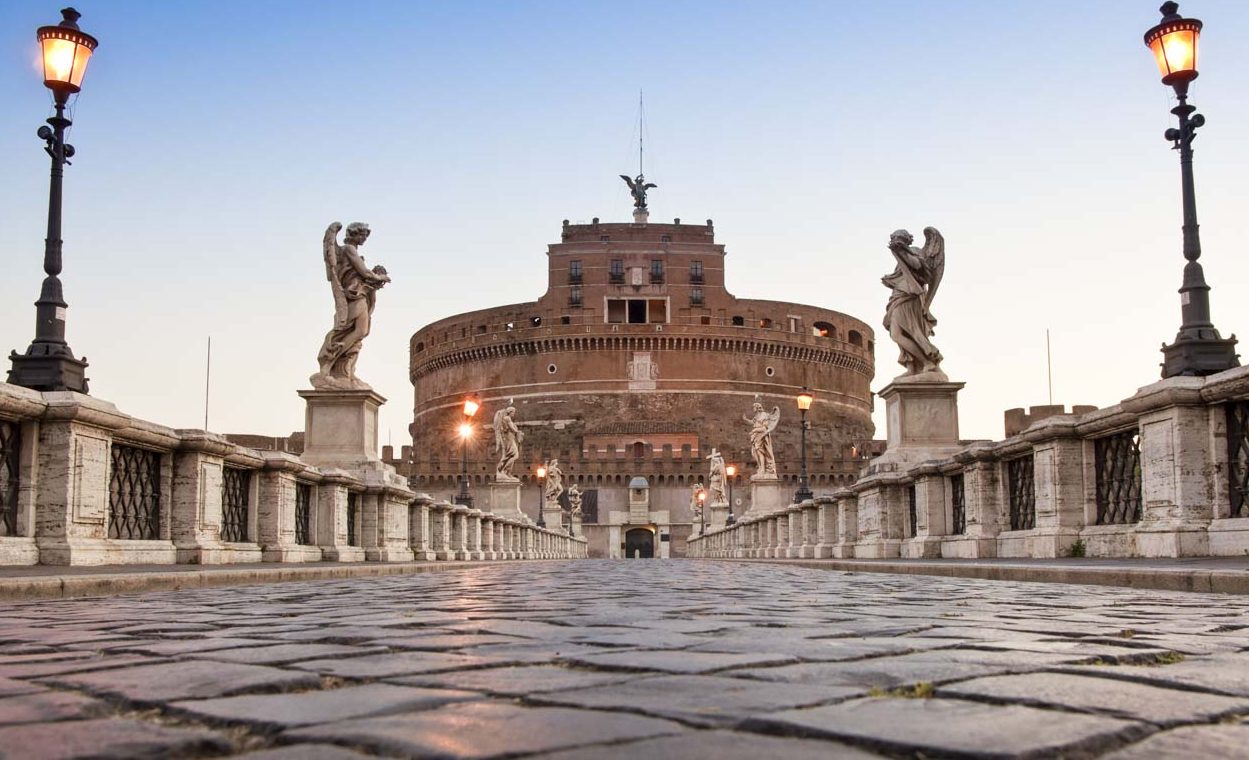
The seven pontifical virtues are: Three theological virtues (concerning God): Faith (white), Hope (Green) and Charity (Red); Four cardinal virtues (related to the human soul and enunciated by Plato): fortitude, justice, prudence and temperance (moderation). Allegories are personifications of ideas, virtues and vices commonly used in the universal artistic language of painting and sculture
Category Archives: History
Vicus Caprarius (the city of water)
Vicus Caprarius (by the ancient niche with image of a goat) is located 9 meters below the current level and came to light during the renovation of the Trevi Cinema between 1999 and 2001 by the current owner, Cremonini Group. Archaeologists found an insula built under Nero as a testimony of the Nova Urbis thatContinue reading “Vicus Caprarius (the city of water)”
Forum of Peace
In 70-75 AD. at the end of the civil wars for the succession to the Empire and the bloody repression of the Jewish revolt, the Emperor Vespasian built a sanctuary dedicated to Peace called the Forum of Peace consisting of a large square with porticoes. The complex became part of the five Imperial Forums, theContinue reading “Forum of Peace”
The Ghetto of Venice (the oldest in the world)
The word ghetto had nothing to do with Jews or segregation.It derives from a place in Cannaregio (Venice) where the waste from copper processing was thrown.In 1516 the area was chosen as a place where the Jewish community could live, with lots of restrictions, and nevertheless many Jews moved there to find refuge from theContinue reading “The Ghetto of Venice (the oldest in the world)”
The Square Colosseum of Rome
The building in the picture is commonly known by Romans as the ‘Square Colosseum’. The real name is ‘Palazzo della Civiltà Italiana’ and is located in the EUR neighborhood, a district with modern buildings recalling ancient monumentality. It was started by Italy’s dictator Benito Mussolini in the 1930s with the aim of hosting ‘Rome’s UniversalContinue reading “The Square Colosseum of Rome”
Divine in Nature
There are Golden Ages in the history of humanity, periods in which some men are particularly intellectually enlightened and this often coincides with periods of particular economic prosperity that allows the affirmation of visionary geniuses. One of these was the Renaissance, in which even Popes appreciated the ideal canons of beauty of the ancients, despiteContinue reading “Divine in Nature”
S. Paul Outside The Walls
It is one of the four major basilicas of Rome and the only one located outside the ancient walls. It was originally built by the Emperor Constantine by the Necropolis (city od the dead) of Via Ostiense, on the burial place of the Apostle Paul who had been condemned to be decapitated at the currentContinue reading “S. Paul Outside The Walls”
Dictatorship in Ancient Rome…and how they usually start (historia magistra vitae)
Since the expulsion of the last King, Tarquinius the Proud, accused of abuses and injustices, the Romans had reorganized their society by founding the Republic (509 BC), a community in which the People could participate more in public affairs (res publica) and the power was divided between various figures such as consuls, magistrates, senators whoContinue reading “Dictatorship in Ancient Rome…and how they usually start (historia magistra vitae)”
Heroic nudity in Ancient Rome
In Roman times we can find eminent public figures represented serenely in ‘heroic nudity’ as benefactors of the community and defenders of the homeland at a time when the Honor of great heroes was considered a desirable virtue. During the Olympic Games held at stadiums, as the one built by Domitian under Piazza Navona, theContinue reading “Heroic nudity in Ancient Rome”
The library of Alexandria
In Alexandria of Egypt in the third century. B.C. were born the Museum (institution sacred to the Muses, protectors of intellectual activities) and the Library. The first offered all the equipment for medical, biological and astronomical investigations; the second offered the entire literary production of the Greeks. The complex created by the Ptolemies became theContinue reading “The library of Alexandria”
Why were Ancient Romans in conflict with Christians?
In ancient Rome, Central Power was guaranteed among the population thanks to highly skilled techniques partly still in use even today in some Modern States: an ideology and a common thought of which to feel part of as a community; participation in frequent ludic-religious festivals in theaters, circuses and amphitheaters (which in fact were state-owned);Continue reading “Why were Ancient Romans in conflict with Christians?”
Discovering ancient Alba Fucens in wild Abruzzo
The city of Alba Fucens was founded by the Romans in 303 BC along the Via Tiburtina Valeria, in a strategic place placed at the confluence of important roads from which it was possible to easily control the surrounding area, previously inhabited by the people of the Equi. Today it is in Abruzzo, one ofContinue reading “Discovering ancient Alba Fucens in wild Abruzzo”
The Jews of Rome: the oldest living community
The Jews of Rome are the oldest Jewish community in the Western World that was able to survive the Pagan Time, the Middle Age, the Papacy, the Inquisition and the nazi persecution. It is a living community, the oldest of Rome, even older than the cristian one considering that their presence in the Eternal City is recorded since the 2ndContinue reading “The Jews of Rome: the oldest living community”
Pictures from The Vatican
With its 44 hectars (109 acres) surrounded by 5 kms of walls, The Vatican is the smallest country in the world, ruled by a king and a college of cardinals officially established as a state in 1929 following the signing of the Lateran Agreement between Benito Mussolini and Pope Pius XI which clarified the dispute raised after theContinue reading “Pictures from The Vatican”
Roman Carnival (Carnevale Romano)
The Roman Carnival has been one of the most colorful events in the history of the city. Possibly deriving from the pagan festivities of the Saturnalia that in roman times celebrated an ideal archaic period when the god Saturn ruled a world of equality and no trace of slavery was on Earth. The masquerades levelContinue reading “Roman Carnival (Carnevale Romano)”
Triumphs and Laments (Trionfi e Lamenti) – William Kentridge
William Kentridge is a renowned artist from South Africa who decided to leave a temporal trace over the banks of the Tiber river removing the silt brought over them in the last decades. The pictures He designed on these huge cartoons recall the ancient and modern history of the eternal city in a musical parade that blends mostContinue reading “Triumphs and Laments (Trionfi e Lamenti) – William Kentridge”
The Vittoriano National Monument – (Il Vittoriano)
The Vittoriano National Monument was built to celebrate the 50th anniversary of the Italian Unification (1861) and is also known as the Altar to Fatherland. Its construction started in 1885, was inaugurated in 1911 but was only completed in 1935 after 50 years of work. The Monument was designed by Giuseppe Sacconi and completed afterContinue reading “The Vittoriano National Monument – (Il Vittoriano)”
Tivoli: the dream of many
Tivoli is a very old settlement and, from its 235 meters above sea level, looks towards its historically rival city of Rome. The modern town has 60,000 inhabitants, is located 33 kms east of Rome and has the imperial eagle on his flag permitted by Frederick Redbeard in the XII century. Its citizens are proudContinue reading “Tivoli: the dream of many”
Maps of Rome
Here you can find a variety of ancient and modern maps related to our city and territory
Brief history of the Colosseum
“When the Colosseum falls, Rome will fall; when Rome falls, the entire world will fall” Venerable Veda WAS THE COLOSSEUM THE FIRST AMPHITHEATER IN ROME?Absolutely not. With increasing importance and prestige, the gladiator games deserved a better location than the simple city squares, set up for the occasion with temporary stands. In 52 BC Curione,Continue reading “Brief history of the Colosseum”
Pontifical Foundry Marinelli
In Agnone, Abruzzo, the tradition of merging and forging the metals is 2500 years old. The area had been inhabited by the Samnites since the Bronze Age and later taken by the Romans by the 3rd century BC. During the Middle Age, probably due to the conventual nature of the rich and industrious city, itContinue reading “Pontifical Foundry Marinelli”
The Pantheon and its Archeoastronomy
My intention is that this sanctuary for all the Gods reproduce the similarity of the terrestrial globe and the spheres of the planets. The dome must reveal the sky through a large opening in the center, alternatively showing light and shadow Hadrian The first structure was built between 27 and 25 BC by Marco VipsanioContinue reading “The Pantheon and its Archeoastronomy”
The hidden frescoes in Ostia Antica
Ostia is the archaeological site in the world with the largest number of stone mosaics. However, not many people have a chance to see the ancient but still well preserved frescoes inside the houses in Ostia Antica, the oldest seaport of Rome, 20 kms south-west of the historic centre. Frescoes were produced by experienced and talentedContinue reading “The hidden frescoes in Ostia Antica”
Domus of Fortuna Annonaria in Ostia Antica
There’s many places where I love walking around in Ostia Antica and one of them is definitely the Domus of the Fortuna Annonaria (food fortune). Domus is a latin word meaning house and specifically referring to an aristocratic house. Modern words as domestic and dome come from this root. Even just this site is worth the tripContinue reading “Domus of Fortuna Annonaria in Ostia Antica”
 Maurizio Rome Guide