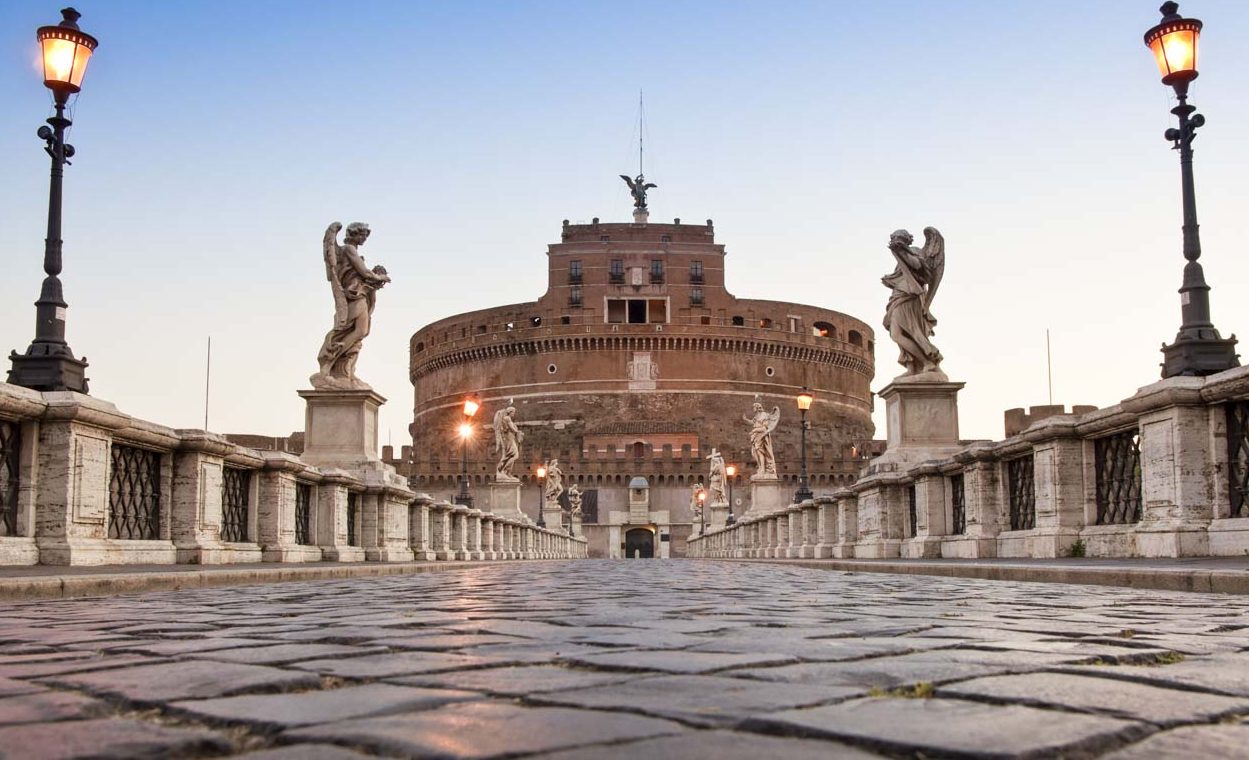

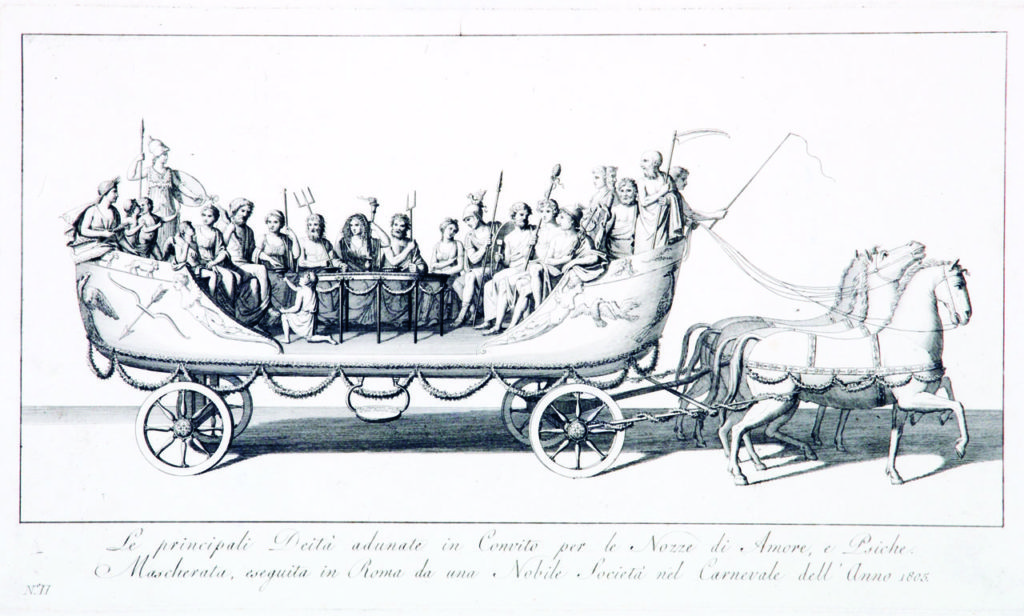
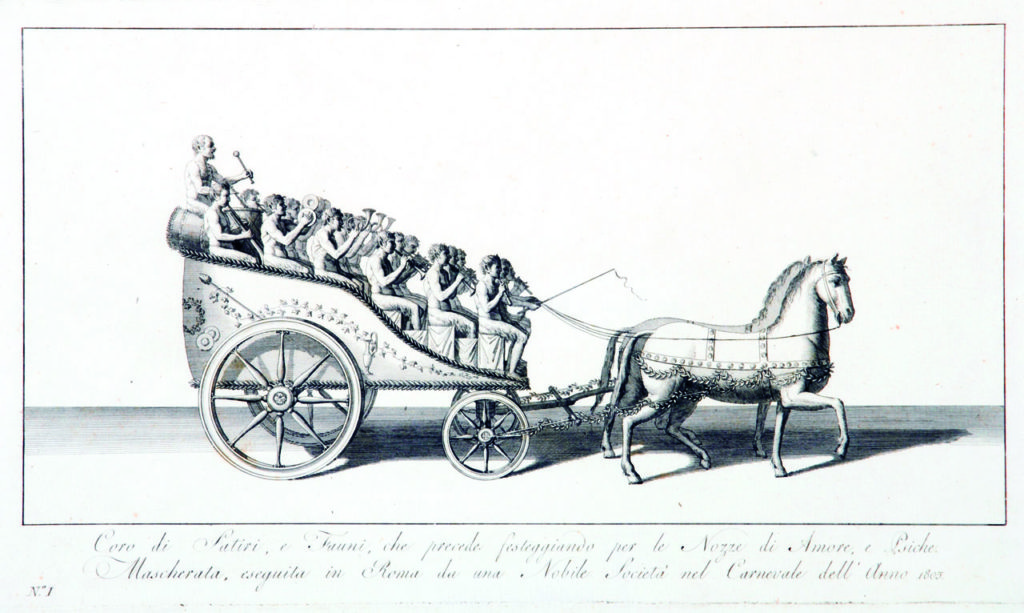
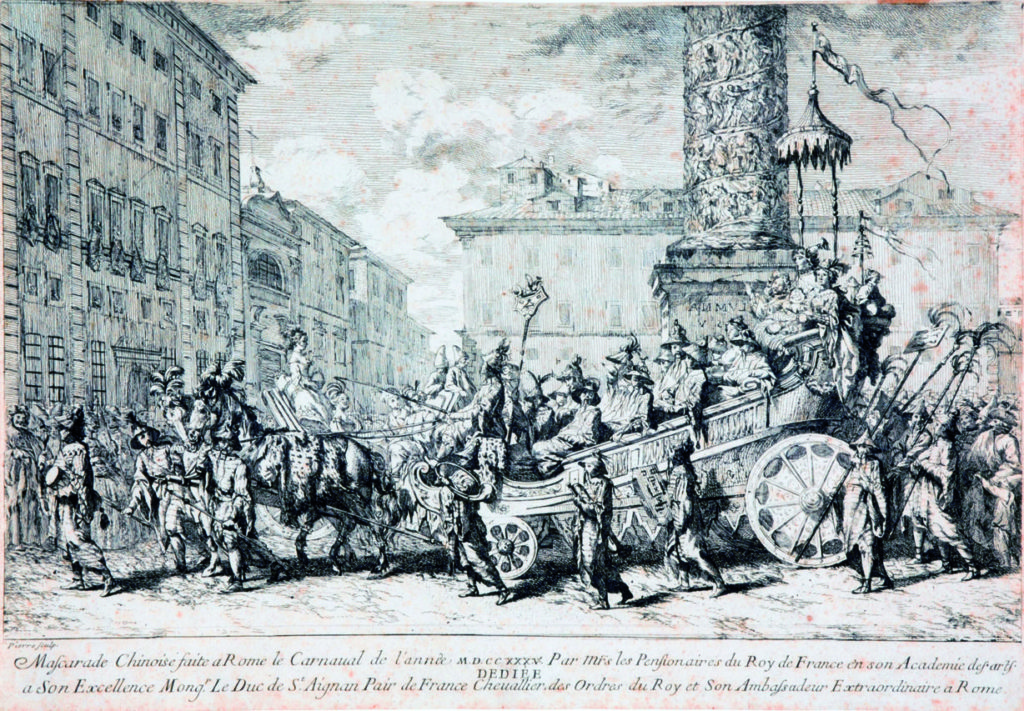
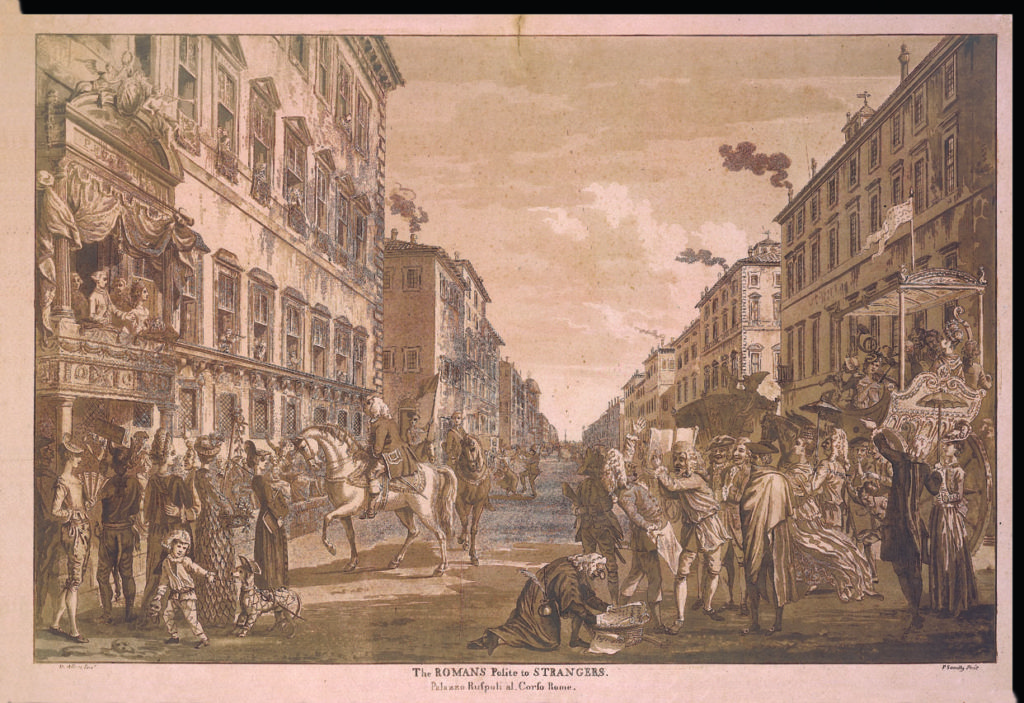
The Roman Carnival has been one of the most colorful events in the history of the city. Possibly deriving from the pagan festivities of the Saturnalia that in roman times celebrated an ideal archaic period when the god Saturn ruled a world of equality and no trace of slavery was on Earth. The masquerades level social differences by wearing masks and costumes and everybody gains a certain freedom during those days showing an hidden part of ourself, usually put away in the ordinary days.

Il Carnevale Romano è stato uno degli eventi più colorati nella storia della città. Forse derivante dalle festività pagane dei Saturnali che in epoca romana celebravano un periodo arcaico ideale in cui il dio Saturno governava un mondo di uguaglianza e nessuna traccia di schiavitù era sulla Terra. Le mascherate livellano le differenze sociali indossando maschere e costumi e ognuno guadagna una certa libertà in quei giorni mostrando una parte nascosta di noi stessi, solitamente riposta nei giorni ordinari.
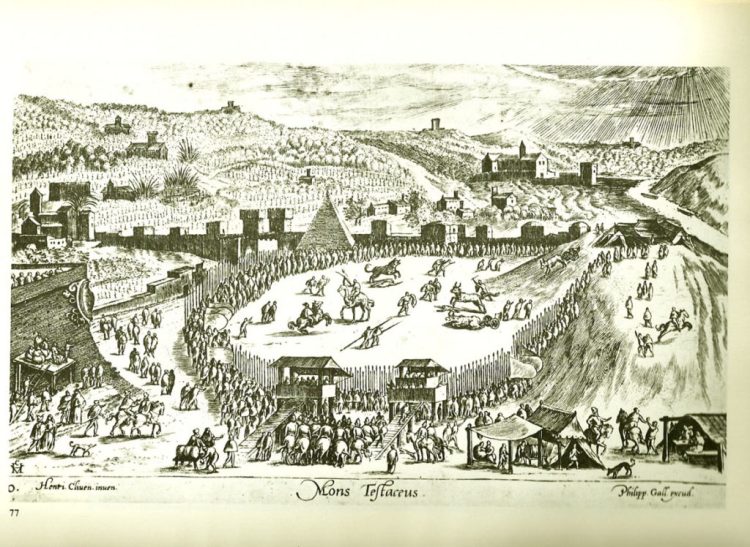
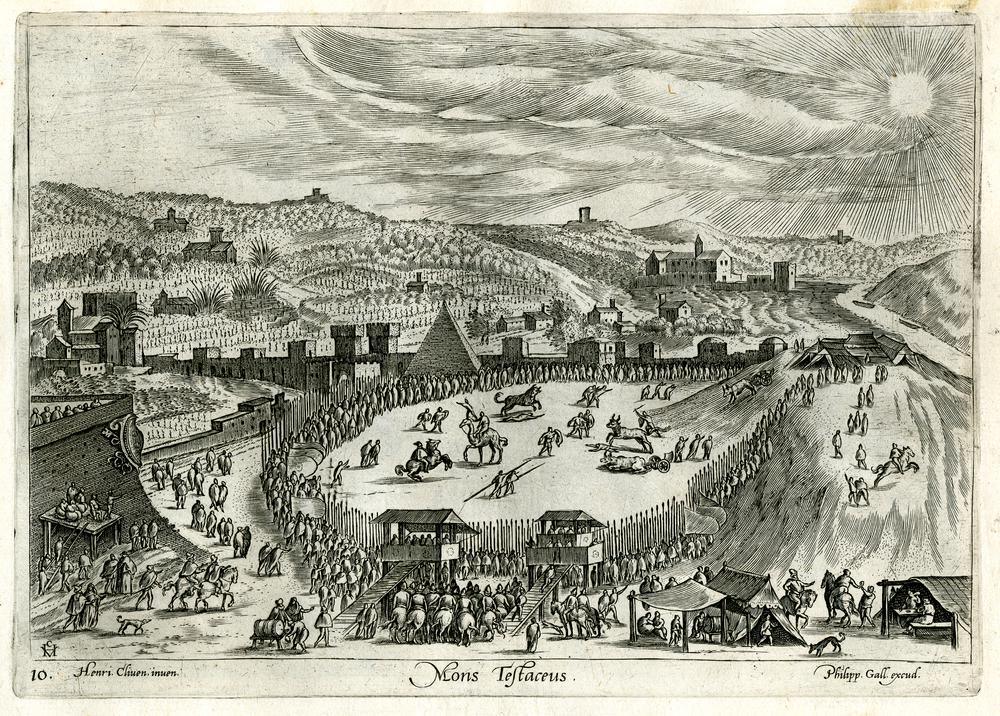
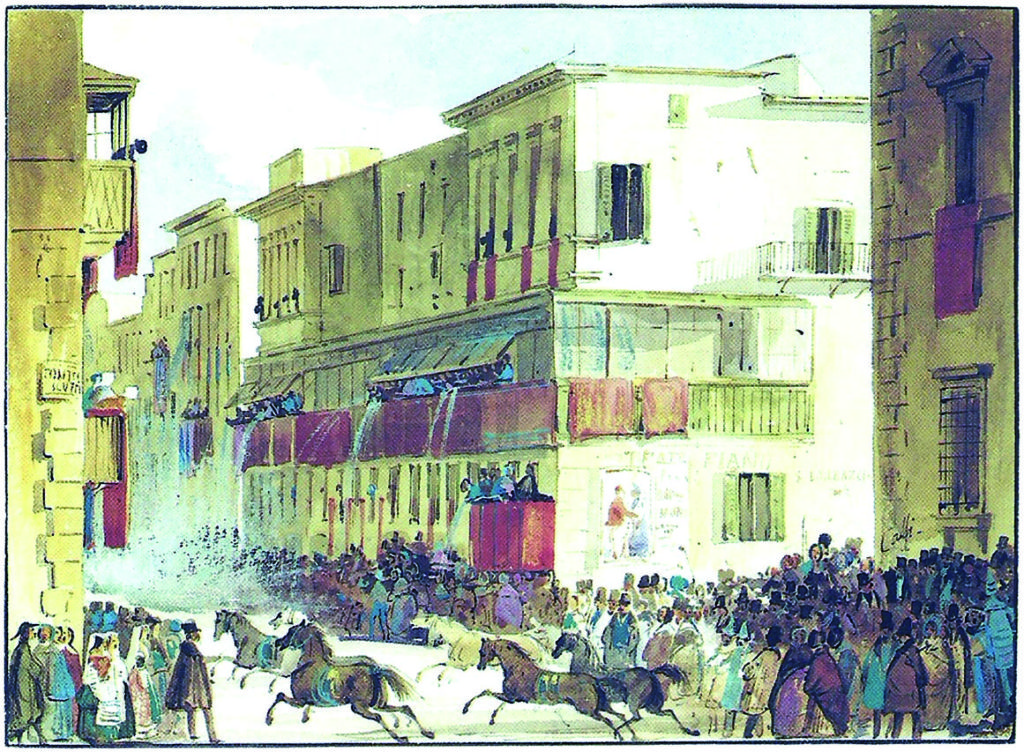
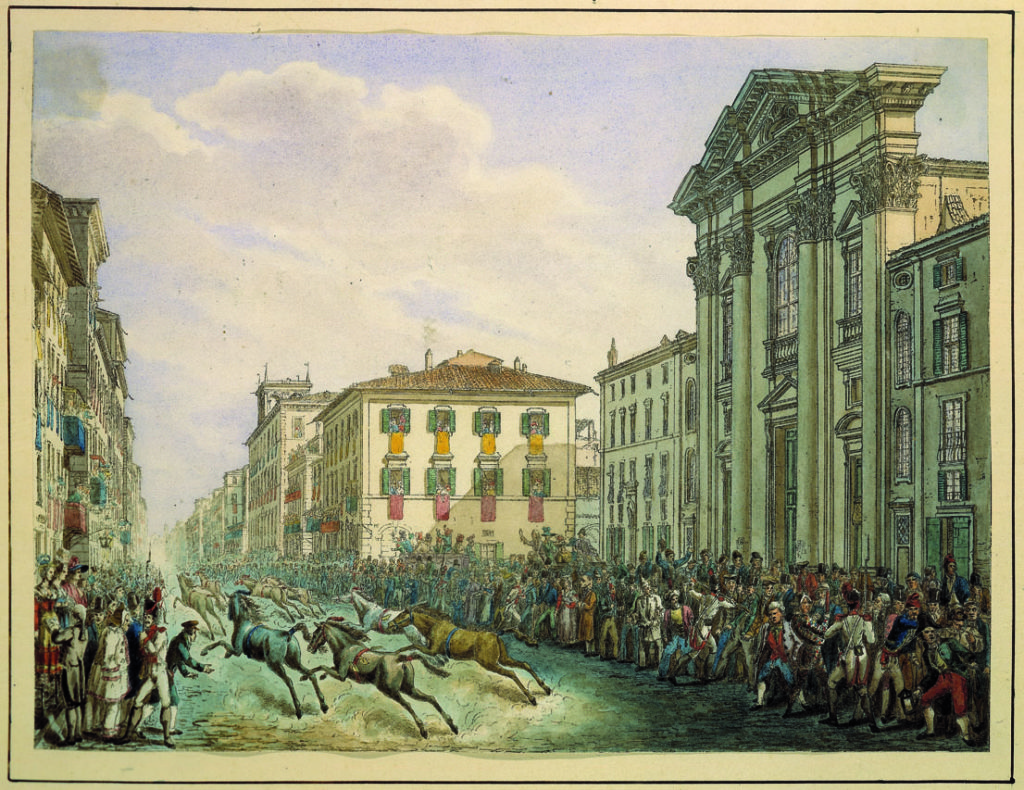
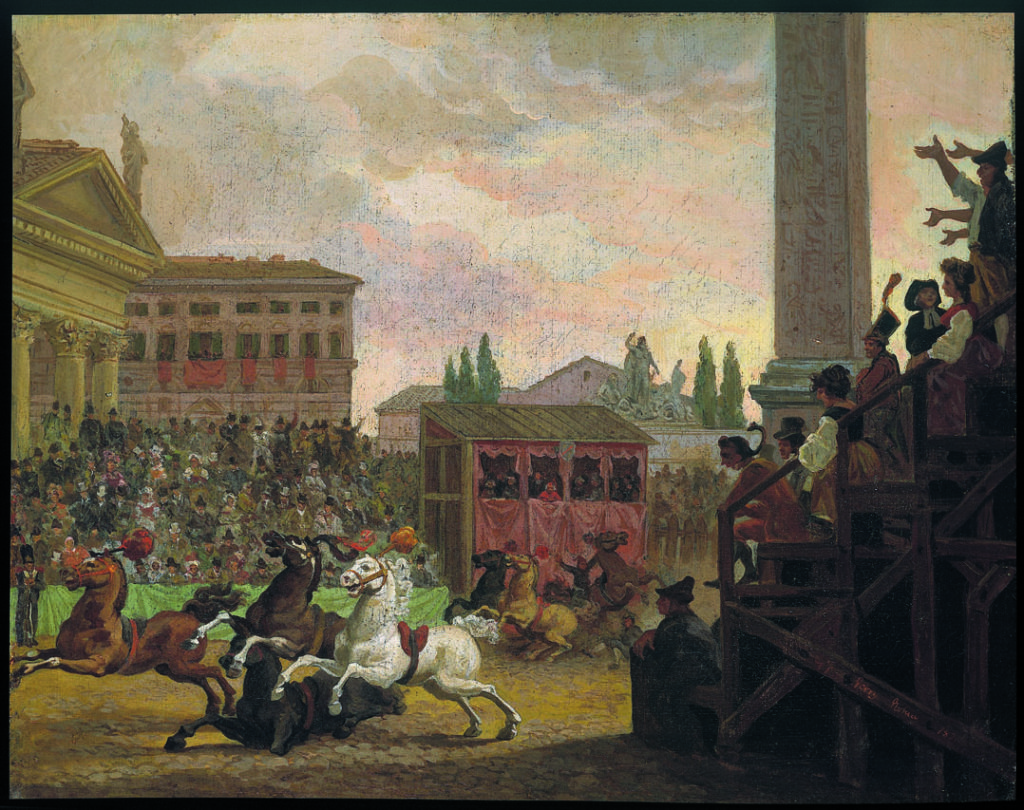
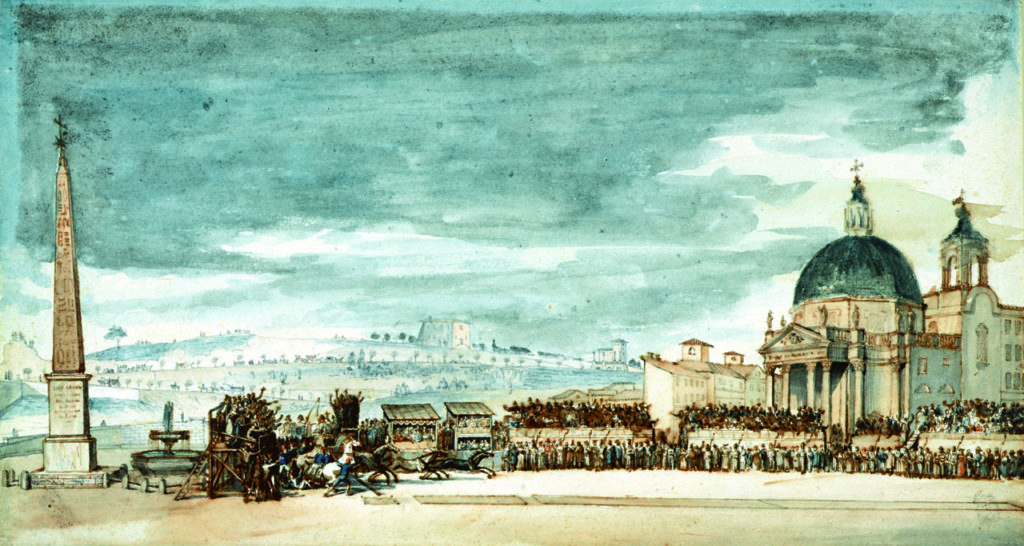
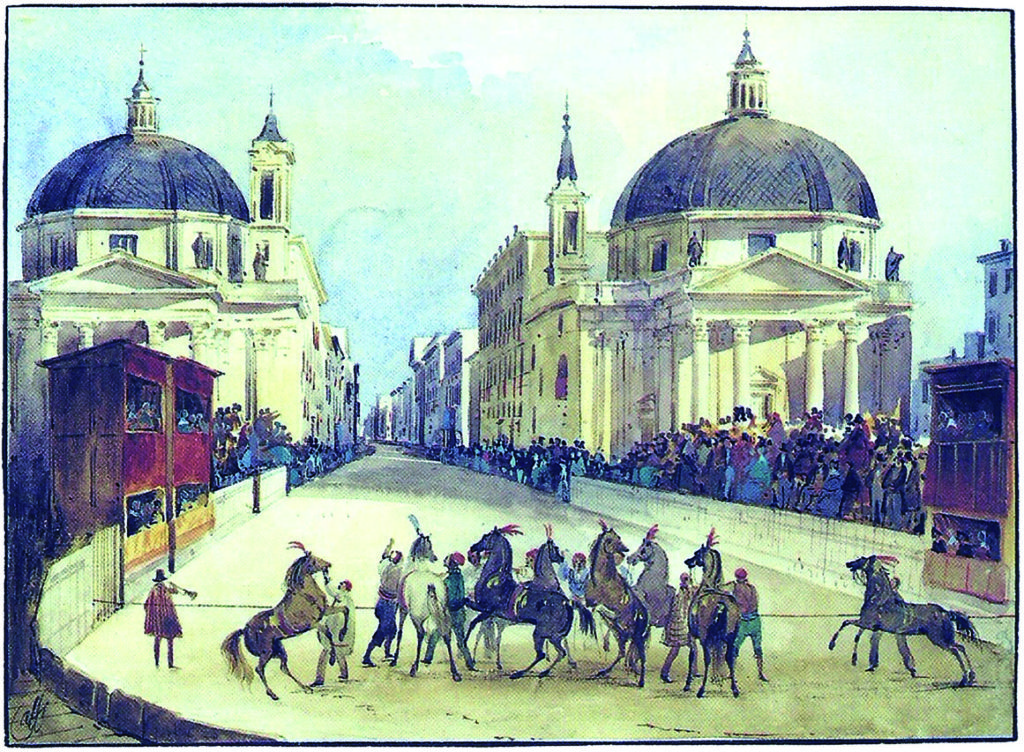
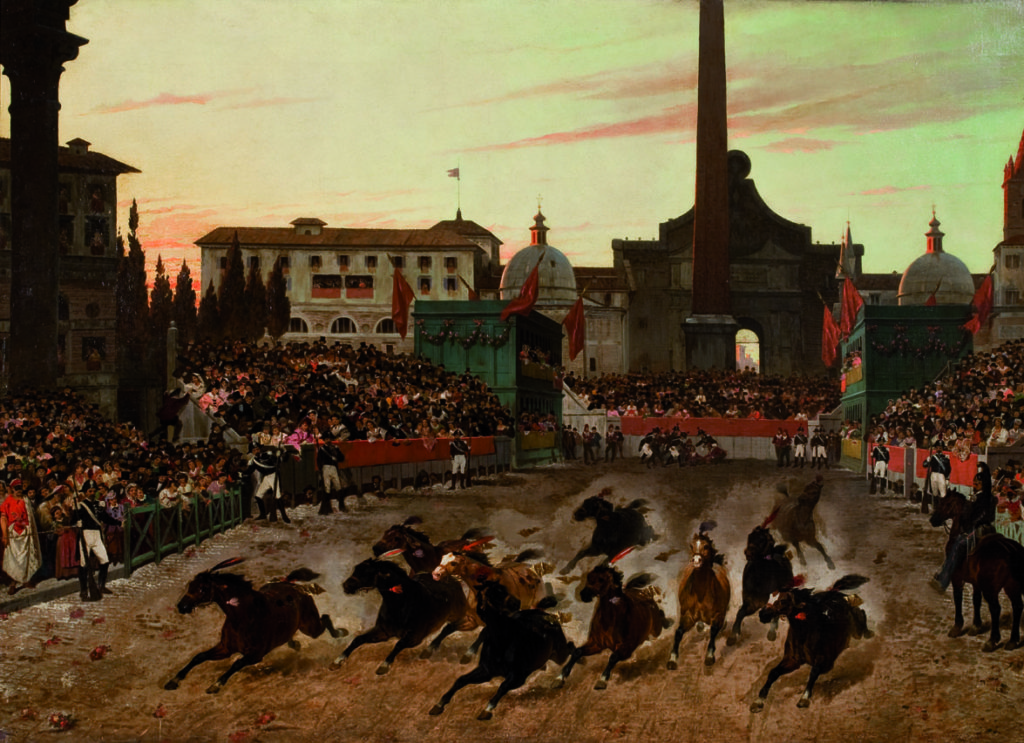
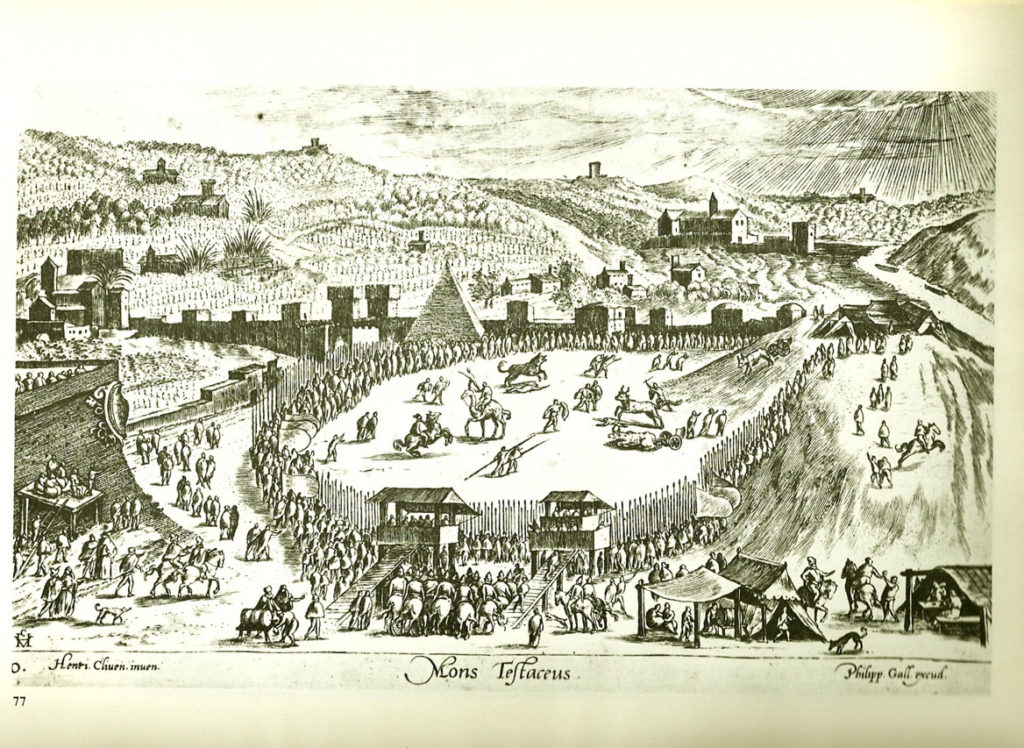
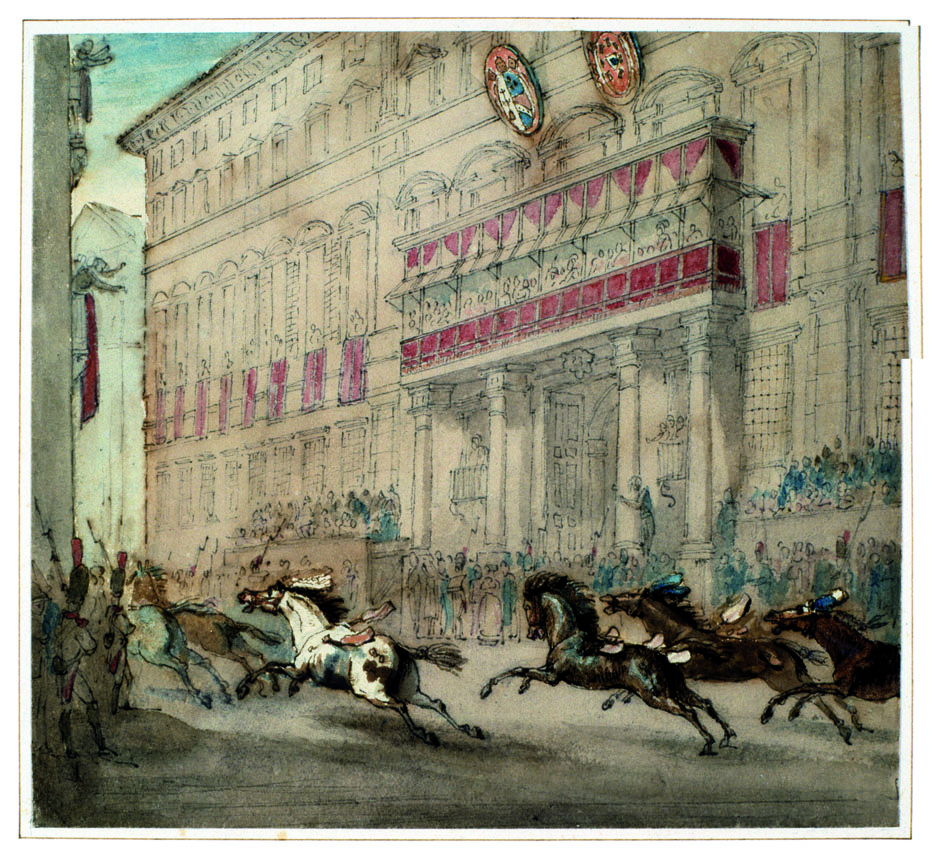
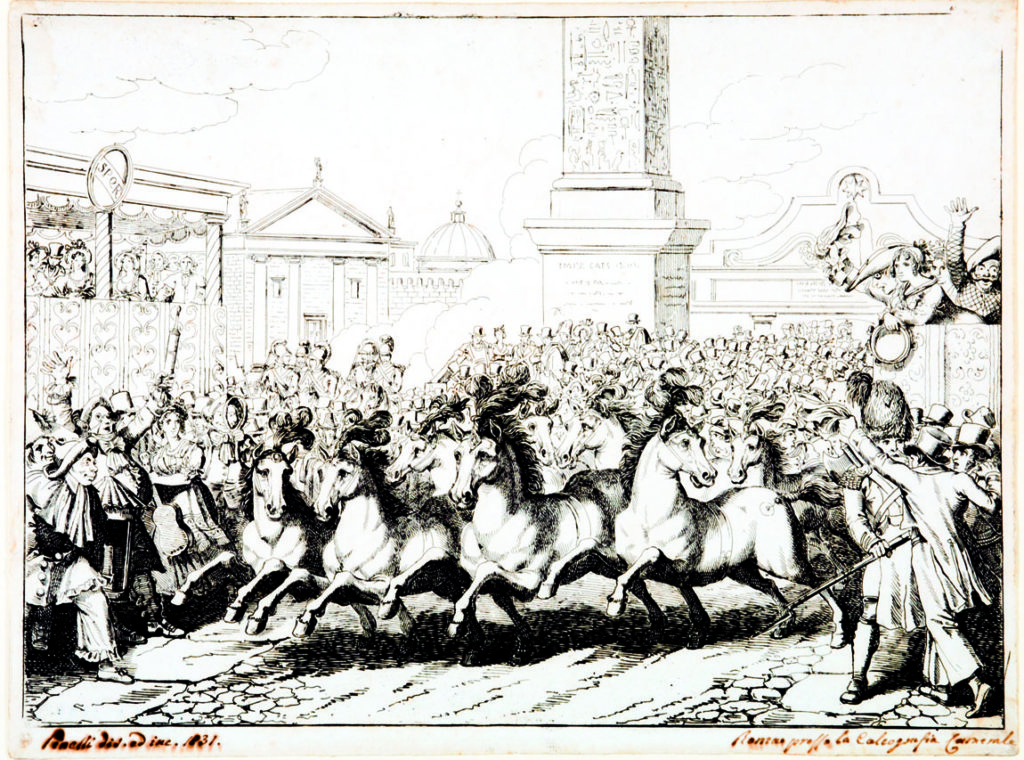
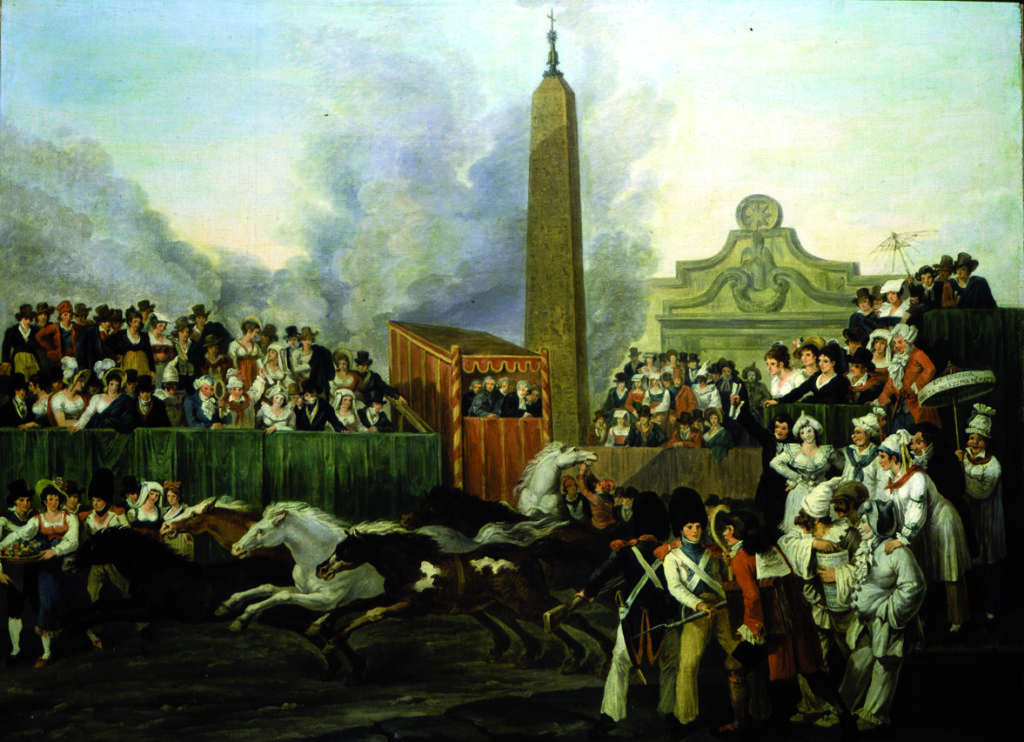
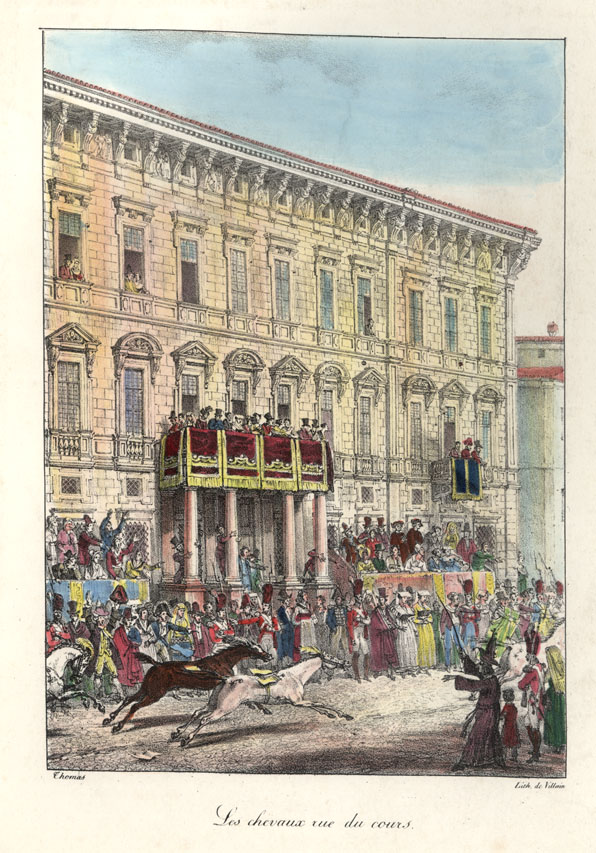
Since the first competitions between the roman rioni (districts) including bullfights in the areas of Testaccio and Agone (Piazza Navona), in 1466 Pope Paul II moved all the important celebrations to the central street, formerly named Via Lata, and then renamed Via del Corso due to the corsa (race) of the berber horses without jockeys. And this just in front of his brand-new palace in the old Piazza San Marco now known as Piazza Venezia.
Fin dalle prime gare tra i rioni romani comprese le corride nelle zone di Testaccio e Agone (Piazza Navona), nel 1466 Papa Paolo II spostò tutte le celebrazioni importanti nella via centrale, anticamente denominata Via Lata, e poi ribattezzata Via del Corso dovuto alla corsa dei cavalli berberi senza fantini. E questo proprio di fronte al suo palazzo nuovo di zecca nella vecchia Piazza San Marco ora conosciuta come Piazza Venezia.
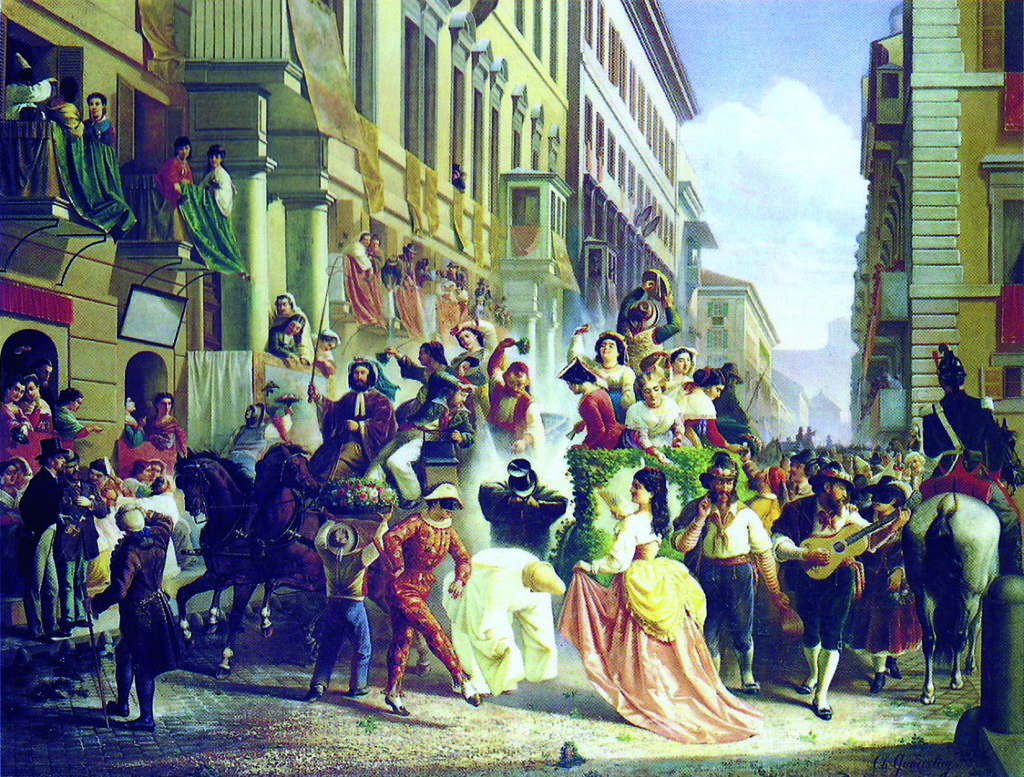
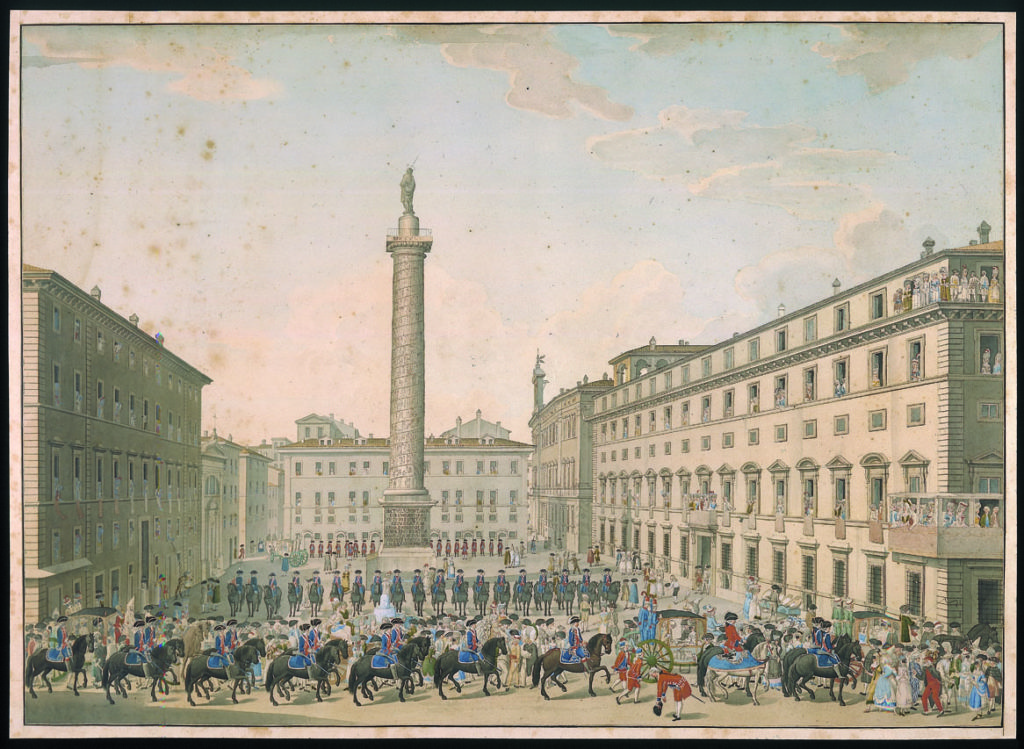
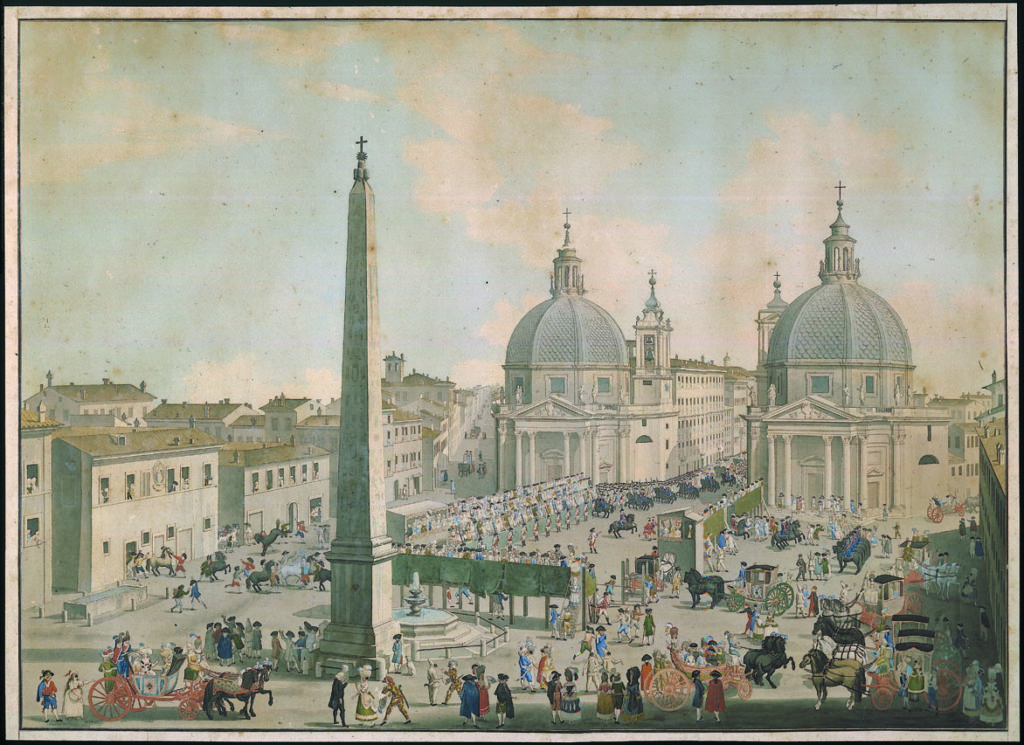
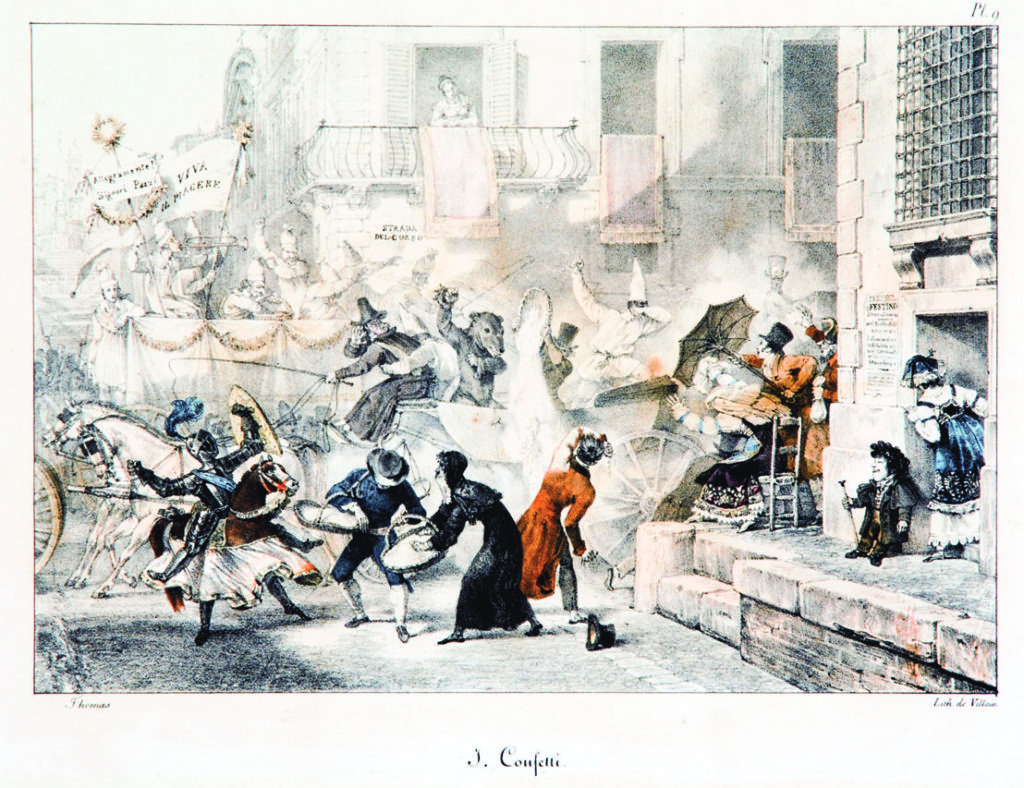
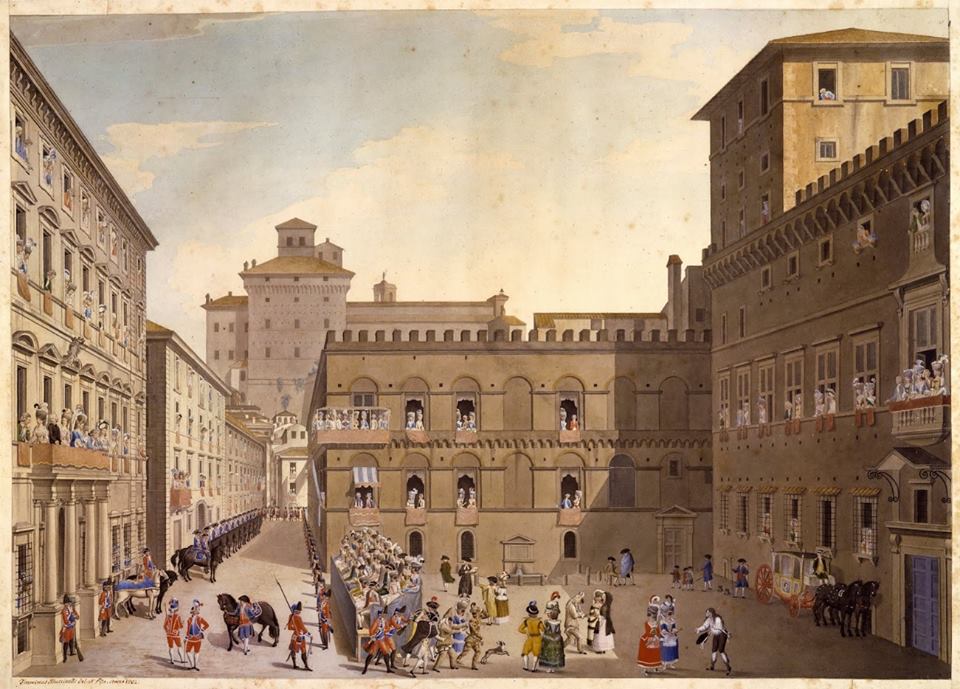
The Roman Carnival lasted nine days and started with an official parade of the Senator (the governor of the city) along the Corso and the ring of bells from the Town Hall on the Capitol Hill. Only after this ceremony, everybody was allowed to show off on the road with all different types of masks according to personal possibility and creativity including trades and typical italian characters such as Pulcinella, Harlequin and Rugantino; only military and ecclesiastical costumes were forbidden with the pillory always well visible as a deterrent to crimes. The balconies were adorned with colorful banners and flowers as people threw little chalk confetti at others making everybody look, at the end of the day, as whitewashed as a baker.
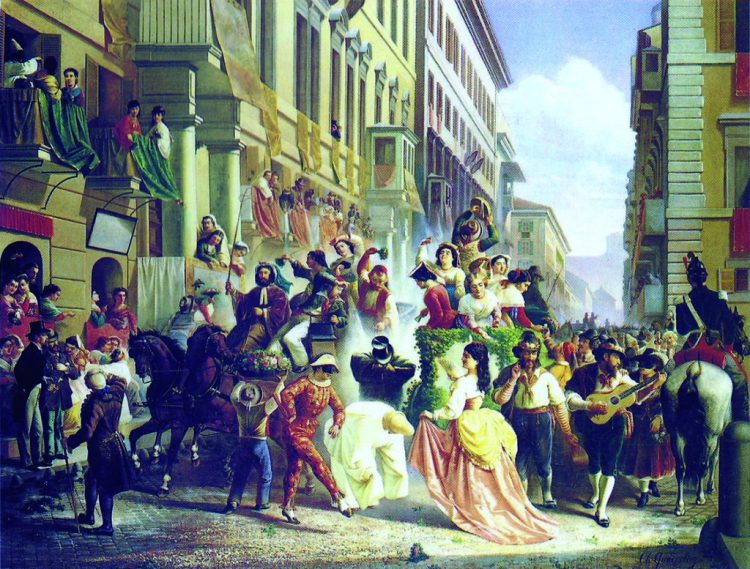
Il Carnevale Romano è durato nove giorni ed è iniziato con una sfilata ufficiale del Senatore (il governatore della città) lungo il Corso e il suono delle campane del Palazzo Comunale in Campidoglio. Solo dopo questa cerimonia, a tutti è stato permesso di mettersi in mostra per strada con tutti i diversi tipi di maschere secondo le possibilità personali e la creatività inclusi mestieri e personaggi tipici italiani come Pulcinella, Arlecchino e Rugantino; erano vietati solo i costumi militari ed ecclesiastici con la gogna sempre ben visibile come deterrente ai crimini. I balconi erano adornati con striscioni colorati e fiori mentre la gente lanciava piccoli coriandoli di gesso agli altri facendo sembrare tutti, alla fine della giornata, imbiancati come un fornaio.
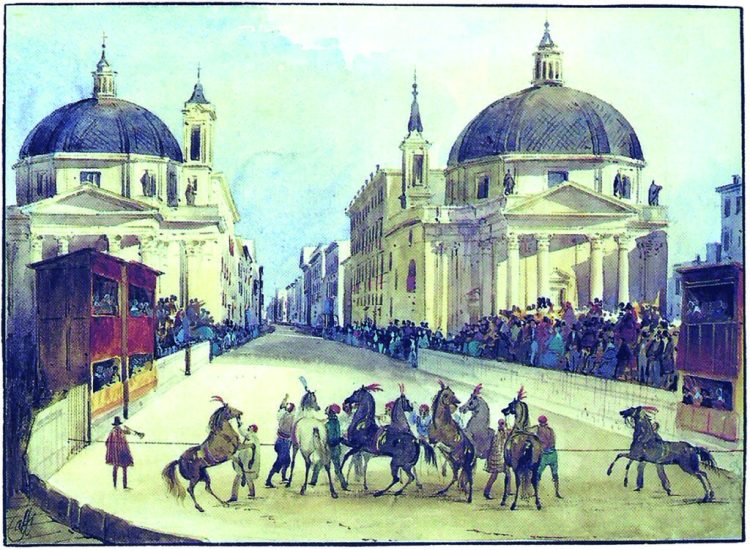
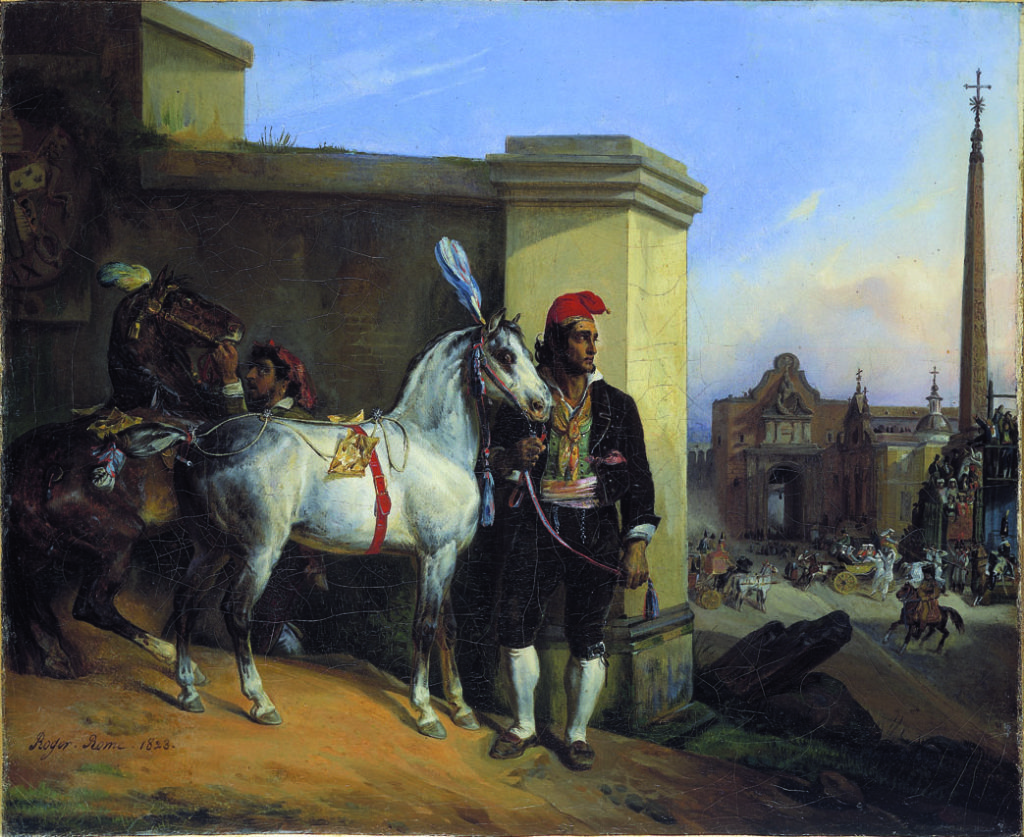
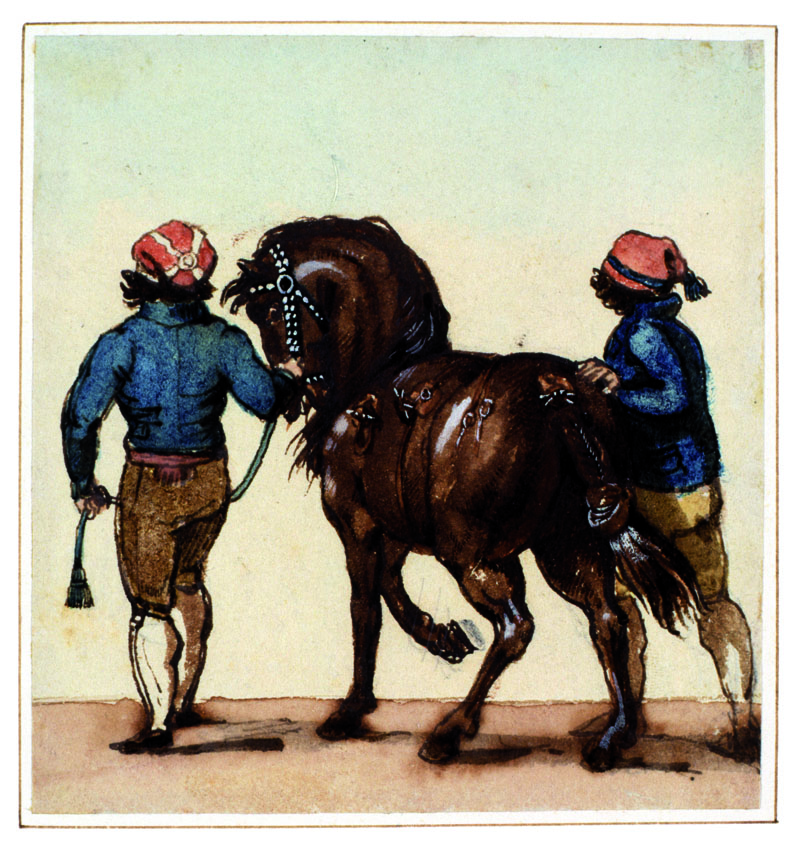
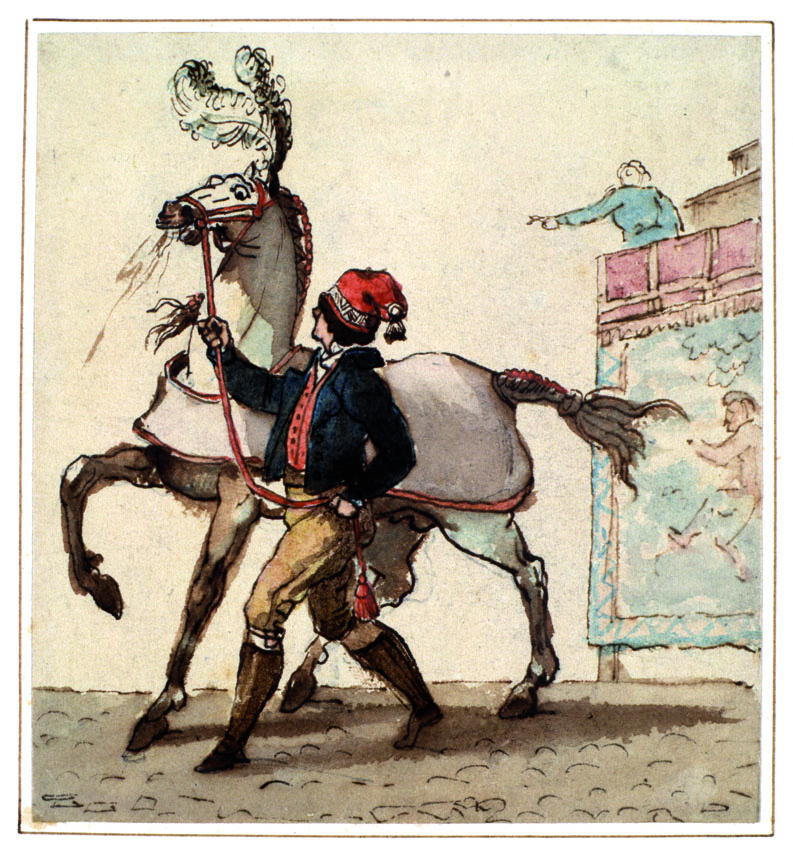
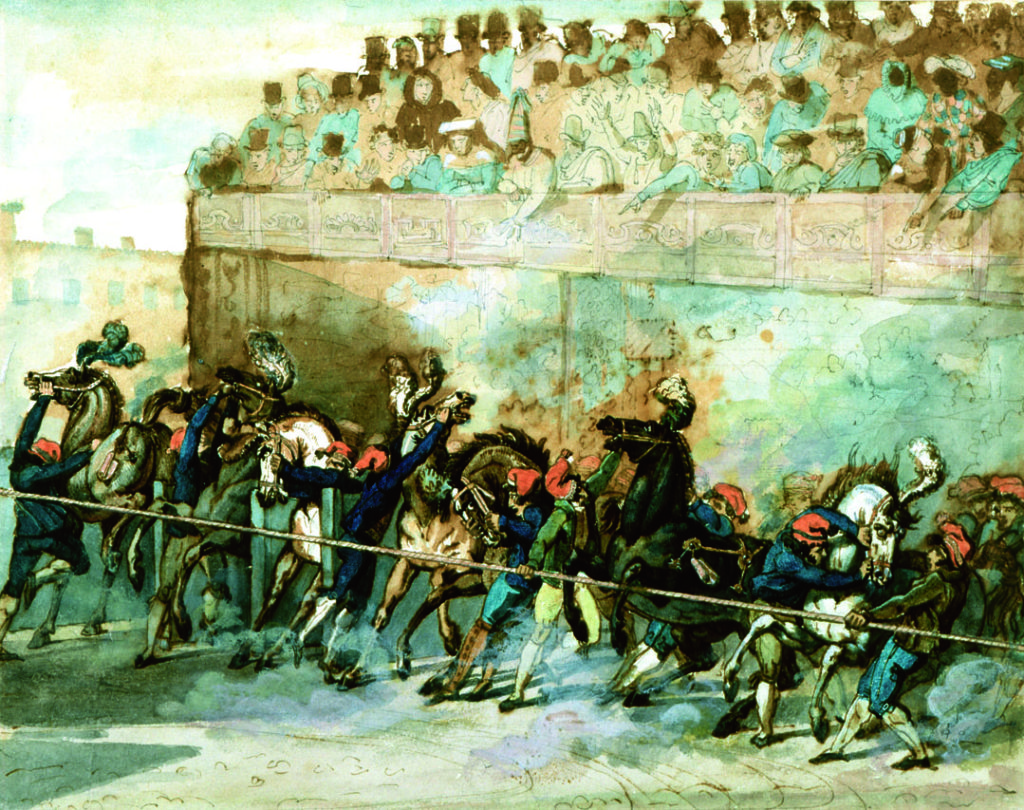
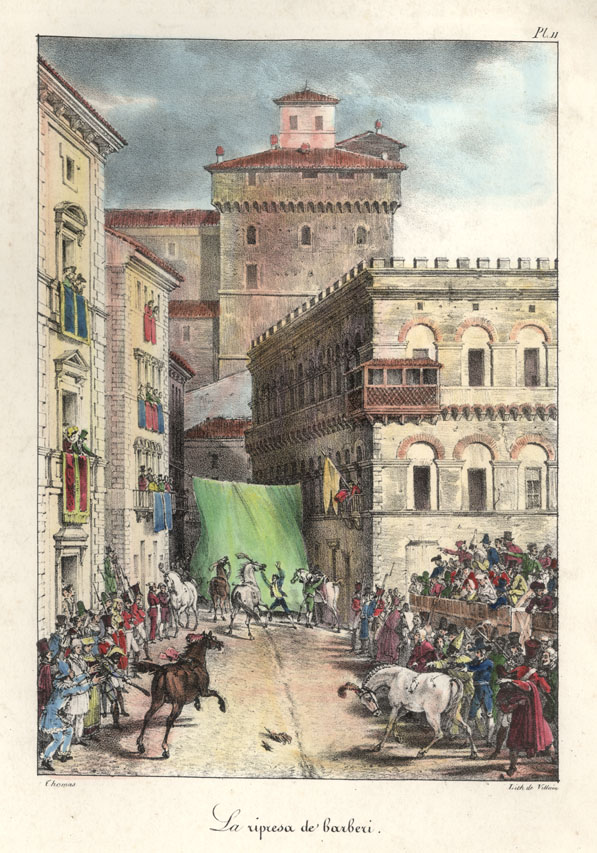
Every day there was a competition, mainly a race, for the youth, the seniors, the Jews, donkeys and horses on the last day, martedì grasso, with cash prizes and a palio (silk banner) given to the winning animals and owners. All this before the last incredible event which was also a symbolic funeral of the carnival: la festa dei moccoletti (the candle party) when everybody holded a lit candle and tried to blow out anybody’s candles screaming “sia ammazzato chi non porta il moccoletto!” (whoever not holding a candle shall be slayed). This was the last event before Ash Wednesday and the beginning of Lent (Carne Levare that is ‘meat removal’). This is why Tuesday was a ‘fat day’, the last time to eat abundantly before the forty days of penance.
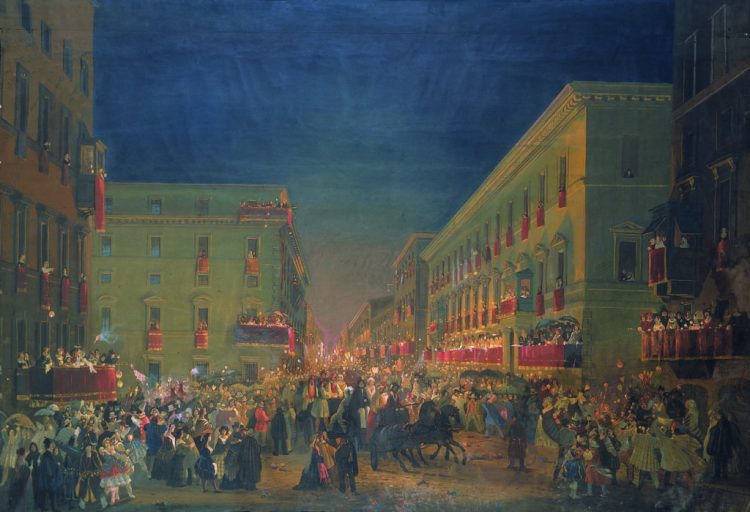
Ogni giorno, l'ultimo giorno, martedì grasso, c'era una gara, principalmente una corsa, per i giovani, gli anziani, gli ebrei, gli asini e i cavalli, con premi in denaro e un palio (stendardo di seta) dato agli animali e ai proprietari vincitori. Tutto questo prima dell'ultimo incredibile evento che era anche un funerale simbolico del carnevale: la festa dei moccoletti quando tutti tenevano una candela accesa e cercavano di spegnere le candeline di qualcuno gridando "sia ammazzato chi non porta il moccoletto!" (chi non tiene in mano una candela sarà ucciso). Questo è stato l'ultimo evento prima del Mercoledì delle Ceneri e dell'inizio della Quaresima (Carne Levare cioè 'rimozione della carne'). Per questo il martedì è stato un “giorno grasso”, l'ultima volta a mangiare in abbondanza prima dei quaranta giorni di penitenza.
Accidents were frequent during the horse races and when Queen Margherita assisted to the death of a boy who was run over as He crossed the road, in 1883 the long-lasting event described by several writers (Goethe, Henry James, Charles Dickens, Belli) and pictured in so many works had to be abolished since it was considered not suitable for the modern times.
Gli incidenti erano frequenti durante le corse dei cavalli e quando la regina Margherita assistette alla morte di un ragazzo investito mentre attraversava la strada, nel 1883 il lungo evento descritto da diversi scrittori (Goethe, Henry James, Charles Dickens, Belli) e raffigurato in tante opere dovette essere abolito poiché ritenuto non adatto ai tempi moderni.
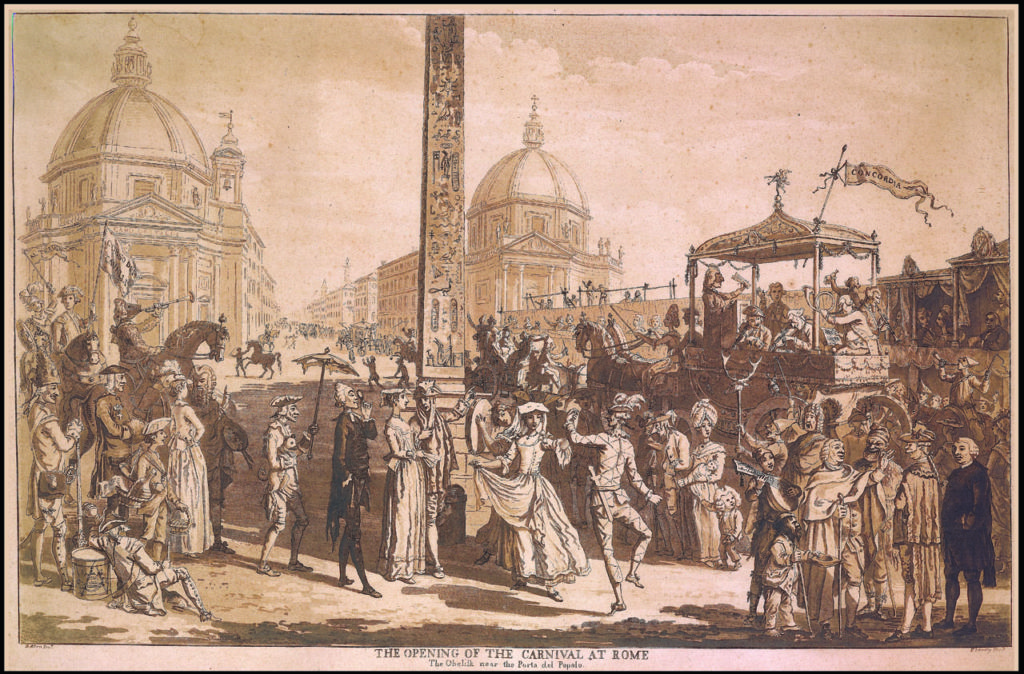

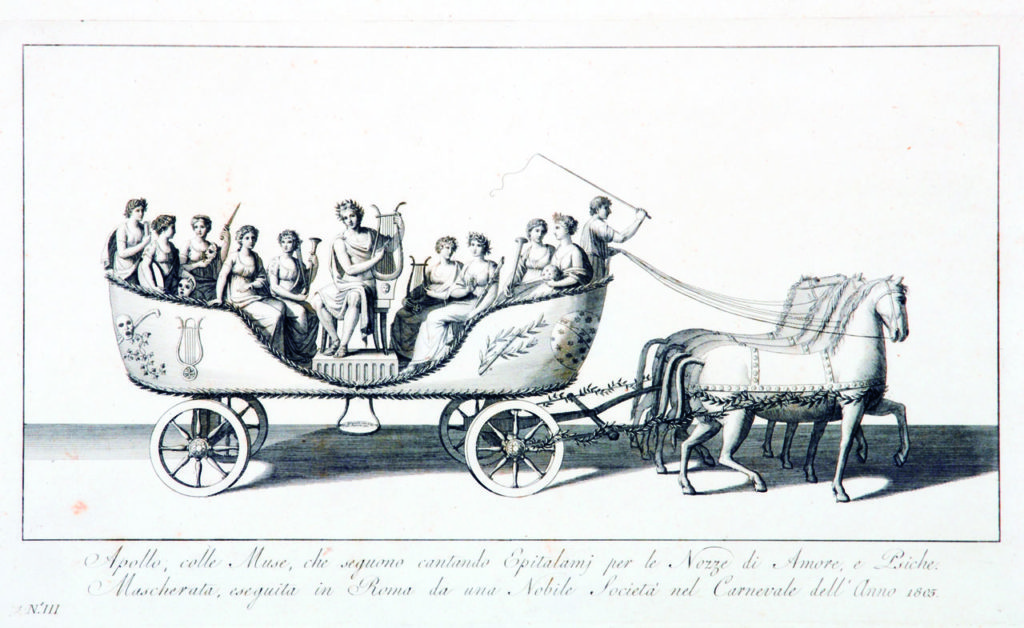











Below you can freely download my University Thesis (in italian) on the Roman Carnival
 Maurizio Rome Guide